Online couples therapy produces outcomes that match in-person counselling for most relationship issues, and the format matters far less than most people assume in 2026. What actually predicts whether therapy works is therapist fit and whether both partners show up consistently, week after week, not whether the session happens in an office or on a screen.
- Online couples therapy is about as effective as in-person counselling for most relationship concerns, according to telehealth research.
- InnerSpark Africa connects couples with licensed therapists by video, voice or chat, with pricing set for African incomes.
- Video sessions come closest to replicating in-person therapy; chat works when partners can't talk privately at the same time.
- Consistency and therapist fit predict outcomes more than the format you pick.
- Couples in different cities or countries can join the same session, which in-person counselling can't offer.
Why this matters
Couples in Kampala, Nairobi and Dar es Salaam often delay therapy because the nearest licensed relationship counsellor is a two-hour drive away, or because one partner works shifts that don't match a clinic's office hours. Online therapy removes both problems, which is why the real question isn't "is it convenient" — it's "does it actually work as well." That question deserves a direct answer, not a hedge.
You can book a licensed therapist through InnerSpark Africa from your phone in about two minutes, which changes the calculus for couples who'd otherwise put off therapy for months.
Is online couples therapy as effective as in-person counselling?
Yes, for most couples dealing with communication breakdowns, trust issues, parenting conflict or general disconnection, online sessions produce comparable results to sitting in a therapist's office. Telehealth research over the past decade has consistently found that the therapeutic relationship — not the delivery channel — drives outcomes in couples counselling. The exceptions are situations involving active safety risk or severe crisis, where in-person or emergency support is more appropriate than any remote format.
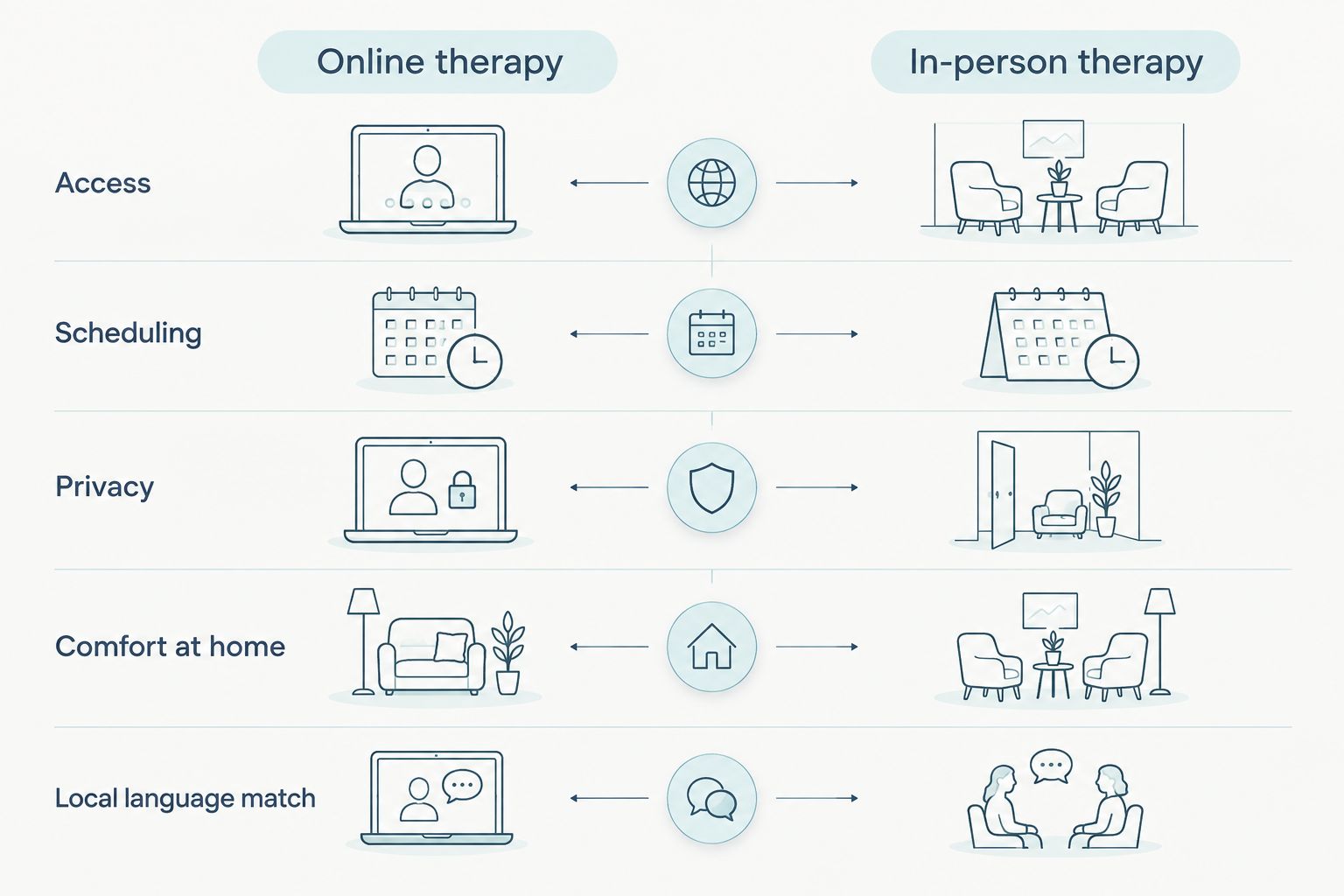
Here's how the two formats stack up on the factors that actually affect a couple's experience:
| Factor | Online couples therapy | In-person counselling |
|---|---|---|
| Access to licensed therapists | Wide — not limited by city or clinic hours | Limited to therapists near you |
| Scheduling flexibility | High — evenings, weekends, split locations | Fixed to clinic hours |
| Privacy at home | Depends on having a quiet room | Guaranteed private office |
| Local language and cultural fit | Available with therapists who share your context | Available if local therapist is nearby |
| Comfort discussing hard topics | Higher for some couples, lower for others | Higher for some couples, lower for others |
| Works across two locations (long-distance couples) | Yes | No |
Verdict: online couples therapy is a legitimate substitute for in-person counselling for the large majority of relationship issues, and it's often the only realistic option for couples juggling different schedules, cities or countries.
Video couples therapy
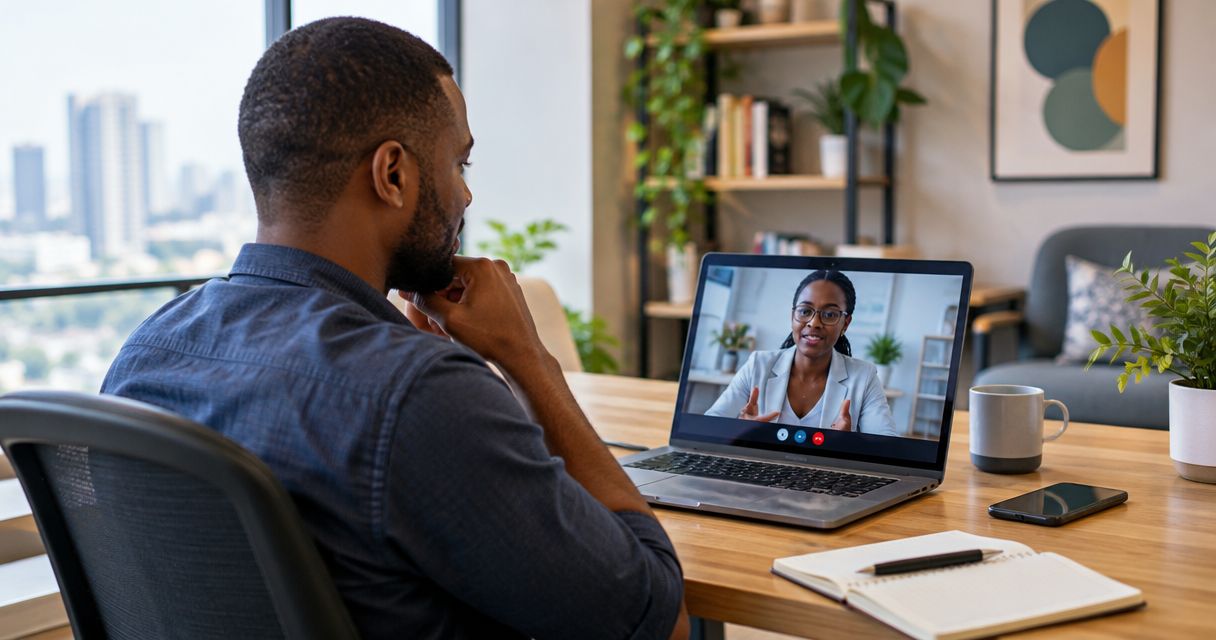
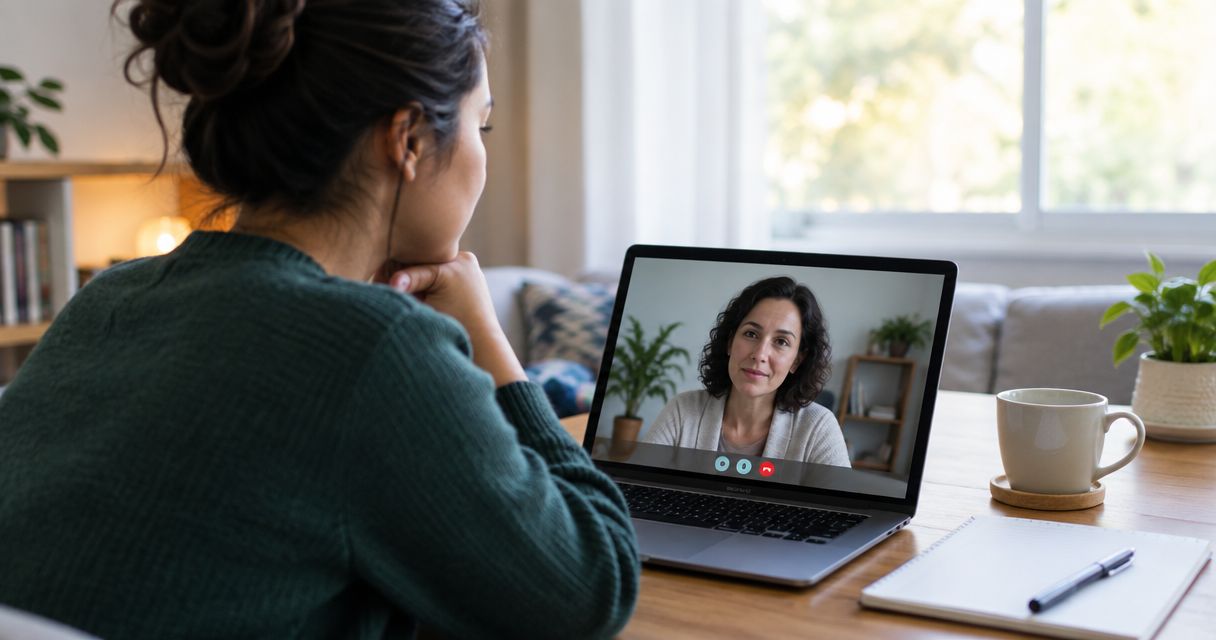
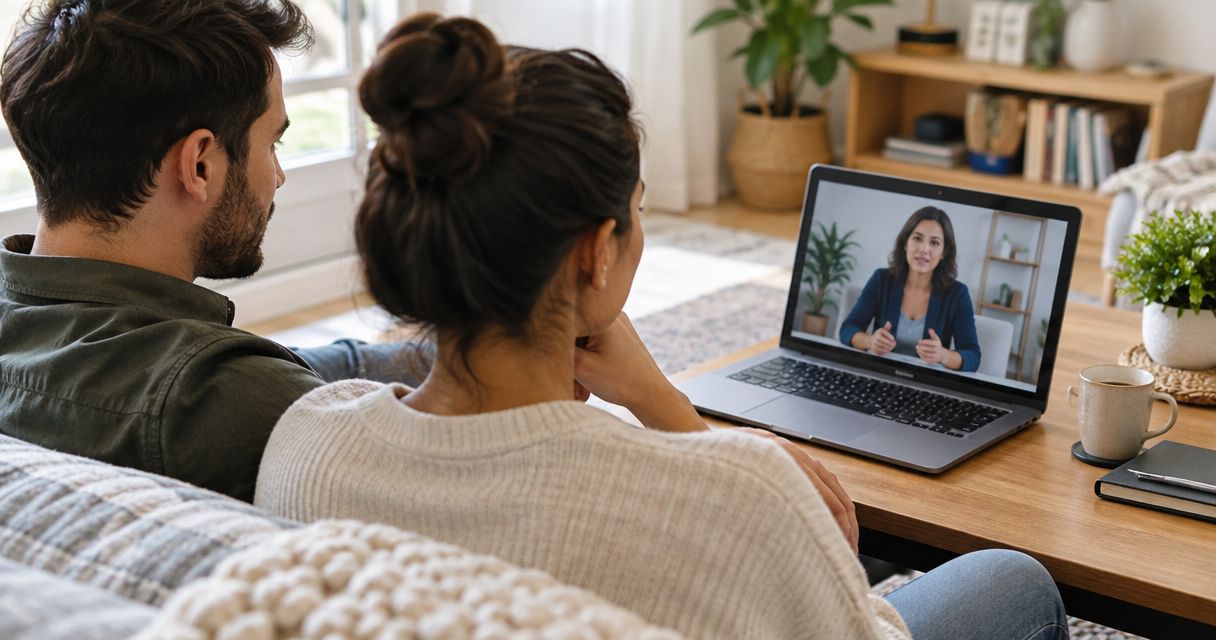
Video sessions are the closest online equivalent to sitting across from a therapist in person. Both partners see facial expressions and body language, which matters in couples work because so much of the conflict pattern shows up in tone and posture, not just words. Most licensed therapists recommend video as the default format for couples unless there's a specific reason to choose otherwise.
Best for: couples who want the fullest version of an in-person session without the drive. Verdict: Buy — video is the strongest online substitute for face-to-face counselling.
Voice-only couples therapy
Voice sessions drop the video feed but keep real-time conversation. Some couples prefer this because it removes the self-consciousness of being on camera, which can actually make it easier to speak honestly about sensitive topics. The trade-off is that the therapist loses visual cues, which matters less for verbal communication work and more for reading unspoken tension.
Best for: couples who find video calls stiff or who have unreliable internet for streaming video. Verdict: Hold — a solid option, but ask your therapist if your specific issues rely on nonverbal cues.
Text-based (chat) couples therapy
Chat therapy lets both partners respond asynchronously or in a scheduled text window, which suits couples who can't find a quiet, private moment together — a common issue in shared housing or with young children at home. It's the least immediate format, so it works better as a supplement or for lower-intensity check-ins than as the primary mode for a couple in active crisis.
Best for: couples with unpredictable schedules or limited privacy who still want structured support. Verdict: Hold — useful, but pair it with occasional video sessions if the relationship issue is serious.
“The format matters less than most people think — what predicts whether couples therapy works is whether both partners keep showing up.”
Why effectiveness varies
Online couples therapy doesn't fail because it's remote — it fails for the same reasons in-person therapy fails. A few factors decide whether a couple actually sees change:
- Therapist-couple fit — a mismatch in style or approach stalls progress regardless of format.
- Consistency — sporadic sessions with long gaps undo the momentum built in earlier ones.
- Internet or device reliability — dropped calls mid-session interrupt the flow that couples work needs.
- Privacy at home — a partner cutting a session short because someone walked into the room limits what gets discussed.
- Both partners' willingness to participate — therapy works when both people show up mentally, not just physically or on-screen.
- Language and cultural alignment — a therapist who understands local context and languages tends to build trust faster than one who doesn't.
Does online therapy work if one partner is skeptical?
Skepticism from one partner doesn't rule out online therapy working — it usually softens once the skeptical partner sees the format is confidential, judgement-free and doesn't require dressing up and driving to an office. Many couples start with one low-pressure session before deciding whether to continue.
Is online couples therapy confidential?
Online couples therapy is confidential in the same way in-person counselling is: sessions are private between the couple and their licensed therapist, and what's discussed doesn't leave the room, virtual or physical. The main privacy variable on your end is finding a quiet space during the session, not the platform itself.
Can couples in different cities or countries do sessions together?
Couples in different cities or countries can join the same online session from separate locations, which is something in-person counselling simply cannot offer. This makes online therapy the practical choice for long-distance relationships or couples where one partner travels for work.
InnerSpark Africa's therapists work with couples across Uganda, Kenya, Tanzania and other African countries, and sessions are available by video, voice or chat depending on what fits a couple's schedule and comfort level. Pricing is set for African incomes and payable by Mobile Money or card, and current rates are listed on the therapy cost page rather than repeated here.
Book a licensed couples therapist
Video, voice or chat sessions, bookable in about two minutes.
FAQ
Is online couples therapy as effective as in-person counselling?
Online couples therapy is as effective as in-person counselling for most relationship issues, since outcomes depend more on therapist fit and consistency than on the delivery format. Exceptions are active safety crises, which need in-person or emergency support.
Which is better for couples: video, voice or chat therapy?
Video therapy is the closest match to in-person counselling because it keeps facial expressions and body language visible. Voice suits couples who find cameras stiff, and chat suits couples with limited privacy or unpredictable schedules.
Is online couples therapy confidential in Uganda and Kenya?
Yes, online couples therapy is confidential — sessions stay private between the couple and their licensed therapist regardless of whether they happen by video, voice or chat. The privacy variable to manage is finding a quiet room during the call.
Can online therapists understand local culture and languages?
Licensed therapists working with couples in Uganda, Kenya and Tanzania understand local context and languages, which builds trust faster than working with a therapist unfamiliar with the region. This matters as much as the format itself for how comfortable a couple feels.
Does online couples therapy work if one partner is skeptical?
Skepticism doesn't rule out progress — many skeptical partners come around once they see the sessions are private and judgement-free. Starting with a single low-pressure session often settles the question faster than debating it beforehand.
Can long-distance couples do therapy together online?
Long-distance couples can join the same online session from two different locations, something in-person counselling can't offer. This makes online therapy the practical option for couples separated by work, study or migration.
How do you book online couples therapy in Uganda?
Booking online couples therapy takes about two minutes through InnerSpark Africa, with payment by Mobile Money or card and a choice of video, voice or chat sessions. Current pricing is listed on the therapy cost page before you confirm.
One last thing
The format debate distracts from the factor that actually decides whether couples therapy works: showing up on the same day and time every week. Couples who protect a fixed slot on the calendar make more progress than couples who book whenever it's convenient, whether the sessions happen on video, voice, chat, or in an office in 2026.