You can start most conversations with a therapist through InnerSpark Africa using a nickname or first name only, and nothing forces you to share your legal name during a chat or voice session. Full anonymity has one limit: setting up an account and paying by Mobile Money or card requires a phone number or card detail, which the payment processor sees but your therapist does not.
- Anonymous online therapy without your real name is possible for chat and voice sessions on InnerSpark Africa in 2026.
- Account signup and Mobile Money or card payment need a phone number, even when the therapist never sees it.
- Chat is the most private mode; video is the least private because your face is visible.
- Licensed therapists in Uganda, Kenya and Tanzania are bound by confidentiality rules regardless of the name you use.
- You choose what name or nickname appears in the session itself.
Why this matters
Stigma around mental health is still real across Uganda, Kenya and Tanzania in 2026, and a lot of people delay therapy simply because they're afraid of being recognized or judged. Knowing exactly which parts of the process require your identity and which don't removes a real barrier to booking a first session.
The short version: your name is never broadcast, your therapist doesn't get your payment details, and you control what you're called inside the session itself.
Can I really use online therapy without giving my real name?
Yes, for the parts that matter to a therapist. Here's what happens at each stage of booking with an online therapy platform:
| Step | What's required | Can it stay anonymous? |
|---|---|---|
| Creating an account | Phone number or email | Yes — no legal name required |
| Paying for a session | Mobile Money or card | No — payment provider verifies you, therapist doesn't see it |
| Chat session | A name or nickname you choose | Fully anonymous |
| Voice session | Your voice only | Anonymous, no face shown |
| Video session | Your face and chosen name | Least anonymous, most personal |
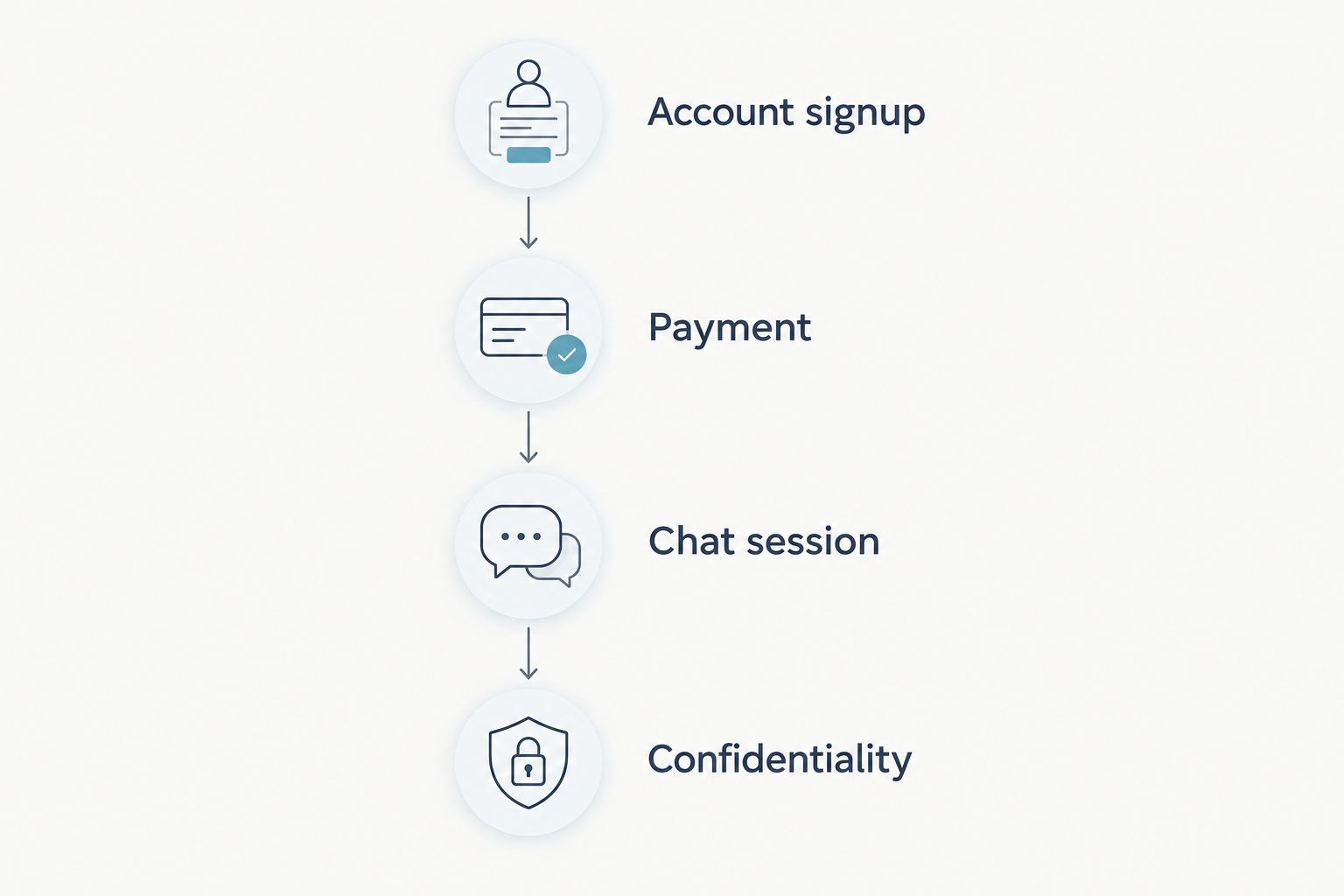
The practical takeaway: the identity check happens once, at the payment gate, and it's between you and the payment provider. Everything after that — what you type in chat, what name you give, what you talk about — is between you and your therapist.
Chat therapy: the most anonymous option
Chat sessions let you type under any name you're comfortable with. There's no camera, no voice recognition, and no requirement to state your legal name to the therapist at any point in the conversation.
This mode works well for people testing therapy for the first time, university students worried about being seen, or anyone who wants to process something difficult before committing to a face-to-face format. Chat therapy is the best choice for maximum anonymity in 2026.
Voice sessions: heard, not seen
Voice calls remove the visual identifier but keep the human connection of tone and pace, which some people find easier for building trust than typing. Your name here is whatever you introduce yourself as — nothing more is required.
This is a solid middle ground for people who want real-time conversation without appearing on camera. Voice sessions are best for people who want a live conversation but aren't ready to be on video.
Video sessions: least anonymous, most personal
Video therapy shows your face and gives the therapist visual cues — expression, body language — that some clinical approaches rely on. It's the least anonymous of the three formats since your image is visible during the call.
For couples counseling or sessions where a therapist needs to read non-verbal cues closely, video is often more effective even though it costs you some privacy. Video is best for people who prioritize connection over anonymity.
Why anonymity levels vary
- Payment verification — Mobile Money and card providers require some identity check by law, independent of the therapy platform itself.
- Licensing requirements — licensed therapists in Uganda, Kenya and Tanzania must keep basic session records for professional accountability, though these are kept separate from your chosen in-session name.
- Session format — video inherently exposes your face; chat and voice don't.
- Platform security — a phone number or email lets InnerSpark Africa recover your account and confirm bookings, but it isn't shared with your therapist.
- Therapist assessment needs — some concerns (crisis situations, couples work) work better with visual or verified contact, which nudges people toward less anonymous formats.
“Your name is never the barrier to starting therapy — the payment step is the only part that needs to know who you are, and even then, only the provider sees it.”
Does my therapist see my real name and phone number?
No, your therapist sees only the name or nickname you choose to introduce yourself with during the session, not the phone number or payment details used to book. Those stay with the account and payment system, separate from the clinical conversation.
Can I use a fake name for online therapist sessions?
Yes, you can use a nickname or first name only for chat, voice or video sessions with a licensed therapist. What matters clinically is honest conversation about what's going on for you, not the label attached to it.
Is online therapy confidential in Uganda, Kenya and Tanzania?
Yes, licensed therapists across Uganda, Kenya and Tanzania operate under professional confidentiality standards regardless of the platform. Sessions are private and judgement-free, and details discussed aren't shared outside the therapeutic relationship except where safety requires it.
Booking a session on InnerSpark Africa takes about two minutes, and you can pick chat, voice or video depending on how much of yourself you want to show up front. Therapists on the platform understand local context and languages across Uganda, Kenya and Tanzania, which matters more for a good session than whether you used your legal name to sign up.
Book a therapist without giving your name
Choose chat, voice or video and pick the level of privacy that works for you.
FAQ
Can I use online therapy anonymously without giving my real name?
Yes, chat and voice sessions on InnerSpark Africa only require the name or nickname you choose to give your therapist, not your legal name. Your phone number or payment details are used for the account and payment provider only, never shared with the therapist.
Do I need to show my face during online therapy?
No, only video sessions show your face — chat and voice sessions never require a camera. Choose chat if you want full anonymity in 2026.
Will my therapist know my phone number?
No, your phone number is used for account setup and Mobile Money payment, not passed to your therapist. The therapist only knows what you tell them directly in session.
Is chat therapy as effective as video therapy?
Chat therapy works well for many people, especially first-time clients or those managing stigma concerns, though video allows therapists to read visual cues more directly. Which format works better depends on what you're working through.
Are online therapists in Uganda, Kenya and Tanzania licensed?
Yes, licensed therapists on platforms like InnerSpark Africa hold professional credentials and follow confidentiality standards in their country of practice. Ask about a therapist's credentials directly if you want confirmation before booking.
Can I switch between chat, voice and video sessions?
Yes, most platforms let you choose the format per session, so you can start with chat and move to voice or video later if you're comfortable. There's no requirement to commit to one format.
How is my payment information handled?
Mobile Money and card payments are processed by the payment provider, and this information is not visible to your therapist. Only your account and billing system handle these details.
One last thing
The part people worry about most — being recognized by name — is actually the easiest part to control, since the therapist only ever knows what you choose to tell them. The identity check that matters happens once, at the Mobile Money or card payment stage, and it's between you and the payment provider, not your therapist. If privacy is the main thing holding you back from booking a session in 2026, start with chat and decide later whether voice or video suits you better.