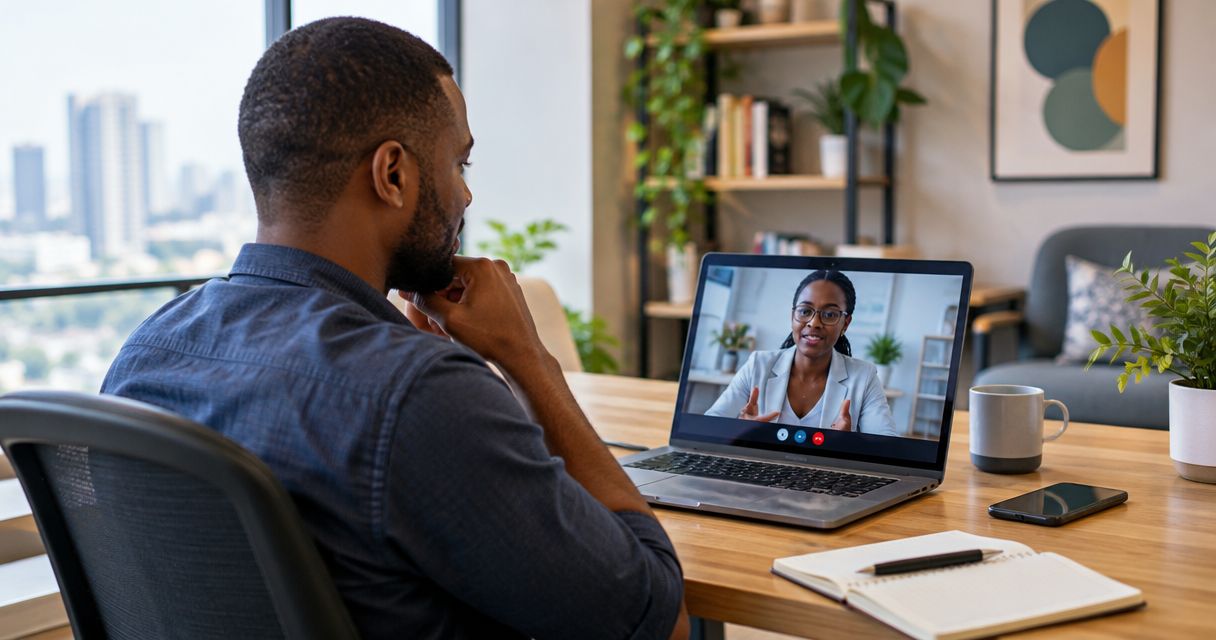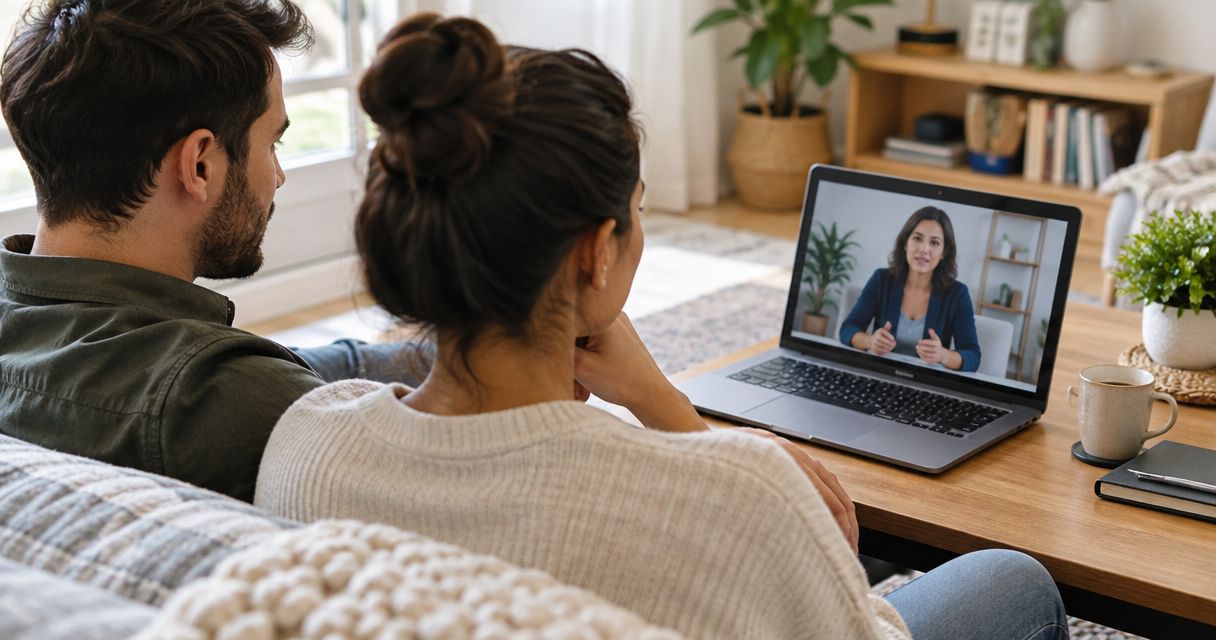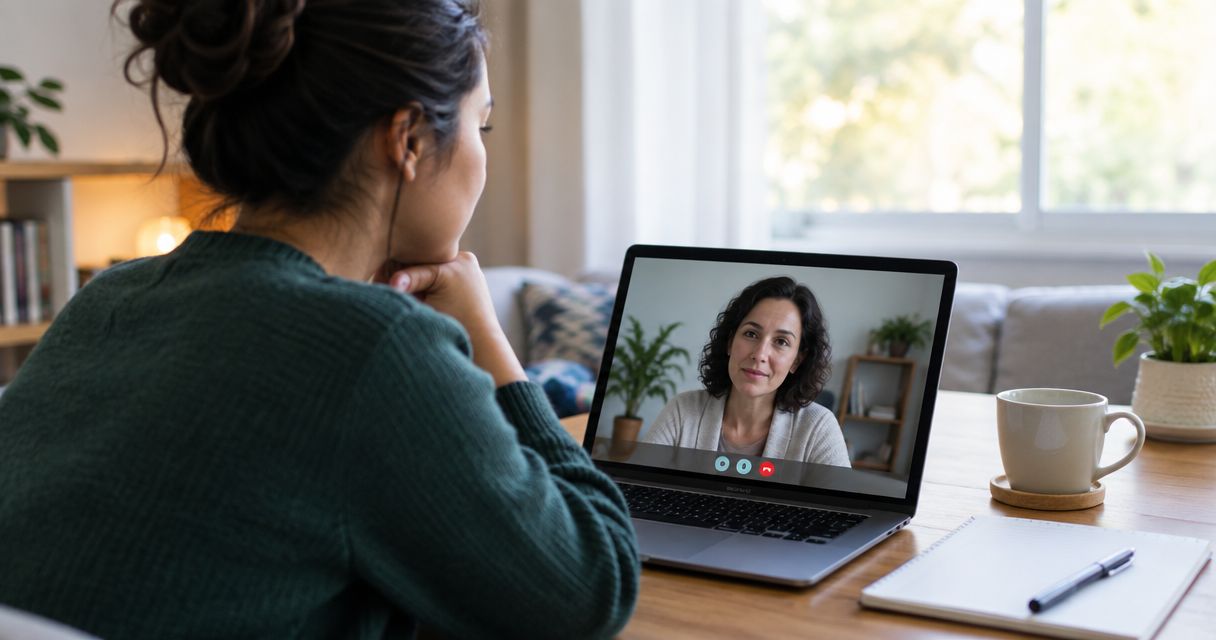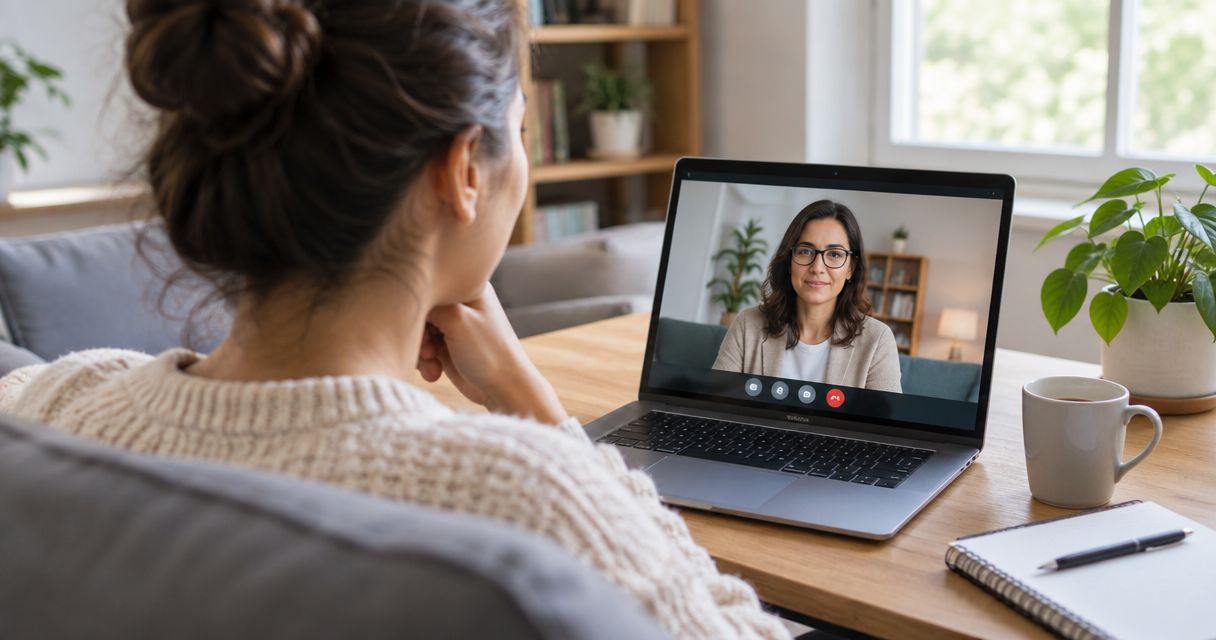
Online therapy sessions are not recorded or saved as audio or video files by default — what a licensed therapist keeps afterward is a written case note, not a replay of your conversation. Recording only happens when you and your therapist agree to it beforehand, and even then most therapists across Uganda, Kenya and Tanzania will decline unless there's a specific clinical or training reason for it.
- Video and voice sessions are not recorded — no audio or video file exists unless both sides agree to it first.
- Chat sessions leave a text log, which is different from a recording and is treated as part of your file.
- InnerSpark Africa's licensed therapists follow standard informed-consent practice: no recording without you knowing about it.
- Data protection laws in Uganda, Kenya and Tanzania require explicit consent before any session gets recorded in 2026.
Why this matters
People hold back in therapy when they're not sure who might hear or see the session later. That hesitation defeats the point of showing up in the first place.
Knowing exactly what does and doesn't get saved lets you speak freely instead of rehearsing your answers. This matters more for online sessions than in-person ones, because video and voice calls run through software that could technically capture them — the question is whether anyone does, and whether you'd know if they did. InnerSpark Africa connects people across East Africa with licensed therapists over video, voice and chat, and confidentiality is the baseline expectation for every one of those formats.
Can online therapy sessions be recorded?
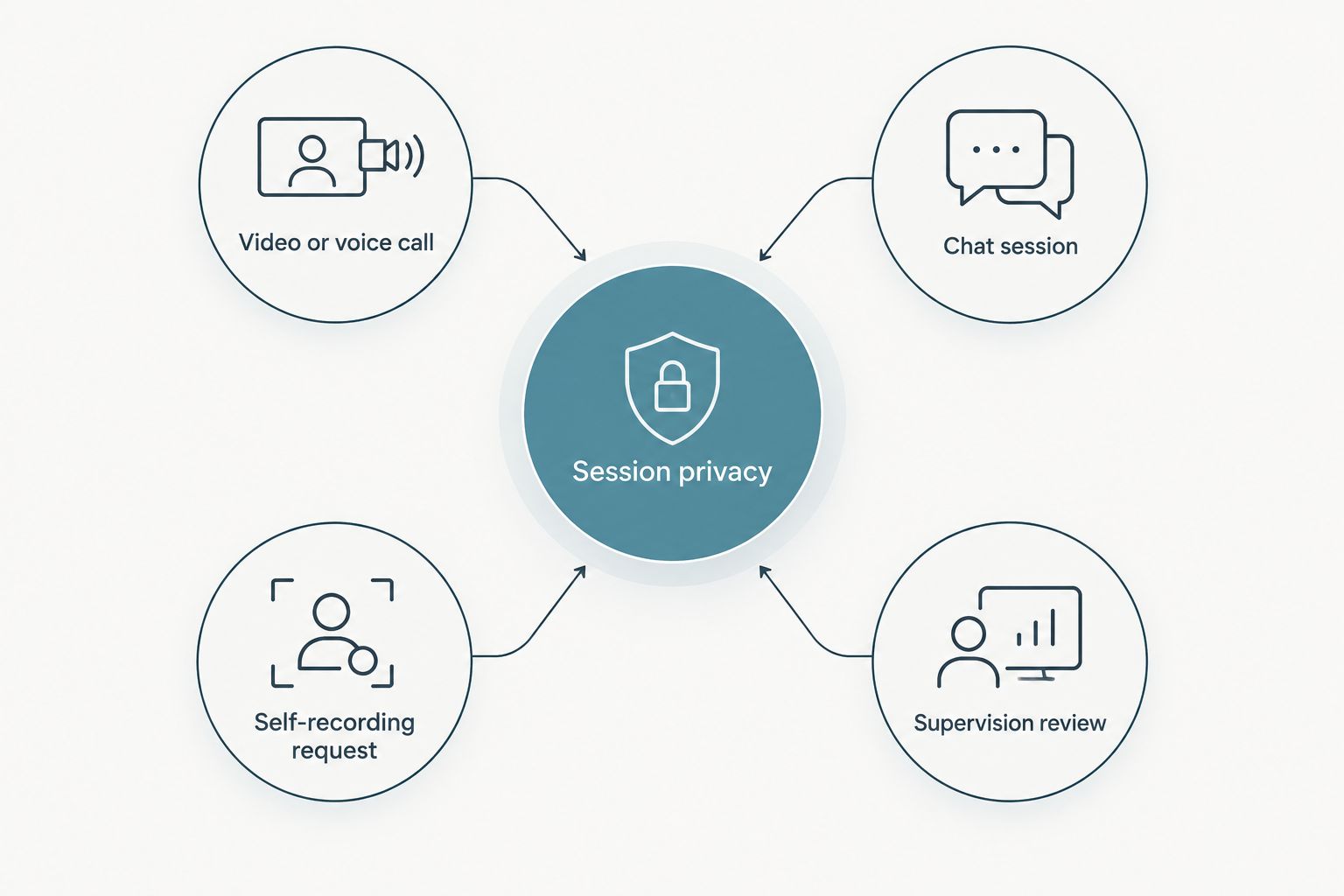
The short answer is yes, technically — but not automatically, and not without consent. What actually gets stored depends on the session format and what you and the therapist agree on.
| Scenario | Recorded? | Who controls it | Privacy level |
|---|---|---|---|
| Standard video or voice session | No | Not applicable | Highest — nothing saved beyond notes |
| Chat-based session | Text log saved | You and the therapist | High — stored as text, not audio or video |
| Client asks to record | Only if therapist agrees | You | Depends on how you store the file afterward |
| Supervision or training review | Only with written consent | Therapist's clinical supervisor | Requires consent under professional ethics codes |
The pattern across every legitimate scenario is the same: recording requires a deliberate, informed decision on both sides. Nothing gets captured passively.
Does InnerSpark Africa record therapy sessions?
No — InnerSpark Africa's therapists are licensed professionals who follow standard confidentiality practice, and that means sessions aren't recorded without your knowledge and agreement. Video and voice calls aren't captured as files at all under normal circumstances.
If you ever want clarity on how a specific therapist handles notes or documentation, ask directly at the start of the session — a licensed therapist should answer that question without hesitation. If you're still comparing what a session costs against what you'd get, the breakdown on how much therapy costs in Uganda covers pricing by format.
Can you record your own therapy session?
Some clients want a recording for personal reference — to revisit an insight, or because they process spoken information better on a second listen. That's a reasonable ask, but it isn't automatic.
- Ask before the session starts, not partway through
- Expect the therapist to say yes only if they're comfortable with it
- Understand the recording becomes your responsibility to store securely once it exists
- Know that a therapist can decline for their own professional reasons, and that's normal
Verdict: ask first, every time — never assume recording is allowed just because the technology makes it possible.
Are chat and video sessions saved the same way?
No. Chat-based therapy naturally leaves a written log because that's how the format works — you're typing, and the platform stores the conversation the same way any messaging app would. Video and voice sessions don't leave that kind of trail; once the call ends, there's no file unless someone specifically recorded it.
This distinction trips people up because they assume "saved" means the same thing everywhere. A chat log being stored is not the same as a session being recorded — one is a byproduct of the medium, the other is a deliberate action.
Why recording policies vary
A handful of factors decide whether any given therapy session gets recorded and how it's handled if it does:
- The platform's privacy policy — some outline exactly what's stored and for how long
- Local data protection law — Uganda's Data Protection and Privacy Act and Kenya's Data Protection Act both require consent before recording personal data, including therapy sessions
- Session format — chat leaves text, video and voice generally don't leave anything
- The therapist's professional code of ethics — licensed therapists operate under informed-consent standards regardless of country
- The purpose of the recording — personal reference, supervision, or training each carry different consent requirements
- Explicit agreement from both sides — the single factor that overrides everything else on this list
“If a therapist wants to record a session, they need your yes first — not your silence.”
Can I ask my therapist to record a session for later?
Yes, you can ask your therapist to record a session for later, and a licensed therapist will decide based on their own comfort and professional judgment. If they agree, the recording is typically shared with you rather than kept indefinitely on the platform's side.
Are online therapy chat logs saved forever?
No, chat logs aren't necessarily saved forever — retention depends on the platform's data policy, and most keep them only as long as needed for continuity of care. Ask directly if you want a clear answer on how long your specific chat history is retained in 2026.
Is video therapy as private as in-person therapy?
Yes, video therapy can be as private as in-person therapy when the session isn't recorded and you're in a private space on your end. The main added variable online is your own environment — a closed door and headphones do more for privacy than any platform setting.
Talk to a licensed therapist privately
Book a video, voice or chat session with a licensed therapist across East Africa.
FAQ
Can online therapy sessions be recorded?
Online therapy sessions can technically be recorded, but it doesn't happen by default — recording only occurs if you and your therapist explicitly agree to it beforehand. Standard video and voice calls leave no file at all.
Does InnerSpark Africa record video or voice therapy sessions?
No, InnerSpark Africa's licensed therapists don't record video or voice sessions without your knowledge and consent. That follows standard confidentiality practice for licensed mental health professionals.
Are therapy chat sessions saved as a written log?
Yes, chat-based therapy sessions are saved as a text log because that's inherent to the format, similar to any messaging app. This is different from an audio or video recording.
Can I record my own therapy session for personal use?
You can ask to record your own session, but it requires your therapist's agreement first. Once recorded, storing the file securely becomes your responsibility.
What happens to therapy session notes after the session ends?
Session notes are kept by the therapist as part of your case file for continuity of care, not as a recording of the conversation. They're written summaries, not transcripts or media files.
Is online therapy confidential in Uganda, Kenya and Tanzania?
Yes, online therapy is confidential in Uganda, Kenya and Tanzania, backed by national data protection laws that require consent before personal data — including recordings — can be captured or shared.
Can a therapist share my session recording with anyone else?
No, a therapist cannot share a session recording with anyone else without your separate, explicit consent, even if you agreed to the original recording. Each additional use requires its own permission.
One last thing
The detail most people miss: even when a session isn't recorded, the fact that you had a session, its date and its general topic still exists somewhere in a case file — that's normal clinical documentation, not surveillance. If total anonymity matters more to you than continuity of care, say so at the first session; a licensed therapist can adjust how much detail goes into notes while still meeting their professional obligations. Confidentiality in 2026 isn't about nothing being written down — it's about nothing leaving the room, the screen or the chat window without your say-so.