Chat-only therapy sessions do not produce a formal mental health diagnosis in 2026 — that requires a structured clinical assessment, which most licensed therapists do over video or voice, not text. Chat therapy is built for counseling, coping strategies and day-to-day emotional support, and it works well for that, but it is not the format where a therapist tells you "you have generalized anxiety disorder" or "this is major depression."
- Chat therapy alone rarely produces a formal diagnosis in 2026 — video or in-person assessment does.
- InnerSpark Africa's chat sessions, from UGX 30,000, focus on counseling and coping tools, not diagnostic testing.
- A licensed psychologist or psychiatrist can diagnose conditions like anxiety or depression, usually after a structured interview over video.
- Chat therapy still works well for ongoing support once you already have a diagnosis, or if you're not ready for a full assessment.
Why this matters
People often start with chat therapy because it's private, cheap and easy to fit into a lunch break, then wonder why the therapist hasn't named a condition after three sessions. That's not a failure of the therapist or the platform — it's how the format is designed. Knowing the difference up front saves you from expecting a diagnosis a chat session was never built to deliver, and helps you pick the right format on InnerSpark Africa from the start.
Can you get a diagnosis through chat therapy?
The short answer is no, not reliably. A formal diagnosis usually requires a structured clinical interview, observation of tone, facial expression and behavior, and sometimes standardized questionnaires that a therapist walks you through in real time. Text strips out most of that. Here's how the three common formats compare on diagnosis versus support:
| Format | Real-time cues | Typically used for | Diagnosis likely? |
|---|---|---|---|
| Chat | None (text only) | Counseling, coping strategies, check-ins | Rare |
| Voice | Tone, pacing, pauses | Talk therapy, structured sessions | Sometimes, with follow-up |
| Video | Tone, facial expression, body language | Full assessments, ongoing therapy | Most likely |
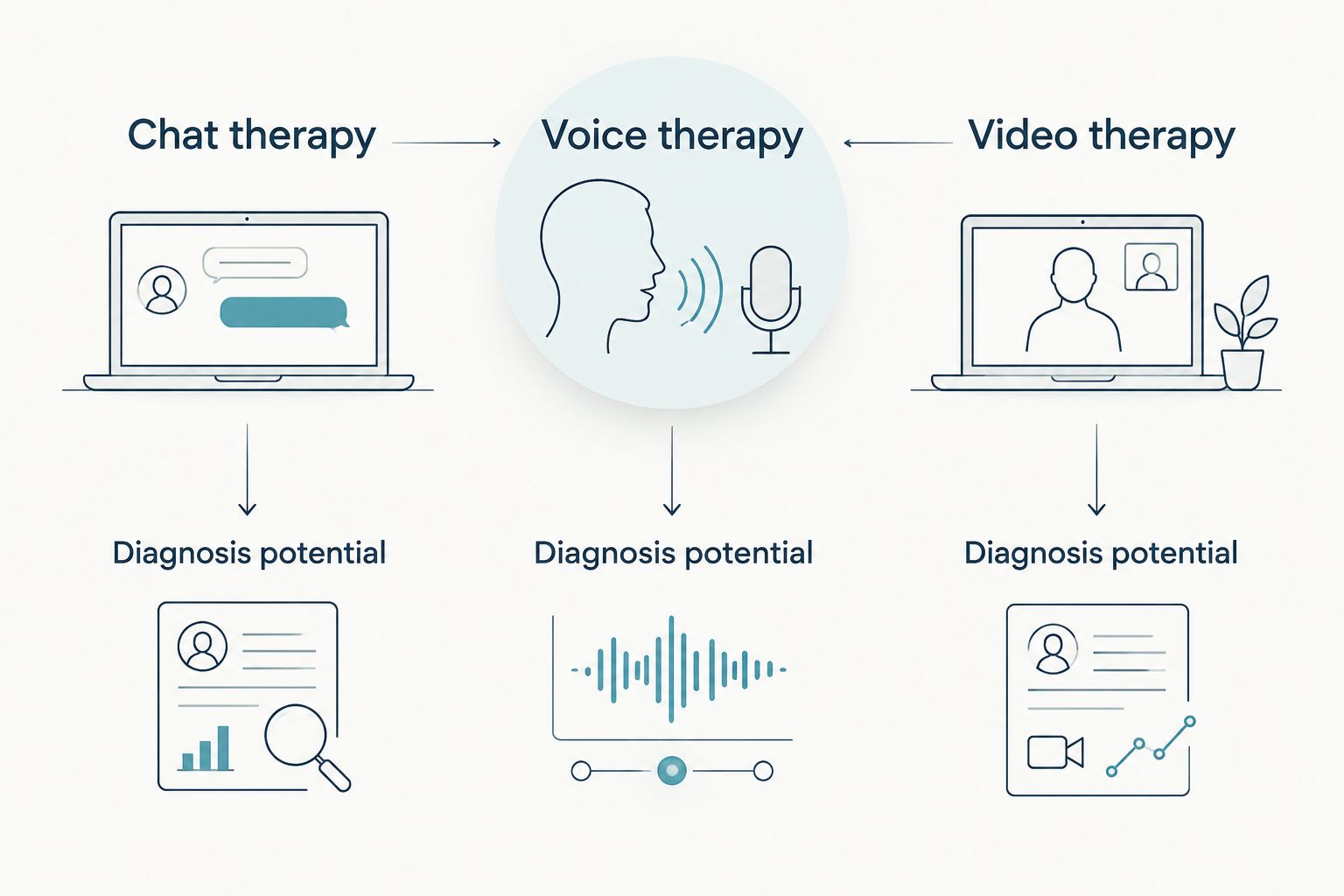
Chat therapy: built for support, not diagnosis
Chat sessions let you type out what's on your mind on your own schedule, which is why they're popular with university students and people in their first week of trying therapy. A therapist reading your messages can flag patterns — recurring stress, sleep problems, relationship conflict — and offer coping strategies, but they're working with words alone. Without tone of voice or facial expression, a therapist has less to go on, so most licensed clinicians won't formally diagnose off chat transcripts alone.
Voice therapy: closer to diagnosis, still limited
Voice sessions restore tone, pacing and hesitation — cues a therapist actually listens for during an assessment. It's a step closer to a full clinical picture, and some therapists will move toward a working diagnosis over several voice sessions. It's still not the gold standard, because facial expression and body language are missing.
Video therapy: the format best suited to formal diagnosis
Video comes closest to an in-person session. A therapist can observe how you present, ask structured questions, and run through the same kind of assessment they'd do face-to-face. If a diagnosis is what you actually need — for a school accommodation, a workplace note, or your own clarity — video is the format to book.
Why chat can't replace a clinical diagnosis
- No visual cues. Facial expression, eye contact and body language carry information text can't.
- No structured interview in real time. Diagnostic tools are usually administered live, with follow-up questions based on your answers.
- Scope of practice. Licensed therapists are trained to diagnose within a full assessment process, not from typed messages alone.
- Severity is easy to misread. A calm-sounding message can hide a crisis, and a dramatic one can be a bad day — voice and video reduce that gap.
- Language and tone nuance gets lost. Local expressions and ways of describing distress carry meaning that's easier to catch when spoken.
- Time. A proper diagnostic interview takes longer than most people type in a single chat session.
Can a therapist diagnose depression over chat?
A therapist can recognize signs of depression from what you write and recommend next steps, but a formal depression diagnosis usually needs a structured conversation, which is easier over voice or video. If your goal is a documented diagnosis rather than ongoing support, book a voice or video session instead of chat.
Do I need a diagnosis before starting therapy?
No, you don't need a diagnosis before starting therapy — most people start chat or voice sessions to talk through stress, relationship problems or low mood without a label attached. A diagnosis becomes relevant later if you need it for medication, a workplace accommodation, or your own understanding of what you're dealing with.
Is online therapy in Uganda confidential?
Yes, sessions with a licensed therapist through InnerSpark Africa are confidential, whether you choose chat, voice or video. Confidentiality is part of what makes chat therapy appealing to people who aren't ready to say things out loud yet, even if it isn't the format for a diagnosis.
If what you actually want is support this week — not a label — InnerSpark Africa's chat therapy starting from UGX 30,000 is built for exactly that: licensed therapists across Uganda, Kenya and Tanzania who understand the local context and languages, paid for with Mobile Money or card, judgement-free. If you suspect you need an actual diagnosis, say so when you book and ask for a voice or video session instead, so the therapist can run a proper assessment rather than a chat check-in.
Book a licensed therapist now
Chat, voice or video sessions, bookable in about two minutes.
FAQ
Can you get a diagnosis through chat therapy?
Rarely — chat therapy is built for counseling and support, not formal diagnosis, which usually needs a structured interview over voice or video. If you need a documented diagnosis in 2026, book a voice or video session instead of chat.
What's the best therapy format for a diagnosis?
Video therapy is the best format for a formal diagnosis because it lets a licensed therapist observe tone, facial expression and behavior the way they would in person. Voice therapy is the next-best option when video isn't possible.
Is chat therapy better than voice therapy?
Neither is better outright — chat therapy suits people who want privacy and time to think before responding, while voice therapy suits people who want a structured, real-time conversation. Pick chat for daily support and voice or video if diagnosis matters.
How much does chat therapy cost in Uganda?
Chat therapy through InnerSpark Africa starts from UGX 30,000 per session in 2026, with video and voice sessions also available at the same starting point. Pricing is set for African incomes rather than international rates.
Can a therapist prescribe medication through chat?
No, a therapist cannot prescribe medication through chat therapy — prescribing requires a licensed psychiatrist and typically a formal assessment, not a text-based session. Chat and voice therapists can refer you onward if medication looks necessary.
Do I need to know what's wrong with me before booking therapy?
No, you don't need a diagnosis or even the right words before booking — most people start with stress, sleep problems or relationship conflict and figure out the rest with their therapist. InnerSpark Africa's licensed therapists are trained to work with vague starting points.
Is online chat therapy confidential in Uganda, Kenya and Tanzania?
Yes, sessions with a licensed therapist through InnerSpark Africa are confidential across Uganda, Kenya, Tanzania and other African countries served by the platform. This applies to chat, voice and video formats equally.
Can teenagers get a diagnosis through chat therapy?
Formal diagnosis for a teenager typically requires a licensed therapist to run a structured assessment, which works better over video with a parent or guardian involved. Chat therapy can still offer teens a private, judgement-free space to talk in the meantime.
One last thing
Most people who ask about diagnosis through chat therapy don't actually need one to start feeling better — they need someone licensed to talk to this week. Book chat therapy for support now, and switch to a video session later if a documented diagnosis becomes necessary — you don't have to decide that on day one.