An online therapy session with a licensed therapist typically lasts 45 to 60 minutes for video or voice calls, with 50 minutes as the standard length most therapists use in 2026. Chat-based sessions work differently — they're often spread across a scheduled window rather than one continuous sitting, and a first (intake) session can run up to 90 minutes because the therapist needs time to understand your history before setting a treatment plan.
- A standard online therapy session runs 45 to 60 minutes for video or voice calls in 2026.
- First sessions with a new therapist often run up to 90 minutes for intake and history-taking.
- Chat therapy sessions are spread across a scheduled window, not a single 50-minute block.
- InnerSpark Africa connects you with licensed therapists across Uganda, Kenya and Tanzania by video, voice or chat.
- Session length depends more on format and stage of therapy than on the topic being discussed.
Why this matters
Getting the length wrong sets the wrong expectations before you even start. Book a 30-minute slot expecting to unpack a difficult week and you'll leave feeling rushed; book 60 minutes for a quick check-in and you're paying for time you don't use.
Knowing what's standard also helps you spot a therapist or platform that's cutting corners. A licensed therapist doesn't compress real clinical work into 15 minutes, and a legitimate online therapy service should be upfront about how long each format runs before you book.
InnerSpark Africa sets session length by format when you book, so you know exactly what you're walking into — video, voice or chat — before the clock starts.
How long does an online therapy session last?
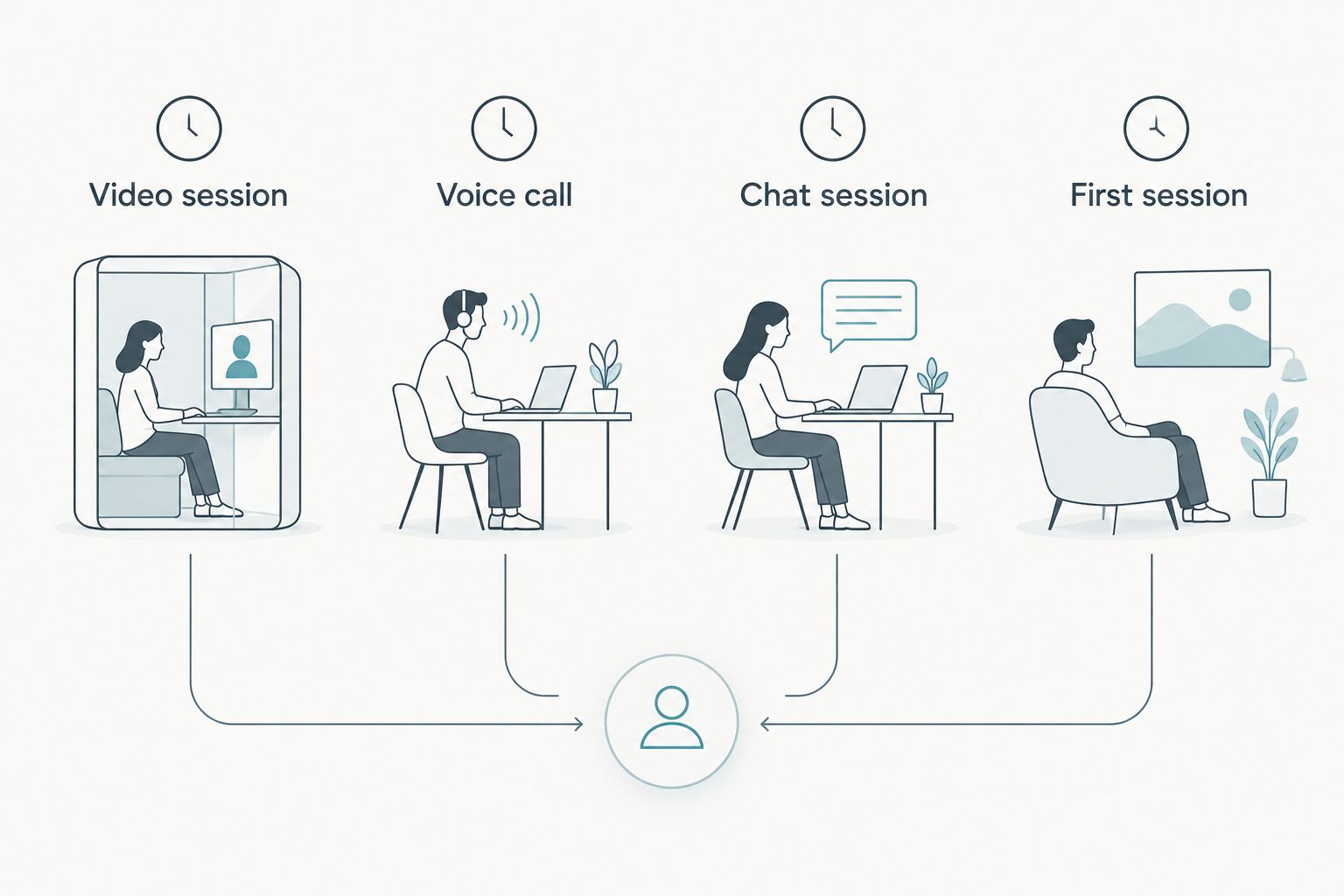
The answer depends on the format. Video and voice sessions follow the same 45–60 minute pattern used by in-person therapy; chat sessions run on a different clock entirely.
| Session type | Typical length | Best for |
|---|---|---|
| Video session | 45–60 minutes | Full weekly or biweekly therapy, building rapport face-to-face |
| Voice call session | 45–60 minutes | Clients with limited data, or those who prefer not to be on camera |
| Chat/text session | Spread across a scheduled window, not one sitting | Clients who process feelings better in writing, or need flexibility around work and school |
| First/intake session | Up to 90 minutes | New clients being matched and assessed for the first time |
The pattern holds across most licensed practices in 2026: video and voice are timed the same way, chat is asynchronous, and the first session almost always runs longer than the ones that follow.
Video sessions: 45–60 minutes
Video is the closest online format to sitting across from a therapist in person, and the timing reflects that — 45 to 60 minutes is standard for a working session once you've had your intake. Pro: you get facial cues and body language, which many therapists say makes it easier to read what a client isn't saying out loud. Con: it needs stable internet and a private space, which isn't always available for clients in shared housing or with unreliable connections.
Voice call sessions: 45–60 minutes
Voice sessions run the same length as video but strip out the camera. Pro: lower data use and more privacy if you're worried about being seen or overheard on a call. Con: some therapists find it harder to pick up on distress cues without visual context, though the clinical content of the session doesn't change.
Chat therapy sessions: spread across a scheduled window
Chat is the odd one out. Instead of a single 50-minute block, a chat session is usually structured as ongoing messaging within an agreed time window — you write when you have a thought, the therapist responds within that window rather than in real time. Pro: it fits around work, class or childcare far better than a fixed appointment. Con: it's slower for working through something urgent, and it doesn't suit every clinical need — a therapist may recommend switching to voice or video if the topic needs real-time back-and-forth.
First session: up to 90 minutes
Your very first session with any therapist — online or in person — tends to run longer than the sessions after it. The therapist is gathering history, understanding what brought you in, and checking whether they're the right fit for you. Pro: it means the follow-up sessions can move faster because the groundwork is already done. Con: if you're short on time, block out the extra 30 minutes rather than trying to squeeze intake into a standard slot.
Why session length varies
A handful of factors push a session shorter or longer than the standard 45–60 minutes:
- Format chosen — chat runs on a different clock entirely from video or voice.
- Stage of therapy — intake sessions run longer than routine follow-ups.
- Therapist's clinical approach — some approaches (like structured CBT) fit tightly into 50 minutes; others need more room to breathe.
- Complexity of what's being addressed — a session focused on a crisis or a major life event may need to run longer than a routine check-in.
- Connectivity and access — clients in areas with unstable internet sometimes prefer voice or chat over video specifically because it's easier to keep the session running without interruption.
- Client preference — some people want to talk everything out in one sitting; others do better with shorter, more frequent contact.
Is a 30-minute therapy session enough?
A 30-minute session is usually too short for real clinical work, though it can work for a quick check-in between longer sessions. Most licensed therapists reserve short slots for medication follow-ups or brief progress reviews, not for processing something new. If you're starting therapy for the first time, book the longer 45–60 minute format rather than a shortened one.
How long should a chat therapy session last?
A chat therapy session isn't measured in minutes the way video or voice is — it runs across a scheduled window agreed with your therapist, sometimes a few hours, sometimes a full day. This makes chat a poor fit for anything urgent, since replies aren't instant. If a conversation needs real-time back-and-forth, most therapists will suggest switching to a voice or video session for that particular topic.
How often should I have therapy sessions?
Weekly sessions are the most common starting cadence, with many clients moving to biweekly or monthly once things stabilize. The right frequency depends on what you're working through and what your therapist recommends after the first session or two — there's no single number that fits everyone. Session length and session frequency are decided separately, so a 50-minute weekly session and a 50-minute monthly session are both normal, just for different situations.
“Session length depends on the format you pick, not on how serious your problem is — a 50-minute check-in and a 50-minute crisis conversation are timed the same way.”
If you're weighing formats against each other, it helps to also know what a session costs before you book — InnerSpark Africa lays out pricing by format so you're not guessing which option fits your budget in 2026.
Book a licensed therapist today
Choose video, voice or chat and book in about two minutes.
FAQ
How long does an online therapy session last?
A standard online therapy session lasts 45 to 60 minutes for video or voice calls in 2026, with 50 minutes as the typical length. Chat sessions run differently, spread across a scheduled window instead of one continuous block.
Is the first online therapy session longer than the rest?
Yes, first sessions often run up to 90 minutes because the therapist needs time for intake and history before setting a plan. Follow-up sessions after that return to the standard 45-60 minute length.
How long is a chat therapy session?
Chat sessions aren't timed in minutes the way video or voice sessions are — they run across an agreed window, sometimes several hours long. This suits ongoing reflection better than urgent, real-time conversations.
Can I book a shorter therapy session?
Some therapists offer shorter check-in slots, but 30 minutes is usually too brief for new clinical work. Reserve short sessions for progress reviews rather than starting therapy for the first time.
Does session length change based on what I'm discussing?
No, session length is set by the format and stage of therapy, not by the topic. A crisis conversation and a routine check-in are both typically scheduled for 45-60 minutes.
What's the difference between video and voice session length?
There is no length difference — both run 45 to 60 minutes in 2026. The only difference is that video includes the camera, while voice is audio only.
How do I book an online therapy session in Uganda?
You can book a licensed therapist through InnerSpark Africa by choosing video, voice or chat and picking a time slot, a process that takes about two minutes. Sessions are private and confidential.
How often should sessions happen after the first one?
Weekly is the most common starting cadence, moving to biweekly or monthly as things stabilize. Your therapist will usually recommend a frequency after the first one or two sessions.
One last thing
The biggest mistake people make isn't choosing the wrong session length — it's not switching formats when the one they picked isn't working. If a chat session is dragging out a conversation that needs to happen in real time, that's a sign to move to voice or video for that particular topic, not a sign therapy isn't working for you. InnerSpark Africa's licensed therapists work across all three formats, so switching mid-course doesn't mean starting over.