
Most people notice real change after 6 to 8 weekly therapy sessions, with fuller results for anxiety or depression often taking 12 to 20 sessions over the course of 2026 treatment. The number on paper matters less than what happens between sessions — skipping weeks or switching therapists resets the clock more than any fixed session count does.
- How many therapy sessions you need depends on the concern: 6-8 for stress or mild anxiety, 12-20 for depression, 15+ for trauma work in 2026.
- Psychotherapy research shows roughly half of clients improve within 8 sessions and about three-quarters improve within 6 months of weekly sessions.
- Consistency beats quantity — weekly sessions with the same therapist outperform sporadic sessions with different ones.
- InnerSpark Africa connects you with licensed therapists in Uganda, Kenya and Tanzania from UGX 30,000 per session, bookable in about two minutes.
- Stopping after 1-2 sessions rarely resolves anything beyond an initial vent — most concerns need at least a month of consistent contact.
Why this matters
People often quit therapy after one or two sessions because nothing has "fixed" itself yet, then conclude therapy doesn't work for them. That's a timing problem, not a therapy problem — most approaches need a handful of sessions before patterns start to shift.
Knowing a realistic range going in helps you judge progress fairly instead of measuring session one against a cure. It also helps you budget, since sessions on InnerSpark Africa start from UGX 30,000 and most people book weekly.
How many therapy sessions do you need to see results?
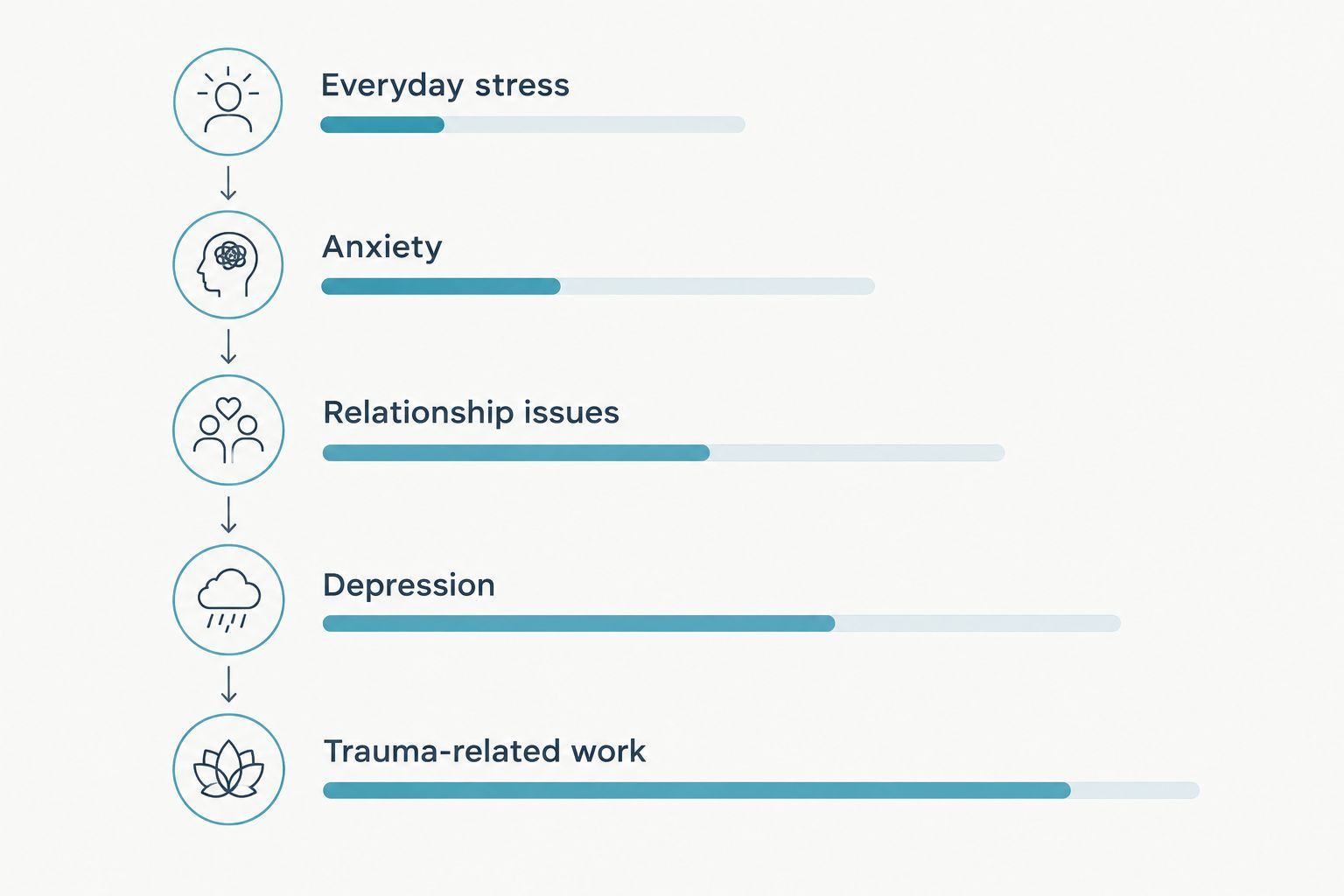
There's no universal number, but clinical practice generally clusters around these ranges depending on what you're working through:
| Concern | Typical session range | What "results" usually looks like |
|---|---|---|
| Everyday stress or a single life event | 4-6 sessions | Clearer thinking, coping tools you can use immediately |
| Generalized anxiety | 8-12 sessions | Fewer physical symptoms, better sleep, less avoidance |
| Depression | 12-20 sessions | Improved mood, energy, and daily functioning |
| Relationship or couples issues | 8-12 sessions | Better communication patterns, reduced conflict frequency |
| Trauma or PTSD-related work | 15-20+ sessions | Reduced distress around triggers, more stability |
These ranges come from how structured therapy models (like CBT) are typically designed, not from a guarantee tied to any individual case. Some people feel a shift in 3 sessions; others need 30. Both are normal.
Everyday stress: 4-6 sessions
Four to six sessions is often enough for a specific stressor — a job change, an exam, a breakup — where the goal is coping skills rather than long-term pattern change. Verdict: proceed with short-term, goal-focused sessions and reassess at session 4.
Anxiety: 8-12 sessions
Eight to twelve sessions is the common range clinicians report for generalized anxiety, especially with structured approaches that build skills week over week. Progress usually shows up gradually — less time spent worrying, easier sleep, fewer avoided situations. Verdict: commit to at least 8 weekly sessions before judging whether it's working.
Depression: 12-20 sessions
Twelve to twenty sessions is the range most often cited for depression, since mood and motivation tend to shift slower than anxiety symptoms. Someone with more severe or longer-standing depression should expect the higher end of that range, sometimes with ongoing maintenance sessions after. Verdict: plan for a 3-5 month commitment, not a quick fix.
Trauma-related work: 15-20+ sessions
Fifteen to twenty or more sessions is typical when trauma is part of the picture, because trauma-focused approaches build safety and stabilization before addressing the event itself. Rushing this stage tends to backfire, which is part of why trauma therapy runs longer than general counseling. Verdict: expect a longer timeline and don't compare it to a friend's 6-session anxiety plan.
Why the number varies so much
- Severity — mild stress resolves faster than chronic depression or complex trauma
- Consistency — weekly sessions build momentum; monthly sessions stretch the same work over a much longer calendar
- Fit with the therapist — switching therapists partway through often means restarting the relationship-building phase
- Life stressors that keep piling on — new problems during treatment can extend the timeline regardless of progress already made
- The goal itself — crisis stabilization is quicker than working toward long-term personality or relationship change
- How much work happens outside sessions — practicing coping tools between sessions speeds things up noticeably
Is one therapy session enough to help?
One session is rarely enough to resolve a concern, though it can help you feel heard and give you a first coping tool to try immediately. Think of session one as an assessment and a starting point, not the treatment itself — most people need at least 4 sessions before drawing conclusions.
How often should you go to therapy each week?
Weekly sessions are the standard pace for most concerns, since it keeps momentum between conversations without letting too much time pass. Some people move to biweekly sessions once initial progress is made, while acute crises sometimes call for twice-weekly sessions in the first few weeks.
What happens if you stop therapy too early?
Stopping too early usually means the initial relief fades once the stressor that prompted the first session resurfaces or a new one appears. It's not a failure to pause therapy, but going in expecting a handful of sessions to fully resolve depression or trauma sets up disappointment that isn't really about whether therapy "worked."
On InnerSpark Africa, licensed therapists in Uganda, Kenya and Tanzania are available by video, voice or chat, and sessions start at UGX 30,000 with Mobile Money or card payment — useful to know when budgeting for a multi-session plan rather than a single visit. You can review current therapy costs in Uganda for 2026 before committing to a weekly schedule.
Book a licensed therapist today
Sessions from UGX 30,000, bookable in about two minutes.
FAQ
How many therapy sessions do you need to see results in 2026?
Most people notice change within 6 to 8 weekly sessions, with fuller results for depression or trauma often taking 12 to 20 sessions. The range depends heavily on what you're working through and how consistently you attend.
How many sessions does it take for anxiety to improve?
Anxiety often improves within 8 to 12 weekly sessions, based on common clinical practice ranges. Sleep and avoidance behaviors are usually among the first things to shift.
Is therapy still worth it if you can only afford a few sessions?
Yes — even 3 to 4 sessions can teach coping tools for a specific stressor, though ongoing concerns like depression usually need more. Sessions on InnerSpark Africa start from UGX 30,000, which makes a short course of sessions realistic on most budgets.
How long should couples therapy take?
Couples counseling typically runs 8 to 12 sessions to see a shift in communication patterns. Longstanding conflict usually needs the higher end of that range.
Can trauma be resolved in just a few sessions?
No — trauma-focused therapy typically needs 15 to 20 or more sessions because early sessions focus on stabilization before addressing the trauma directly. Rushing this stage tends to slow overall progress.
How do you know therapy is working?
You'll usually notice small, specific changes first — sleeping better, reacting less intensely, using a coping tool without thinking about it. Broader mood or relationship shifts tend to show up later, often around the 8-session mark.
Do online therapy sessions take longer to show results than in-person sessions?
There's no established difference — video, voice and chat sessions follow the same general timelines as in-person therapy. What matters more is consistency and fit with the therapist, not the format.
What if you don't feel a connection with your therapist after a few sessions?
It's reasonable to switch therapists if the fit isn't right after 2 to 3 sessions, since rapport strongly affects outcomes. Switching platforms like InnerSpark Africa often makes this easier since multiple licensed therapists are available.
One last thing
The most overlooked factor in "how many sessions do I need" isn't the diagnosis — it's the gap between sessions. Someone attending weekly for 8 weeks in 2026 will typically see more change than someone attending the same 8 sessions spread across 6 months, because momentum decays between visits. If budget or schedule is the barrier, book a shorter, more frequent block first and reassess, rather than stretching a handful of sessions thin over a year.