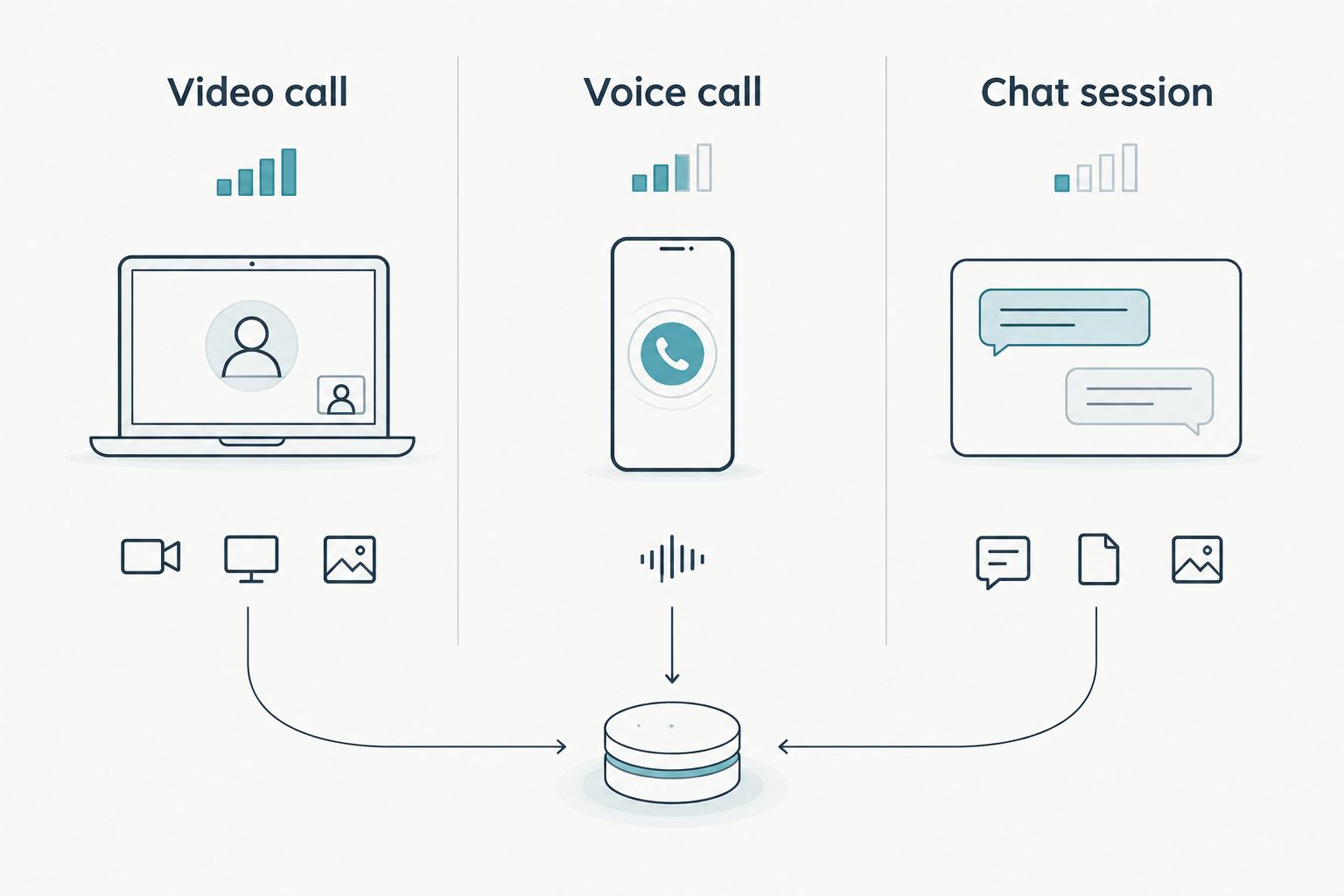
A one-hour video therapy session on InnerSpark Africa uses about 400MB of mobile data on average, ranging from 250MB on standard definition to over 1GB on HD, based on published data-usage figures for common video-calling platforms in 2026. Switching to a voice-only or chat session cuts that usage dramatically — voice calls run closer to 30-50MB an hour, and a full chat conversation with your therapist can use under 5MB.
That gap matters if you're booking a licensed therapist through InnerSpark Africa on a limited data bundle, because a single video session can eat through a big chunk of a small daily plan.
- A standard-quality video therapy session uses roughly 250-500MB per hour in 2026.
- HD video calls can push past 1GB per hour on a strong WiFi or 4G connection.
- Voice-only sessions use about 30-50MB per hour — a fraction of video.
- Text and chat therapy on InnerSpark Africa uses only a few megabytes per session.
- Switching video off mid-call instantly drops data use without ending the session.
Why this matters
Mobile data is expensive relative to income across Uganda, Kenya and Tanzania, and a lot of people booking therapy do it from a phone on a prepaid bundle, not unlimited home WiFi. Knowing roughly how much data a session eats before you start means you're not staring at a "low data" warning ten minutes into a hard conversation.
InnerSpark Africa offers video, voice and chat therapy specifically because not everyone has the same connection or the same budget for data. Picking the right format upfront is a practical decision, not just a comfort one.
How much data does video therapy use?
The honest answer depends on video quality, camera settings and how stable your connection is. Here's how the three session formats compare on data use per hour:
| Session type | Approx. data use per hour | Best for |
|---|---|---|
| Video (standard quality) | 250-500MB | Decent 4G or home WiFi |
| Video (HD) | 600MB-1GB+ | Strong WiFi, unlimited plans |
| Voice call | 30-50MB | Limited data bundles |
| Text/chat | Under 5MB total | Very limited or unstable data |
If your connection is shaky, most video calling technology automatically drops resolution to keep the call running smoothly, which lowers data use without you having to change anything. That's a built-in safeguard, not a failure of the call.
Video sessions: 250MB to 1GB per hour
Video therapy uses the most data of the three formats because it's constantly transmitting both audio and a moving image. On standard definition, expect 250-500MB for a typical hour-long session in 2026; on HD, that climbs toward 600MB-1GB or more, especially on WiFi where nothing throttles the resolution automatically. If your goal is to see your therapist's face and body language, video is worth the extra data — but it's the format to avoid if your bundle is nearly out.
Voice sessions: 30MB to 50MB per hour
Dropping video and keeping audio-only cuts data use to roughly a tenth of video calling. A one-hour voice therapy session uses about 30-50MB, which fits comfortably into most small daily data bundles sold in Uganda, Kenya and Tanzania. Voice therapy through InnerSpark Africa still connects you with the same licensed therapist — you just skip the camera.
Chat sessions: under 5MB per session
Text-based chat therapy is the lightest option by a wide margin. A full chat conversation typically uses under 5MB, since it's just text transmitting back and forth rather than continuous audio or video. For someone on a near-empty bundle, chat therapy is often the only realistic way to talk to a therapist that same day.
Why data use varies session to session
A few factors push the numbers above up or down:
- Video resolution settings — HD uses two to three times more data than standard definition for the same call length.
- Network type — 3G connections often force lower resolution automatically, which lowers data use compared to fast 4G or WiFi.
- Session length — a 30-minute check-in uses roughly half the data of a full hour-long session, scaled linearly.
- Camera on vs. off mid-call — switching your camera off during a video session (while keeping audio) drops usage close to voice-call levels for that stretch.
- Background apps — other apps syncing or updating in the background on your phone add to total data use during the call, separate from the session itself.
- Call stability — a call that keeps dropping and reconnecting can use more data overall than one smooth uninterrupted session, because reconnecting resends data.
Related questions
Does voice therapy use less data than video therapy?
Yes, voice therapy uses far less data than video — roughly 30-50MB per hour compared to 250MB-1GB for video over the same length call. If your priority is stretching a small data bundle, voice-only sessions are the more practical choice without losing access to your therapist.
Can I do a therapy session on a small data bundle?
Yes, chat or voice therapy work well on a small data bundle, since chat typically uses under 5MB per session and voice uses only 30-50MB per hour. Save video for days when you're on WiFi or have a larger bundle loaded.
What happens if my data runs out mid-session?
If your data runs out mid-session, the call will drop, but on InnerSpark Africa you can reconnect with your therapist by switching to a lighter format like voice or chat once you've topped up. Letting your therapist know in advance that your connection is unreliable also helps them plan the session around possible interruptions.
FAQ
How much data does a one-hour video therapy session use?
A one-hour video therapy session uses roughly 250-500MB on standard quality in 2026, rising past 1GB on HD. Actual use depends on your network type and whether your camera stays on the whole time.
Is voice therapy cheaper on data than video therapy?
Yes, voice therapy uses about 30-50MB per hour compared to 250MB-1GB for video over the same length call. It's the better option when your data bundle is limited.
Does chat therapy use data at all?
Chat therapy uses data, but very little — typically under 5MB for a full session. It's the lightest option of the three formats InnerSpark Africa offers.
Can I switch from video to voice mid-session to save data?
Yes, turning your camera off mid-call while keeping audio running drops your data use close to voice-call levels for the rest of that session.
Does a slow connection use more or less data during a video call?
A slow connection often uses less data because most video calling technology automatically lowers resolution when bandwidth is limited. It may also cause the call to drop and reconnect, which can offset some of that saving.
Is WiFi better than mobile data for video therapy?
WiFi is generally more stable for video therapy and won't count against a mobile data bundle, though the session itself still uses the same 250MB-1GB of data per hour on the network it's using.
What format should I choose if I have almost no data left?
Chat therapy is the best choice with almost no data left, since a full session typically uses under 5MB. Voice is the next best option if you'd rather talk than type.
Book a licensed therapist today
Choose video, voice or chat based on your data and connection.
One last thing
The format that uses the least data — chat — is also the one people underestimate for depth. A written conversation with a licensed therapist can cover just as much ground as a video call; it just moves at a different pace, and it's the format that keeps working when your data bundle doesn't.