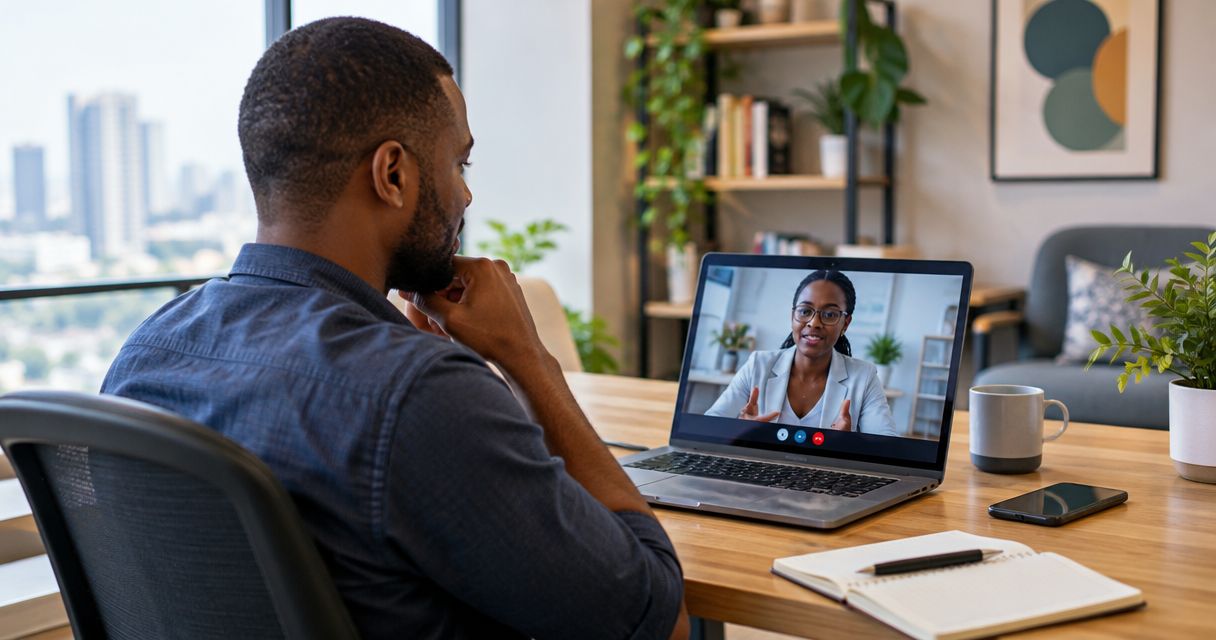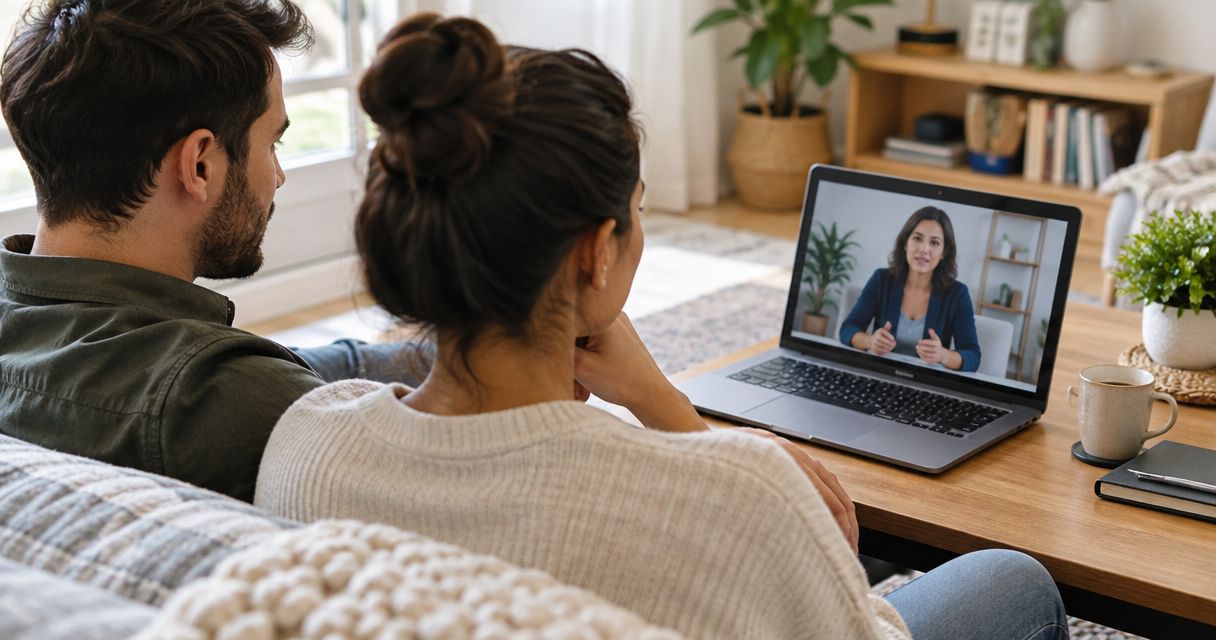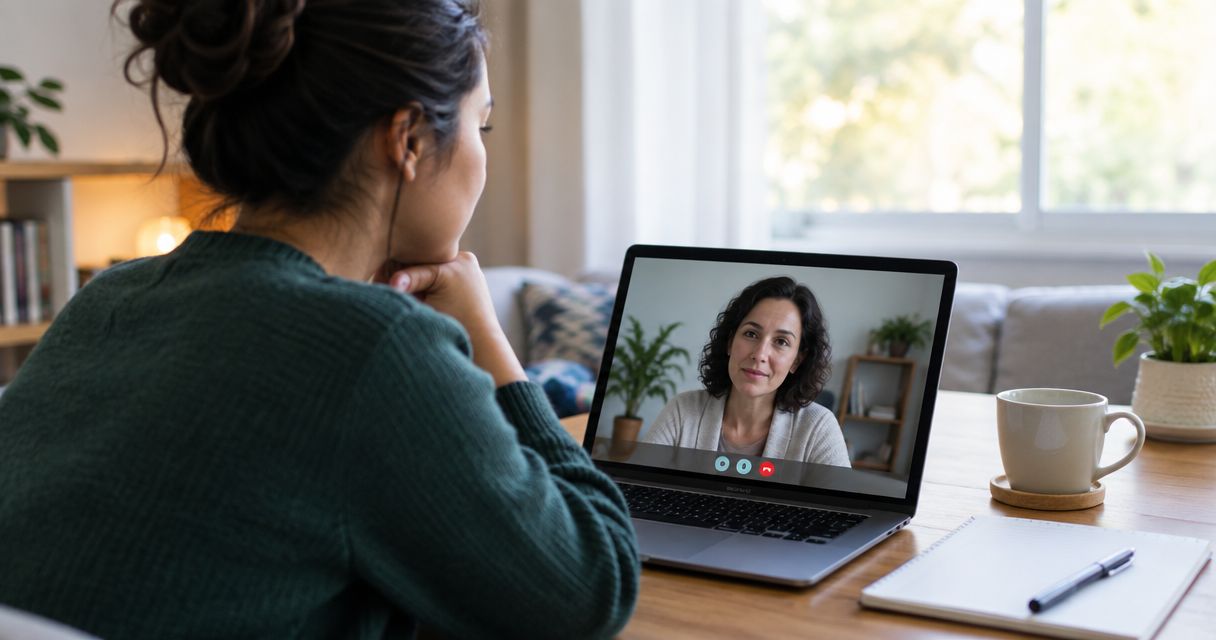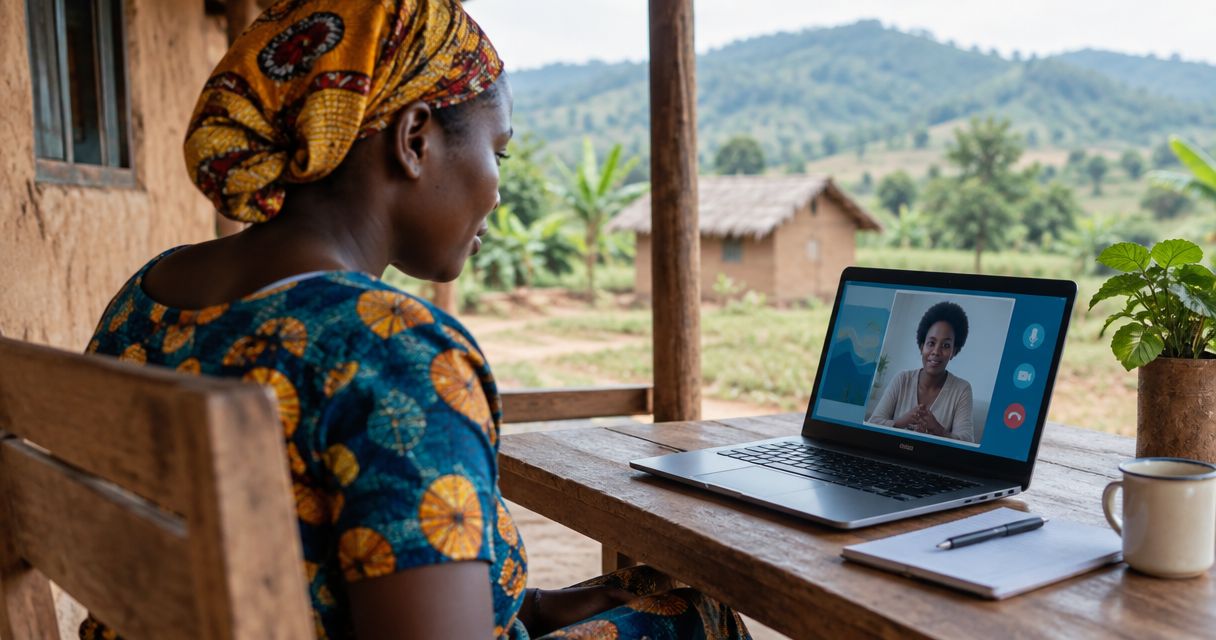
If your internet connection drops in and out, you can still get online therapy in rural Uganda — chat and voice sessions work reliably on 2G and 3G, and InnerSpark Africa's licensed therapists are used to picking up where a call cuts off. Video is the option that struggles most; if your network can't hold a stable video call, switch to voice or text-based chat therapy instead, both of which cost the same starting from UGX 30,000 per session in 2026.
- Online therapy rural Uganda slow internet works best through chat or voice sessions, not video, when networks are unstable.
- InnerSpark Africa's licensed therapists offer video, voice or chat starting from UGX 30,000 in 2026.
- Chat therapy needs the least data and keeps working through 2G dips and network drops.
- Sessions are bookable in about two minutes and paid for with Mobile Money or card.
Why this matters
Most districts outside Kampala, Mbarara and Gulu still run on inconsistent 3G, and rural connections drop mid-call more often than urban ones. That's not a reason to skip therapy — it's a reason to pick the right session type. A therapist who can't see your face over a shaky video feed can still hear you clearly on voice, or read every word you type in chat.
InnerSpark Africa built its platform around this reality rather than around city-grade connectivity. Licensed Ugandan therapists on the platform run sessions through whichever format survives your local network best, and switching formats mid-treatment doesn't cost anything extra or require a new booking.
Can you do online therapy in rural Uganda with slow internet?
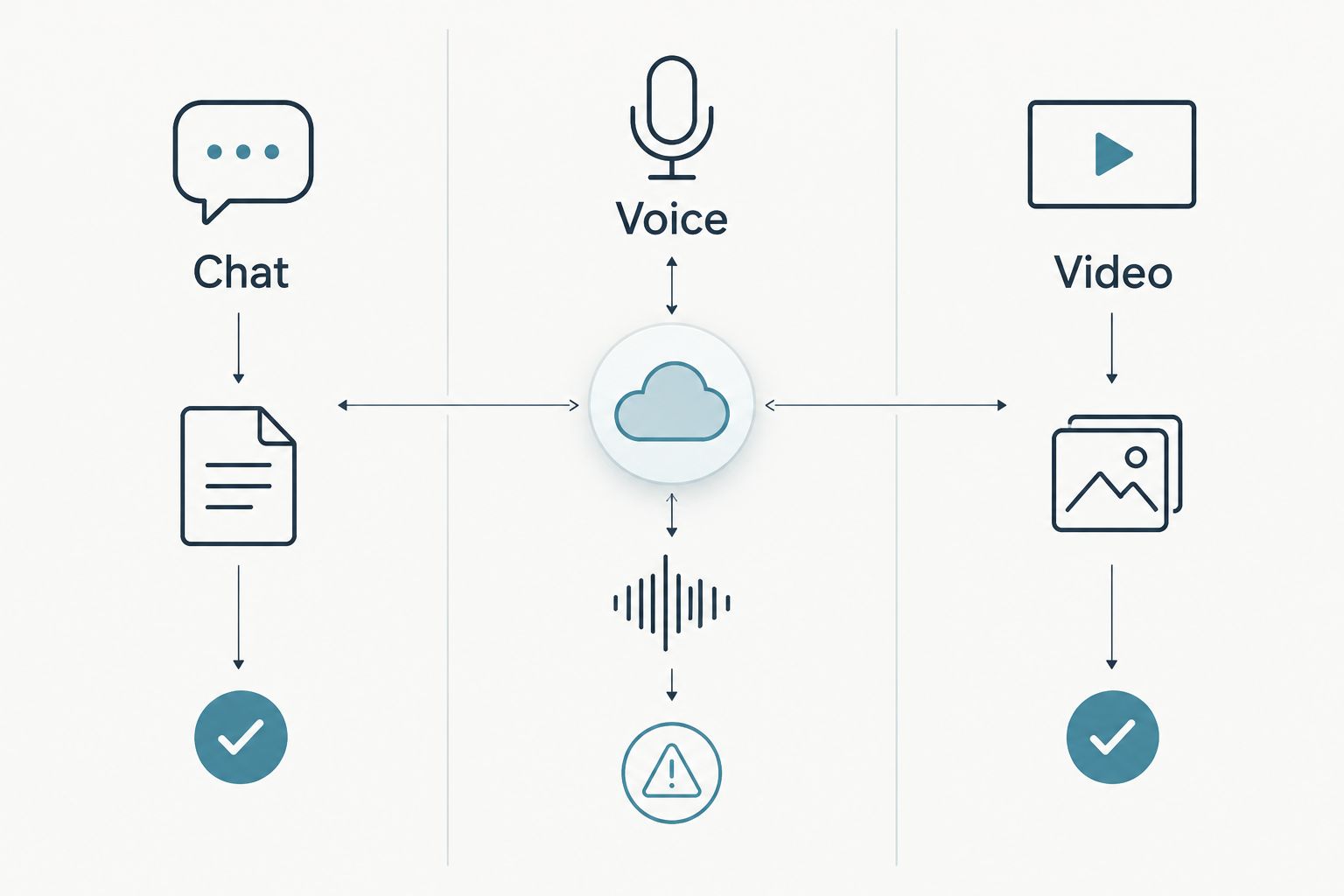
Yes — the format you choose matters more than your connection speed. Here's how the three session types compare on a weak or rural network:
| Format | Data needed | Works on 2G | Best for |
|---|---|---|---|
| Chat | Lowest — text only | Yes | Areas with frequent drops or no data bundle beyond basic browsing |
| Voice | Low — no video stream | Mostly | Stable-ish 3G with occasional lag |
| Video | Highest — live video stream | Rarely | Reliable 4G or Wi-Fi, town centers |
If a session keeps freezing, the fix isn't to give up on the call — it's to drop down a format. A therapist on InnerSpark Africa can move you from video to voice mid-session without rescheduling, and voice to chat works the same way if the network gets worse.
Chat therapy: from UGX 30,000, the most reliable option on weak networks
Chat sessions use the least data of any format because there's no audio or video stream to carry — just text going back and forth in real time. This makes chat therapy the most dependable choice if you're in an area where a data bundle only reliably loads WhatsApp and basic pages.
It also means the session doesn't collapse if your connection drops for thirty seconds — messages queue and send once the connection returns, and your therapist waits for you rather than losing the thread of the conversation. Sessions on InnerSpark Africa start from UGX 30,000 regardless of format, so choosing chat over video isn't a downgrade in access to a licensed therapist, just a change in how you communicate.
Voice therapy: from UGX 30,000, a middle ground for patchy 3G
Voice calls need far less bandwidth than video since there's no image to transmit, which makes them the practical choice when your network can hold a phone call but chokes on anything heavier. Many people in rural Uganda find voice therapy the most natural format anyway — it feels closer to a phone conversation with someone you trust than a formal video appointment.
If your voice call breaks up occasionally, that's usually a sign to drop to chat rather than push through a frustrating session. Voice sessions on InnerSpark Africa also start from UGX 30,000 and are booked the same way as video or chat.
Video therapy: from UGX 30,000, best where the network can support it
Video gives you facial expression and body language, which some people — and some therapists — find helps a session move faster, especially for a first appointment. It's also the format most affected by rural connectivity, since a live video stream needs a stronger and steadier signal than either voice or chat.
If you're in a trading center with decent 4G or near a Wi-Fi hotspot, video is worth trying first. If it stutters more than once or twice in a session, switching to voice keeps the appointment productive instead of spending the time troubleshooting a frozen screen.
![therapy session on a phone in a rural setting]
Why connectivity issues in rural Uganda vary so much
A handful of factors decide how well a given session will run before you even open the app:
- Network generation — many rural areas sit on 2G or patchy 3G, while district towns and Kampala suburbs often have 4G.
- Time of day — evening hours see network congestion spike as more people come online after work.
- Weather — heavy rain during Uganda's wet seasons can disrupt tower signal in some regions.
- Device and data bundle — a basic smartphone with a small data bundle handles chat easily but struggles with sustained video.
- Physical location — proximity to a cell tower matters more in rural districts than in cities with dense coverage.
- Background app usage — other apps pulling data in the background can slow down a therapy session without you realizing it.
None of these are things you control on the spot, which is exactly why choosing chat or voice over video is the more reliable fix than waiting for better network conditions.
“If video keeps freezing, the answer isn't a better signal — it's a lighter format.”
What if my session disconnects halfway through?
If a session disconnects, you can reconnect and continue from where you left off rather than losing the appointment entirely. Licensed therapists on InnerSpark Africa are used to network interruptions and will pick the conversation back up instead of restarting it, and switching to voice or chat after a dropped video call is a normal adjustment, not a failure of the session.
Does chat therapy work as well as video therapy?
Chat therapy works well for many people, especially for ongoing check-ins rather than a first assessment — some clients even prefer writing things out because it gives them time to think before responding. It's not a lesser version of therapy, just a different format, and licensed therapists are trained to work effectively through text.
How do I pay for online therapy if I don't have a bank card?
You can pay with Mobile Money, which is the payment method most people across Uganda already use day to day, alongside card payment for anyone who has one. Sessions on InnerSpark Africa are bookable in about two minutes once payment goes through, so there's no drawn-out signup process standing between you and a licensed therapist.
Booking a session that fits your connection doesn't require guessing — pick chat or voice from the start if you know your area has weak service, and switch formats later if things improve.
Book a licensed therapist today
Chat, voice or video sessions from UGX 30,000, bookable in about two minutes.
FAQ
Is online therapy possible in rural Uganda with slow internet?
Yes — chat and voice therapy sessions work reliably on 2G and weak 3G, even when video calls struggle. InnerSpark Africa's licensed therapists run sessions in whichever format holds up best on your connection.
What's the best therapy format for a weak network?
Chat therapy is the best option for a weak network because it uses the least data and keeps working through connection drops. Voice is a solid middle ground if your network can hold a phone call.
How much does online therapy cost in Uganda in 2026?
Online therapy on InnerSpark Africa starts from UGX 30,000 per session in 2026, whether you choose video, voice or chat. Payment is accepted through Mobile Money or card.
Can I switch from video to chat mid-session?
Yes, you can switch formats mid-session if your video call keeps freezing, and your therapist will continue the conversation without needing a new booking. This is common practice on InnerSpark Africa for clients on rural networks.
Do I need a smartphone for online therapy in rural areas?
A basic smartphone with a small data bundle is enough for chat or voice therapy, though video sessions need a stronger connection. Chat is the most accessible format for lower-end devices and limited data.
Are therapists on InnerSpark Africa licensed?
Yes, therapists available through InnerSpark Africa are licensed and understand local languages and context across Uganda, Kenya and Tanzania. Sessions are confidential and judgement-free regardless of the format you choose.
How long does it take to book a session?
Booking a session on InnerSpark Africa takes about two minutes once you've chosen a therapist and payment method. There's no lengthy signup process before you can start.
One last thing
The biggest mistake people in rural Uganda make with online therapy isn't giving up on a bad connection — it's sticking with video when chat or voice would have worked from the first minute. If you already know your area has weak network coverage, start with chat or voice rather than testing video first and getting frustrated.