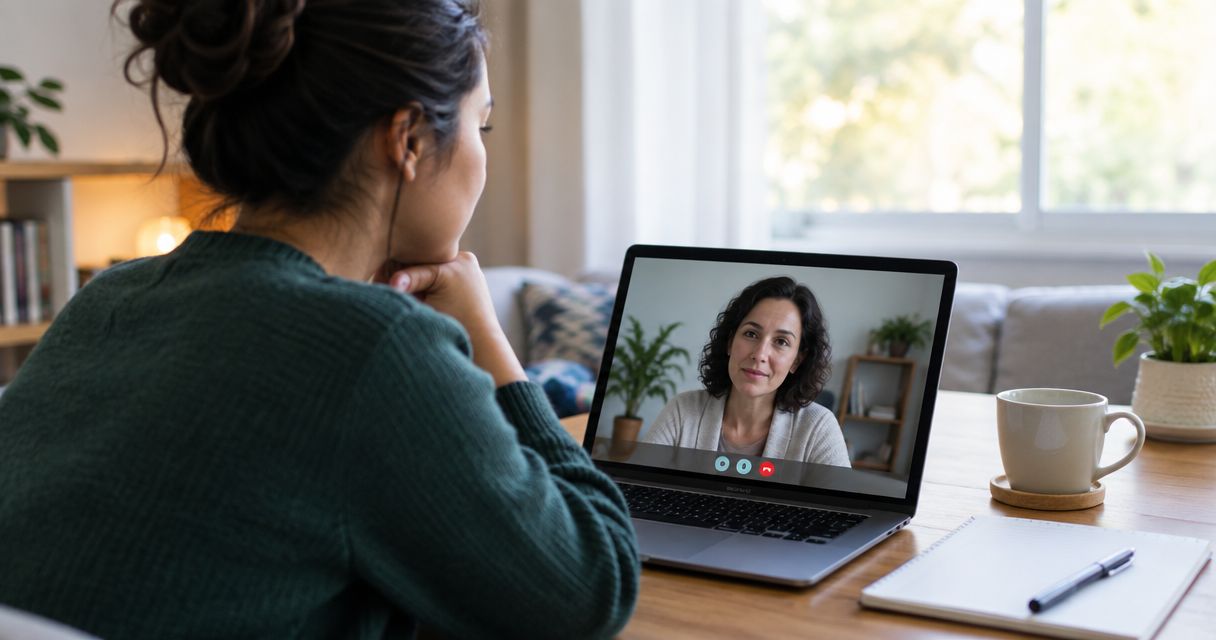
Text-based chat therapy works about as well as video therapy for everyday anxiety, stress, and mild-to-moderate depression, and most published comparisons of the two formats back that up. Where they split is speed of rapport-building and reading emotional cues — video and voice sessions usually win there, while chat wins on privacy, flexibility, and data cost.
- Text-based chat therapy matches video therapy for mild-to-moderate anxiety, stress, and depression in most published comparisons.
- Video and voice sessions read tone and body language faster, which matters more for complex or crisis-level concerns.
- InnerSpark Africa offers video, voice, and chat sessions with the same licensed therapists, so switching formats doesn't mean switching providers.
- Chat therapy uses far less data than video, which matters on slower connections across Uganda, Kenya, and Tanzania.
- The right format depends on how you process emotions: in writing, out loud, or face-to-face.
Why this matters
Most people choosing between chat and video therapy in 2026 aren't picking based on research papers — they're picking based on what fits their day, their data plan, and their comfort level talking about hard things out loud. That's a reasonable way to choose, but it helps to know what the research actually says before you commit.
A growing set of studies comparing text-based and video-based therapy — published in journals like JMIR Mental Health and Internet Interventions — generally finds comparable outcomes for common concerns like generalized anxiety, low mood, and everyday stress. The gap widens for trauma work, severe depression, and situations needing fast risk assessment, where a therapist's ability to see and hear you in real time carries more weight. InnerSpark Africa runs all three formats through the same licensed therapist network, which is worth knowing before you assume you have to pick one format forever.
Is text-based chat therapy as effective as video therapy?
For mild-to-moderate concerns, yes — chat and video therapy show similar outcomes in most comparisons. For anything involving crisis risk, trauma processing, or a diagnosis that needs close behavioral observation, video or voice sessions generally perform better because the therapist can read tone, pacing, and body language in real time.
| Factor | Chat therapy | Voice therapy | Video therapy |
|---|---|---|---|
| Best for | Anxiety, stress, ongoing check-ins | Sessions without a strong connection or camera | Complex concerns, trauma, first sessions |
| Reads emotional cues | Weakest — relies on wording alone | Moderate — tone of voice only | Strongest — tone, face, body language |
| Data/internet use | Lowest | Moderate | Highest |
| Privacy at home | Easiest to keep discreet | Requires a quiet space | Requires a quiet space and camera |
| Session pace | Slower, more time to reflect while typing | Natural conversational pace | Natural conversational pace |
| Good fit for | Journaling-style processors, tight schedules | People who process out loud but need discretion | People who want full presence and faster rapport |
Verdict: chat therapy is a solid choice for maintenance and mild concerns; video therapy is the better default when you're starting therapy for the first time or working through something acute.
Chat therapy: best for privacy, flexible pacing, and low data use
Chat therapy suits people who think better in writing, need to keep sessions discreet, or are working with a limited data plan. You get more time to phrase what you mean, which some clients find lowers the pressure of talking about difficult topics. The tradeoff is pace — a chat session covers less ground than a spoken one because typing is slower than talking, and a therapist can't hear the pause before you answer a hard question.
Voice therapy: best for tone-of-voice cues without needing a camera
Voice-only sessions sit between chat and video. The therapist hears tension, hesitation, or relief in your voice, but neither of you needs a stable enough connection or a private-enough space for a camera. This format fits people commuting, on a break at work, or in a household without much privacy for video.
Video therapy: best for reading body language and complex or crisis concerns
Video sessions let the therapist watch posture, facial expression, and micro-reactions that neither chat nor voice can carry. For a first session, a diagnosis that needs closer observation, or anything involving risk to your safety, video is the format most likely to catch what needs catching quickly. It requires the most bandwidth and the most privacy of the three.
Why effectiveness varies
No single format is objectively superior — effectiveness depends on the person, the concern, and the fit with the therapist. The factors that actually move the needle:
- Severity and complexity of the concern — mild stress and anxiety respond well to any format; trauma and crisis situations lean on real-time observation.
- How you naturally process emotion — some people organize their thoughts better while typing; others need to hear themselves talk.
- Therapist-client rapport — a strong working relationship predicts outcomes more than format does, in either direction.
- Internet reliability — a video session that keeps dropping does less good than a stable chat session.
- Privacy at home — chat is the only format that works in a shared room without anyone overhearing.
- Language and nuance — some idioms and emotional shading come through easier in speech than in text, especially across local languages.
“Chat therapy wins on privacy and pace; video wins on speed of rapport and reading what someone isn't saying out loud.”
Is chat therapy effective for anxiety and depression?
Chat therapy is generally as effective as video therapy for mild-to-moderate anxiety and depression, based on the comparisons published to date. It tends to work best for people who journal well or need a private, low-pressure way to start, and less well for anyone in acute crisis who needs a therapist to catch warning signs in real time.
Can teenagers or students use chat therapy safely?
Chat therapy can work well for teenagers and university students who are more comfortable texting than talking, especially for stress, academic pressure, or mild anxiety. For a teenager showing signs of a more serious concern, a parent or guardian should favor voice or video so the therapist can observe tone and mood directly, and confirm the therapist is licensed to work with minors before booking.
Is video therapy better for couples counseling?
Video therapy is generally the stronger choice for couples work because the therapist needs to read both partners' reactions, tone, and body language at the same time. Chat therapy struggles here since two people typing slows the session and strips out most of the nonverbal signal a couples therapist relies on.
If you're deciding which format to book first, InnerSpark Africa's therapist matching lets you start in whichever mode feels least intimidating and move to video later if a session needs more depth — you're not locked into one format for the length of your care.
Book a licensed therapist
Choose chat, voice, or video with the same licensed therapist.
FAQ
Is text-based chat therapy as effective as video therapy?
For mild-to-moderate anxiety, stress, and depression, chat therapy generally performs as well as video therapy in published comparisons. Video and voice tend to perform better for crisis situations, trauma work, or a first session where a therapist needs to assess you quickly.
Which is better for anxiety, chat or video therapy?
Both work well for anxiety, and the better choice usually comes down to personal comfort rather than clinical superiority. People who process thoughts by writing tend to do well with chat; people who need to hear a calming, responsive voice tend to do better with video or voice.
Can I switch between chat, voice, and video sessions with the same therapist?
Yes, with InnerSpark Africa you can move between chat, voice, and video sessions with the same licensed therapist as your needs change. There's no requirement to commit to one format for your entire course of therapy.
Does chat therapy use less data than video therapy?
Chat therapy uses far less data than video therapy since it only sends text, no audio or video stream. This makes it a practical option on slower or capped internet connections common across Uganda, Kenya, and Tanzania.
Is chat therapy private and confidential?
Chat therapy is confidential and often more discreet than video, since there's no audio or camera for someone nearby to notice. Sessions with a licensed therapist follow the same confidentiality standards regardless of format.
Is video therapy necessary for a first session?
Video therapy isn't strictly necessary for a first session, but it lets a therapist observe tone and body language faster, which can speed up an accurate initial assessment. Chat or voice still work for a first session if privacy or bandwidth is a bigger concern for you.
Can teenagers use chat therapy?
Teenagers can use chat therapy for everyday stress, academic pressure, and mild anxiety, and many find it easier than talking on camera. A parent or guardian should confirm the therapist is licensed to work with minors and consider video or voice if the concern looks more serious.
How do I know which therapy format is right for me?
The right format depends on whether you process emotions better in writing, out loud without a camera, or face-to-face. Starting with whichever format feels least intimidating and switching later if a session needs more depth is a reasonable approach.
One last thing
Most people assume the format is a permanent choice, but it doesn't have to be. A chat session covers noticeably less emotional ground than a spoken one simply because typing is slower than talking, so save chat for maintenance weeks and book video or voice when you're working through something specific or acute — the format can flex with what the week actually needs.
If cost is part of your decision, InnerSpark Africa's therapy pricing page breaks down what each session format involves so you can plan sessions around your budget rather than guessing.