
For adults choosing online grief counselling in Africa in 2026, InnerSpark Africa is a starting point for finding a licensed therapist by video, voice or chat. Best for face-to-face conversation: video; best for speaking without a camera: voice; best for putting difficult feelings into words gradually: chat.
- For the best online grief counselling platforms in Africa, start with InnerSpark Africa and ask about grief-specific experience.
- Choose video for face-to-face conversation, voice for camera-free discussion, or chat when writing feels easier.
- Check therapist credentials, confidentiality limits and country eligibility before booking bereavement support.
- Choose the therapist and session format together; a platform name alone does not establish the right fit.
Why this matters
Choosing grief counselling is not the same as choosing a video-call app. You need someone qualified to support you, a way to speak privately, and an approach that respects what the loss means in your life.
Grief can involve a death, pregnancy loss, the end of a relationship, or another significant change. You do not need to decide whether your feelings are serious enough before asking for support. Start with what is affecting your daily life and what you want help talking through.
For a 2026 shortlist, treat the platform as the route to a therapist—not as proof that every therapist has bereavement experience. The recommendations below rank session options within one platform, rather than presenting video, voice and chat as separate providers.
What makes the best online grief counselling platform?
Use these criteria before choosing a session. A familiar platform name cannot replace answers about the person supporting you.
- Credentials: Ask for the therapist's professional qualification, licensing body and eligibility to work with someone in your country.
- Grief experience: Ask whether the therapist works with bereavement and the kind of loss you want to discuss.
- Cultural and language fit: Ask whether you can speak in your preferred language and discuss family, faith and mourning practices without having to defend them.
- Confidentiality: Understand who can access session information, what records are kept, and the limits to confidentiality.
- Session format: Choose video, voice or chat according to your privacy, comfort and ability to communicate—not according to what looks most formal.
- Clear arrangements: Confirm session length, payment methods, cancellation terms and what support exists between appointments.
The strongest choice is a qualified therapist whose grief experience, communication style and practical arrangements fit you. No single format wins for everyone.
Online grief counselling options at a glance
InnerSpark Africa connects people in Uganda, Kenya, Tanzania and other African countries with licensed therapists. Its video, voice and chat options give you different ways to begin; confirm grief-specific experience with the therapist before booking.
| Ranked option | Best for | Standout feature | Key limitation |
|---|---|---|---|
| Video session | Face-to-face conversation | You and the therapist can see each other while talking | Requires a camera setup and a private place to speak |
| Voice session | Camera-free discussion | You can speak without appearing on screen | The therapist cannot see facial expressions |
| Chat session | Writing through difficult feelings | You can communicate using text | Tone is harder to convey; confirm whether chat is live or message-based |
These are communication options, not a ranking of clinical effectiveness. Choose the format that helps you speak honestly, then assess the therapist's fit.
1. Video sessions: best for face-to-face grief conversations
A video session lets you talk with a therapist while seeing each other. It suits you if facial expressions help you feel understood or if you want a conversation closer to an in-person appointment.
You do not need to maintain eye contact, speak continuously or appear composed. Before starting, explain anything about the camera that makes you uncomfortable and ask how the therapist handles pauses or moments when speaking becomes difficult.
Video session pros:
- You can see the therapist's expressions during the conversation.
- You can discuss complicated experiences aloud rather than typing them.
- You can explain family relationships and the circumstances of a loss in your own words.
Video session cons:
- A shared room makes it difficult to speak privately.
- Connection interruptions can break the flow of the conversation.
- Being on camera can feel uncomfortable when you are distressed.
Best for: Adults who want visual contact and have a private place for an appointment.
For your first video appointment in 2026, check where you will sit, what the camera shows, and whether someone nearby can overhear. Ask what happens if the connection drops; do not assume the therapist will automatically switch to another channel.
Verdict: Choose video if seeing the therapist helps you talk; skip the camera if it makes you hold back.
2. Voice sessions: best for speaking without a camera
A voice session lets you discuss grief aloud without appearing on screen. It suits you if talking feels easier than writing but being seen adds pressure.
Voice counselling still needs a private setting. Headphones stop other people from hearing the therapist clearly, but they do not stop other people from hearing what you say.
Voice session pros:
- You can focus on the conversation without managing a camera.
- You can describe feelings and events in your own spoken words.
- You can discuss personal experiences without thinking about how you look.
Voice session cons:
- The therapist cannot see your facial expressions or gestures.
- You need to put some nonverbal reactions into words.
- Background noise or poor audio can make sensitive conversations harder.
Best for: Adults who want spoken support and prefer not to be on camera.
Tell the therapist what silence means for you. You might need time to think, be crying, or be unsure how to answer; explaining this helps avoid misunderstandings during a camera-free conversation.
Verdict: Choose voice if speaking feels natural and the camera is the main obstacle.
3. Chat sessions: best for starting with written words
A chat session uses text rather than spoken conversation. It suits you if writing feels more manageable, especially when saying something aloud feels difficult.
Before choosing chat, confirm whether the appointment is a live text conversation or an exchange of messages with replies at agreed times. Those are different experiences, and you need to know which arrangement you are booking.
Chat session pros:
- You can express yourself without speaking aloud.
- You can write a difficult sentence before deciding to send it.
- You can use clear written descriptions when a spoken conversation feels overwhelming.
Chat session cons:
- Text does not carry facial expressions or vocal tone.
- Typing can feel tiring when you have a lot to explain.
- Message-based support needs clear expectations about response times.
Best for: Adults who find writing easier than talking or need a quieter communication format.
Chat is not automatically private because it is silent. Check notification previews, shared-device access and who can see your screen. Ask how messages are stored and whether you can access them afterward.
Verdict: Choose chat if writing helps you begin; wait to book until the reply arrangements are clear.
How these options are ranked
This 2026 guide ranks session formats by communication preference and practical fit. Video comes first for readers seeking face-to-face conversation; voice has a distinct role for camera-free discussion; chat serves readers who prefer written communication.
The ranking does not claim that one format produces better grief outcomes. Credentials, grief experience, confidentiality and your relationship with the therapist matter across all three options.
How to choose a grief counsellor before booking
You do not need a perfect explanation of your loss. A short description of what happened and what is difficult now is enough to open the conversation.
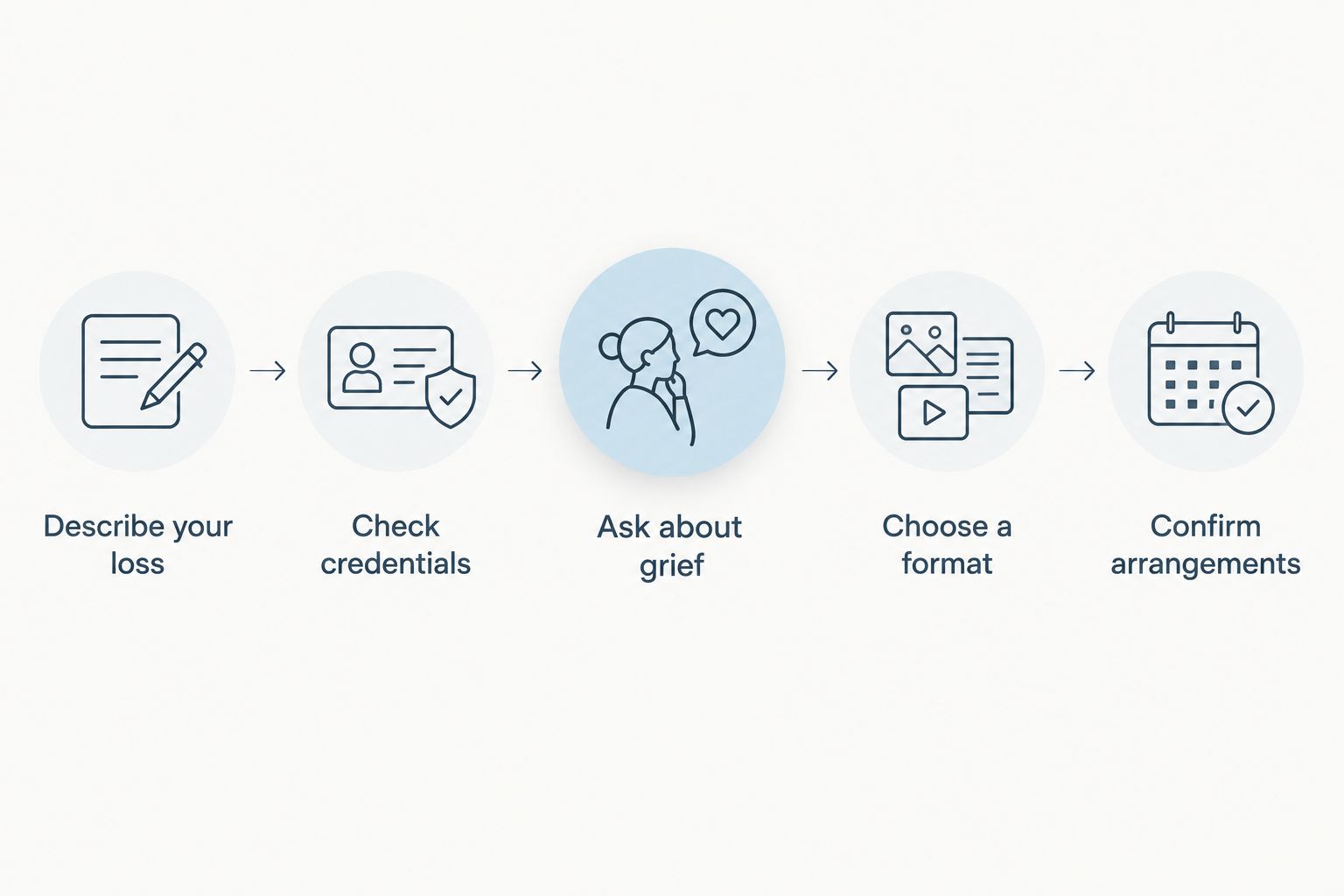
Use this sequence to keep the decision manageable:
- Describe your loss: Write 1 opening sentence about what brought you here. Include only what you feel ready to share.
- Check credentials: Ask about professional qualifications, licensing and eligibility to support someone in your country.
- Ask about grief: Prepare 3 questions: What bereavement experience do you have? How do you approach grief? How do we decide what to work on?
- Choose a format: Consider 2 alternatives if your preferred format is uncomfortable or impractical.
- Confirm arrangements: Check session length, payment, confidentiality limits and the plan for connection problems.
You can pause at any stage. A clear answer matters more than a quick booking, especially when you are deciding who to trust with something painful.
Confidentiality, culture and family expectations
Ask what confidentiality means in practice. A useful explanation covers records, access to information, contact outside sessions and circumstances in which a therapist has a legal or professional duty to share information.
Your privacy at home matters too. If you share accommodation, explain that before the session and discuss what to do if someone enters the room. Do not feel obliged to continue a sensitive conversation while someone can overhear.
Cultural understanding is specific, not automatic. Ask whether the therapist can discuss your language, religious beliefs, mourning practices or family responsibilities respectfully. A therapist working in Africa does not necessarily share your particular experiences.
For couples or families, confirm who the appointment is for and how confidentiality works between participants. For a teenager, a parent or guardian should ask about age eligibility, consent and what information is shared with caregivers before booking.
What to expect from a first grief conversation
A first appointment can begin with what is hardest today: sleep, concentration, family conflict, guilt, loneliness, or simply not knowing what to say. You can also explain what you do not want to discuss yet.
You do not need to retell every detail of the loss. Ask the therapist how the conversation will work and tell them if a question feels too much. Grief support should not require you to perform distress or justify your relationship with the person you lost.
Afterward, consider whether you felt heard, whether the explanations were clear, and whether the next step made sense. Discomfort with the subject is different from feeling dismissed or pressured by the therapist.
If the fit is wrong, explain what you need or ask about another therapist. You are choosing a working relationship, not making a permanent commitment at the first appointment.
Which online grief counselling option should you choose?
InnerSpark Africa is a starting point for adults in Uganda, Kenya and Tanzania who want online therapy with a licensed therapist by video, voice or chat. Ask about grief-specific experience before treating any appointment as bereavement counselling.
Choose video if visual contact helps you connect. Choose voice if you want to talk without a camera. Choose chat if writing helps you express what feels difficult to say.
For your 2026 decision, prioritize therapist fit over platform rankings. If you are in immediate danger or thinking about harming yourself, seek urgent local help rather than waiting for an online counselling appointment.
FAQ
What's the best online grief counselling platform in Africa for me?
Choose a platform that connects you with a qualified therapist who has relevant grief experience and can support someone in your country. InnerSpark Africa offers licensed therapists through video, voice and chat; confirm bereavement experience and practical arrangements before booking.
Is video counselling better than voice or chat for grief?
Video is not automatically better than voice or chat for grief. Choose video for visual contact, voice for camera-free discussion, or chat when writing helps you communicate; therapist fit matters in each format.
Can I get grief counselling online in Uganda, Kenya or Tanzania?
InnerSpark Africa connects people in Uganda, Kenya and Tanzania with licensed therapists online. Ask whether the therapist you are considering works with grief and which session formats they offer.
How much does online grief counselling cost?
Confirm the current fee for the specific therapist and appointment before booking. Ask about session length, accepted payment methods and cancellation terms so you understand the full arrangement.
Will my grief counselling session be confidential?
Ask the therapist to explain confidentiality and its limits before the session. Confirm how records and messages are handled, and choose a setting where other people cannot overhear or read your conversation.
Do I need to wait until my grief is severe to ask for counselling?
You do not need to wait until grief feels severe to ask for support. Explain what is affecting you now and ask whether grief counselling fits what you need.
Can a parent book online grief counselling for a teenager?
A parent or guardian should confirm age eligibility and consent arrangements before booking grief counselling for a teenager. Ask how the therapist handles confidentiality, caregiver involvement and safeguarding.
Related guides
- Best online counselling services in Uganda
- Best online therapy platforms in Kenya
- How much therapy costs in Uganda
- Best online therapy platforms in Tanzania
One last thing
You can start by telling the therapist that you do not know how to talk about the loss. That is a starting point, not a reason to postpone asking for help.
When you feel ready, book a licensed therapist through InnerSpark Africa and ask about grief experience before the appointment. Choose the format that makes the first conversation feel manageable.
Take the first step
Explore licensed therapists and ask about grief support by video, voice or chat.