
Best overall format: licensed video therapy when you have privacy. Best without a camera: licensed voice therapy. Best for written communication: licensed chat therapy. InnerSpark Africa offers all three; for the best online therapy for postpartum depression in Africa in 2026, confirm the therapist’s postpartum experience before booking.
- For the best online therapy for postpartum depression in Africa, choose postpartum experience before session format.
- InnerSpark Africa connects people in Uganda, Kenya, Tanzania and other African countries with licensed therapists.
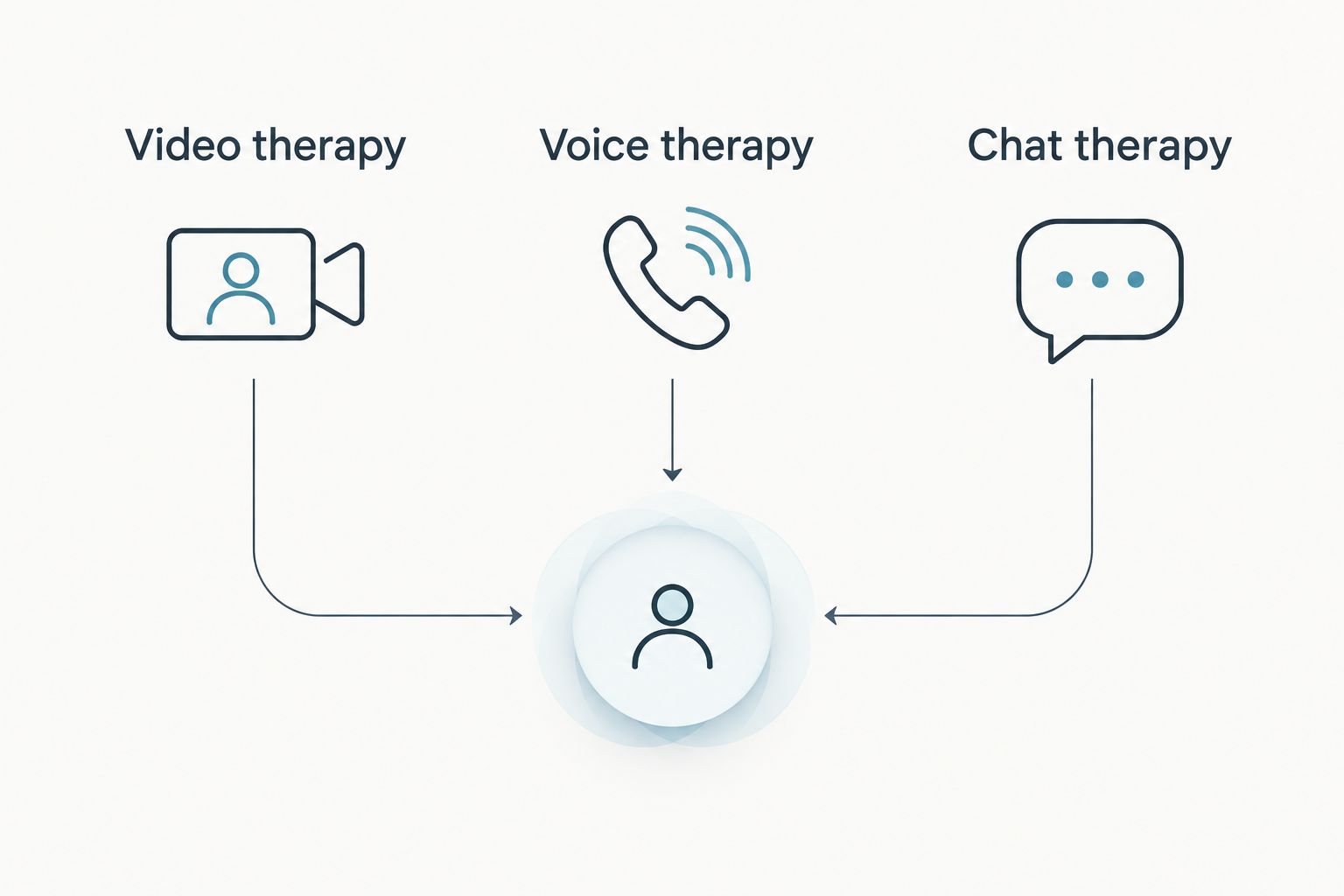
- Video therapy suits face-to-face conversation; voice therapy removes the camera; chat therapy supports written communication.
- Online counselling does not replace emergency care or a medical assessment when symptoms require one.
Why this matters
Postpartum depression deserves professional support, not instructions to be more grateful or try harder. You can love your baby and still feel persistently low, anxious, disconnected or overwhelmed. Asking for help does not make you a bad parent.
InnerSpark Africa is best for parents seeking licensed online therapy in Uganda, Kenya, Tanzania and other African countries. The platform offers video, voice and chat sessions. Those formats provide different ways to talk; they do not establish that every therapist has postpartum-specific experience.
You can start with InnerSpark Africa and ask about a therapist’s experience supporting parents after childbirth. Explain whether you need individual support, help involving a partner, or coordination with a medical professional.
Postpartum depression can occur during the first 12 months after birth, according to the US National Institute of Mental Health’s perinatal depression guidance. The NHS describes baby blues as usually resolving within 2 weeks. Symptoms that persist, worsen or interfere with daily life need assessment; you do not need to wait for a deadline before asking for help.
What makes the best online postpartum therapy?
For your 2026 shortlist, judge the therapist and the care arrangements before judging the platform. These criteria matter more than a polished profile:
- Relevant experience: Ask whether the therapist regularly supports postpartum depression, birth-related distress and adjustment to parenthood. A general counselling background does not answer that question.
- Verifiable credentials: Ask for the therapist’s professional qualification, licensing or registration details, and permission to provide care where you live.
- A workable format: Choose video, voice or chat based on your privacy, connection and communication needs. Convenience should support care, not prevent an adequate assessment.
- Confidentiality explained: Ask who can access messages, how records are handled, and what happens when there is an immediate safety concern.
- Medical coordination: Ask how the therapist refers you for assessment when symptoms need medical attention or medication advice.
- Practical continuity: Confirm follow-up arrangements, local-currency charges and accepted payment methods, including whether Mobile Money or card payment is supported for your booking.
You do not need clinical vocabulary to ask these questions. A useful opening is to say that you recently had a baby, describe what has changed, and ask whether postpartum mental health is part of the therapist’s usual work.
Online postpartum therapy options at a glance
This comparison ranks communication formats, not competing companies or treatment outcomes. InnerSpark Africa offers each format below; suitability still depends on the individual therapist and your needs.
| Option | Best for | Standout feature | Key limitation |
|---|---|---|---|
| Licensed video therapy | Parents who want face-to-face conversation | You and the therapist can see each other while talking | Requires a private setting and a connection that supports video |
| Licensed voice therapy | Parents who prefer speaking without a camera | Spoken conversation without managing an on-screen appearance | The therapist cannot see facial expressions or other visual cues |
| Licensed chat therapy | Parents who communicate more comfortably in writing | You can put difficult experiences into words without speaking aloud | Typing and missing tone can make assessment or clarification harder |
Choose the format you can use honestly and privately, not the format that looks most professional. A camera is not useful if you spend the session worried about someone entering the room.
1. Licensed video therapy: best for face-to-face conversation
Licensed video therapy lets you speak with a therapist while seeing each other. It is the first format to consider when you want face-to-face conversation and have a private place to join. It does not require you to present a tidy room or appear cheerful.
A video session gives the therapist visual information alongside your words. That can support conversation about how you are feeling, but a video call alone does not establish a diagnosis or replace a medical assessment.
Licensed video therapy pros:
- You can see the therapist’s responses while discussing difficult feelings.
- You can speak rather than type through emotionally demanding topics.
- You avoid travelling to a consulting room for the session.
- You can ask directly about the therapist’s approach and follow-up plan.
Licensed video therapy cons:
- An unstable connection can interrupt an important conversation.
- Shared living space can make speaking openly difficult.
- Being on camera can feel uncomfortable when you are exhausted or distressed.
Best for: Parents who value face-to-face contact and can speak privately without frequent interruption.
Before booking, ask what happens if the connection fails or your baby needs you during the session. Confirm whether switching formats is possible rather than assuming it is included.
Verdict: Choose licensed video therapy as the default when privacy, connection and therapist fit are in place.
2. Licensed voice therapy: best for speaking without a camera
Licensed voice therapy lets you talk with a therapist without a video feed. Choose it when speaking feels easier than typing, but being on camera adds discomfort or distraction.
Voice therapy removes the need to manage your appearance or what is visible behind you. It does not remove the need for privacy: someone nearby can still overhear your side of the conversation.
Licensed voice therapy pros:
- You can focus on the conversation rather than the camera.
- You can describe feelings and experiences in your own spoken words.
- You do not need to position a camera or keep yourself in frame.
- You can ask for clarification immediately during the conversation.
Licensed voice therapy cons:
- The therapist cannot use visual cues alongside what you say.
- Interruptions or poor audio can make sensitive details harder to understand.
- A quiet voice does not guarantee privacy in a shared home.
Best for: Parents who want spoken support without the pressure of appearing on screen.
Say clearly when you are finding it hard to explain something. The therapist cannot see that you have started crying, gone quiet because someone entered the room, or become distracted unless you tell them.
Ask how the therapist handles pauses and interruptions. That practical conversation is more useful than assuming a voice session will automatically fit around childcare.
Verdict: Choose licensed voice therapy when the camera is the main barrier to talking openly.
3. Licensed chat therapy: best for written communication
Licensed chat therapy lets you communicate with a therapist in writing. It is a practical option when you find it easier to describe difficult thoughts through text or cannot speak aloud privately.
Do not assume that chat means unlimited messages or immediate replies. Confirm whether your booking is a scheduled conversation, what messaging is included, and how the therapist handles concerns that need spoken assessment.
Licensed chat therapy pros:
- You can describe experiences without speaking aloud.
- Writing gives you space to choose words for sensitive subjects.
- You do not need a camera for the conversation.
Licensed chat therapy cons:
- Tone and meaning can be harder to interpret through text.
- Typing detailed experiences can feel tiring or slow.
- Written messages need protection from shared-device access and visible notifications.
Best for: Parents who communicate more comfortably in writing and understand the session’s response arrangements.
Chat is not a substitute for emergency care. If a therapist recommends a voice, video or medical assessment, ask what that assessment addresses rather than treating a change of format as a failure.
A useful preparation is to write down what has changed since childbirth and what is hardest today. You can use those notes to begin without having to explain everything at once.
Verdict: Choose licensed chat therapy for a clear writing preference; skip it as a crisis-response plan.
How these options are ranked
This 2026 ranking uses communication needs, privacy and assessment practicalities. Video comes first for parents seeking face-to-face conversation; voice earns a separate place for camera-free speaking; chat serves parents who prefer writing.
The order is not a claim that video produces better outcomes for every parent. No comparative treatment results are supplied for these formats. The decisive question is whether a suitably qualified therapist can assess your needs and provide appropriate care through the format you choose.
Postpartum experience outranks format preference. If the available therapist does not have relevant experience, ask for another clinician or a referral rather than choosing solely because the appointment method suits you.
Which online postpartum therapy should you choose?
Start with licensed video therapy if you want face-to-face conversation and can join privately. Choose licensed voice therapy if the camera makes talking harder. Choose licensed chat therapy if writing is your clearest way to communicate.
Then check the individual clinician. A platform’s country coverage does not establish a therapist’s language skills, specialist experience or permission to practise across borders.
For a 2026 booking, ask about:
- Your location: Can the therapist provide care to someone in your country?
- Your language: Can you discuss sensitive experiences in the language you prefer?
- Your circumstances: Does the therapist understand the family, cultural or religious context you want considered?
- Your care needs: What happens if you need medical assessment alongside counselling?
You can bring up pressure from relatives, expectations about motherhood, relationship strain or a distressing birth. You do not have to accept explanations that dismiss your concerns as weakness or a lack of gratitude.
Choose a therapist who answers practical questions clearly. If you feel unable to speak honestly, raise that concern or ask about changing therapists. A first appointment is an opportunity to assess fit, not a commitment to continue regardless of your experience.
When online therapy is not enough
Online therapy is not emergency care. If you feel at immediate risk of harming yourself or your baby, cannot keep yourself or your baby safe, or experience hallucinations, delusions or marked confusion after childbirth, seek urgent in-person medical help.
Contact local emergency services or go to the nearest emergency department. Ask a trusted adult to stay with you and help care for the baby while you get assistance. Do not wait for a therapist’s message reply.
The NHS identifies postpartum psychosis as a medical emergency. Severe confusion, unusual beliefs or hearing or seeing things others do not require urgent assessment, not a routine online booking.
For non-emergency symptoms, tell a qualified healthcare professional if low mood, anxiety or difficulty functioning is continuing. The NHS and National Institute of Mental Health guidance used in this 2026 guide supports assessment and treatment; this article does not diagnose your symptoms.
Medication decisions belong with a qualified prescriber. Tell the clinician if you are breastfeeding and describe any medicines you already take. Do not stop prescribed treatment because of a general article or advice from a messaging group.
Prepare for your first appointment
You do not need a polished story. Write a short note about what has changed, when it began, and what you want help with first. Include sleep difficulties, mood changes, anxiety, birth experiences and existing treatment when relevant.
Before the appointment, check these practical details:
- Private access: Choose a place where you can talk or type without being watched or overheard.
- Childcare support: Ask someone you trust for help if that is possible; otherwise explain your circumstances before the session.
- Connection backup: Ask what happens if the call drops or you cannot reconnect.
- Confidentiality limits: Ask how records, messages and safety concerns are handled.
- Next steps: Ask how follow-up, referrals and between-session contact work.
InnerSpark Africa’s reference information describes booking as possible in about 2 minutes. Treat booking as the administrative step, not the full assessment. Leave room to ask your questions and confirm that the chosen clinician is appropriate for postpartum support.
At the appointment, explain what feels most urgent rather than trying to cover every difficulty. Before you finish, ask what the next step is and what to do if your symptoms worsen before another session.
FAQ
What is the best online therapy for postpartum depression in Africa?
The best choice is a licensed therapist with postpartum experience who can provide care where you live. InnerSpark Africa offers video, voice and chat therapy across Uganda, Kenya, Tanzania and other African countries; confirm the individual therapist’s experience before booking.
Is video therapy better than chat therapy after childbirth?
Video therapy is the better fit when you want face-to-face conversation; chat therapy fits a preference for writing. That is a communication distinction, not evidence that one format produces better outcomes for every parent.
Can I start therapy while breastfeeding?
You can seek counselling while breastfeeding. Tell your healthcare professional about breastfeeding if medication is discussed, and make medication decisions with a qualified prescriber.
How do I know whether this is baby blues or postpartum depression?
A qualified healthcare professional can assess your symptoms; an online checklist cannot establish the diagnosis. NHS guidance says baby blues usually resolve within 2 weeks, while persistent, worsening or disruptive symptoms need assessment.
How much does online postpartum therapy cost?
Confirm the current charge for the therapist and session you choose before paying. Ask which local currency is used, what the booking includes, and which payment methods are accepted.
Will everything I tell an online therapist stay confidential?
Ask the therapist to explain confidentiality and its limits before the session. Confirm how records and messages are handled and what happens when there is an immediate safety concern.
Can my partner join a postpartum therapy appointment?
Ask the therapist before booking whether a partner can join and whether that suits the purpose of the appointment. Keep space for an individual conversation if you need to discuss something privately.
What should I do if I feel unsafe after giving birth?
Seek urgent in-person medical help if you cannot keep yourself or your baby safe. Contact local emergency services or go to the nearest emergency department, and ask a trusted adult to stay with you while you get help.
Related guides
- Best online counselling services in Uganda
- Best online therapy platforms in Kenya
- How much does therapy cost in Uganda?
- Best online therapy platforms in Tanzania
One last thing
You do not need to be certain that you have postpartum depression before asking for an assessment. Describing what has changed is enough to begin a conversation.
For your 2026 next step, contact InnerSpark Africa or book a licensed therapist and ask specifically about postpartum experience. Choose the format that helps you speak honestly, then agree on the next step with the clinician.
Find a licensed therapist
Ask about postpartum experience and choose video, voice or chat support.