Best platform to shortlist: InnerSpark Africa for access to licensed therapists in Uganda, Kenya, Tanzania and other African countries. Best format for seeing your therapist: video therapy; best for talking without a camera: voice therapy; best for expressing yourself in writing: chat therapy—this 2026 guide explains how to choose support for anxiety without confusing the format with the quality of care.
- InnerSpark Africa is a practical shortlist for licensed online therapy in Uganda, Kenya, Tanzania and other African countries.
- The best online therapy for anxiety in Africa starts with therapist credentials, relevant experience and a private setting.
- Choose video therapy for visual conversation, voice therapy for spoken support, or chat therapy for written communication.
- Ask about confidentiality, anxiety treatment experience and the session format before booking.
Why this matters
Anxiety can make choosing a therapist feel like another difficult task. You do not need to identify the perfect platform before asking for help. Start with a licensed professional who can work with someone in your country, then check whether the session format suits you.
InnerSpark Africa is a practical online therapy option for people in Uganda, Kenya and Tanzania who want licensed support by video, voice or chat. That describes the service offered, not a promise that every therapist or format will suit every person.
For your 2026 shortlist, separate access from treatment fit. A platform connects you with someone; the therapist's qualifications, approach and understanding of your concerns determine whether that relationship meets your needs. Ask about those details before committing to ongoing sessions.
This guide ranks the platform's 3 stated session formats by communication needs. The order is a decision aid, not a claim that video treats anxiety better than voice or chat.
What makes the best online therapy for anxiety in Africa?
Use these criteria before choosing a platform or therapist. A convenient booking process does not replace a clear answer about professional credentials or confidentiality.
- Verifiable credentials: Ask for the therapist's full name, professional qualification and relevant registration or licensing body. Check that they can provide care to someone in your location.
- Experience with anxiety: Ask how the therapist works with worry, panic, avoidance or the concerns you want to discuss. You do not need to diagnose yourself to describe your experience.
- A suitable treatment approach: Ask what sessions involve and how you will agree on goals. Cognitive behavioural therapy is an established treatment approach for anxiety disorders, but format alone does not tell you which approach a therapist uses.
- Clear confidentiality boundaries: Ask what stays private, what exceptions apply, whether sessions are recorded and how messages are handled. Confidential care is not the same as secrecy without exceptions.
- Local and language fit: Confirm the language you want to use and whether the therapist understands the family, university, work or cultural pressures relevant to you. Do not assume these details from the platform's country coverage.
- Practical access: Check the session format, payment arrangements, cancellation terms and what happens if the connection fails. Choose support you can realistically attend, not just an appealing listing.
Online therapy options at a glance for 2026
The table compares communication formats available through the platform. Each format has a distinct use case; none establishes a therapist's anxiety experience on its own.
| Ranked option | Best for | Standout feature | Key limitation |
|---|---|---|---|
| Video therapy | People who want visual conversation | You and the therapist can see each other | Requires camera privacy and a connection that supports video |
| Voice therapy | People who want to speak without appearing on camera | Spoken conversation without a video image | The therapist cannot see facial expressions or gestures |
| Chat therapy | People who express themselves more comfortably in writing | Written communication with a therapist | Tone needs clarification, and the chat arrangement must be confirmed |
Before booking, ask whether your preferred format is suitable for the concerns you want help with. Also confirm whether you can change formats later; do not assume that a platform offering several formats automatically allows switching within an existing booking.
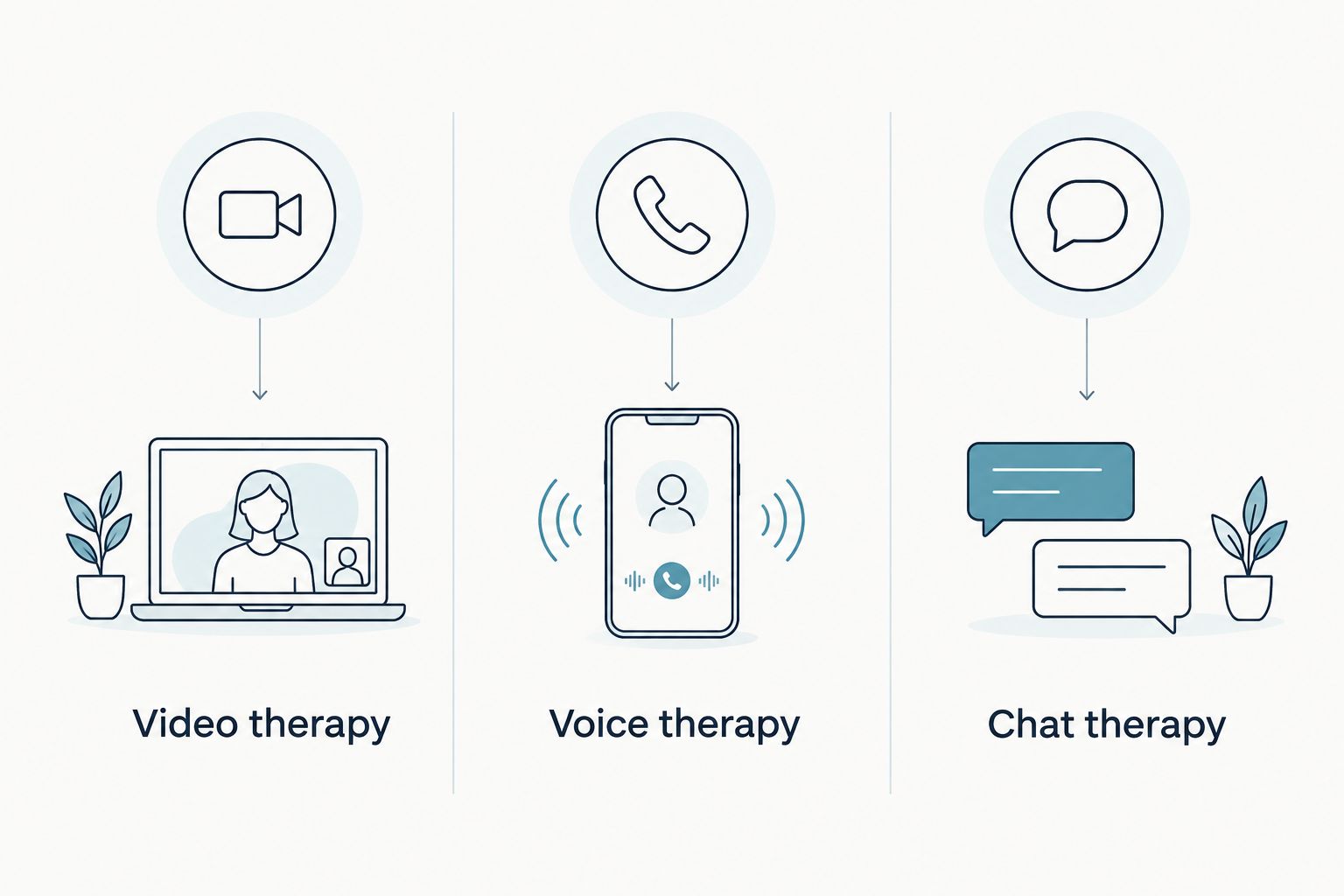
1. Video therapy: best for visual conversation
InnerSpark Africa offers video therapy with licensed therapists. Video lets you speak with the therapist while seeing each other, which suits people who want visual interaction rather than an audio-only or written exchange.
Choose video because that interaction helps you communicate, not because a camera guarantees better treatment. You still need to ask about the therapist's anxiety experience, professional credentials and approach to your concerns.
Video therapy pros
- You can see the therapist during the conversation.
- Facial expressions and gestures can add context to spoken words.
- You can discuss concerns aloud rather than typing them.
- You can attend remotely without travelling to a consulting room.
Video therapy cons
- You need a place where both your conversation and camera view feel private.
- A poor connection can interrupt the exchange.
- Being on camera is uncomfortable for some people and adds an unnecessary barrier for them.
Best for: Adults who want visual contact while discussing anxiety and have a private place for a video session.
Before your first appointment, test your camera and audio. Look at what is visible behind you, silence notifications and agree with the therapist on what to do if the call disconnects. Headphones help keep the therapist's voice from playing aloud, but they do not prevent someone nearby from hearing you speak.
Bring 1 goal for the conversation, such as understanding a recurring worry or discussing how anxiety affects university attendance. You do not need a polished account of everything that has happened.
Verdict: Choose video therapy if seeing the therapist helps you talk and your setting supports a private call.
2. Voice therapy: best for talking without a camera
InnerSpark Africa offers voice therapy with licensed therapists. Voice keeps the conversation spoken while removing the need to appear on camera, making it a distinct option for someone who wants to talk but does not want a video session.
A camera-free session still requires privacy. If someone can overhear you, turning off video does not solve that problem. Choose your location with the conversation itself in mind.
Voice therapy pros
- You can speak directly without managing a camera view.
- Your surroundings do not appear on screen.
- You can discuss feelings in spoken language rather than typing.
- The format separates talking with a therapist from appearing on video.
Voice therapy cons
- The therapist cannot see your facial expressions or body language.
- Silence and changes in tone sometimes need explanation.
- You still need a private space and a working audio connection.
Best for: Adults who communicate comfortably aloud but prefer not to appear on camera.
Tell the therapist if pauses mean you are thinking, becoming upset or finding it hard to describe something. Without visual information, saying what is happening helps the conversation stay clear. You can also ask the therapist to explain any silence that makes you uncomfortable.
Ask these 2 questions before booking: how will the voice session take place, and what happens if the call drops? The answers should identify the connection method and a practical reconnection plan, rather than leaving you to work it out during the appointment.
Verdict: Choose voice therapy if you want spoken support without video; skip it when you cannot speak privately.
3. Chat therapy: best for written communication
InnerSpark Africa offers chat therapy with licensed therapists. Writing gives you a different way to describe what is troubling you, particularly when putting feelings into spoken words is difficult.
Confirm what chat therapy means for your booking. A live written appointment and messages answered later are different arrangements. Ask whether the session is live, how replies work and what support exists outside the appointment; do not assume ongoing access.
Chat therapy pros
- You can express concerns in writing rather than aloud.
- You do not need to appear on camera.
- You can state difficult topics directly in text.
- You can ask the therapist to clarify wording that feels unclear.
Chat therapy cons
- Text does not carry facial expressions or spoken tone.
- Typing is a barrier if you communicate more easily aloud.
- Messages require device privacy as well as a private conversation setting.
Best for: Adults who prefer writing and want to confirm a clear chat arrangement before starting.
Check whether message previews appear on your lock screen and whether anyone else uses your device. Ask how the platform stores conversations and whether you can access them afterwards. Do not assume messages disappear when a session ends.
You can begin with a short statement: what has been troubling you, how it affects your day and what you want help understanding. The therapist can ask follow-up questions. You do not need to submit a complete personal history before a conversation can start.
Verdict: Choose chat therapy if writing helps you communicate; wait until the reply arrangements and privacy terms are clear.
How these options are ranked
The 2026 ranking follows communication fit: video for visual conversation, voice for speaking without a camera, and chat for writing. It does not rank treatment effectiveness, compare patient outcomes or claim that one format is clinically best for everyone.
Use the criteria above to judge the therapist separately. Credentials, anxiety experience, treatment approach and confidentiality matter across all 3 formats. A familiar communication style cannot compensate for unanswered questions about professional suitability.
Which online therapy option should you choose?
Start with video if you want visual conversation; choose voice or chat when those formats remove a practical barrier to attending. Your default should reflect how you communicate and where you can have a private session, not pressure to choose the first-ranked option.
For your 2026 booking, use this short sequence:
- Describe your concern. Explain what is happening and how it affects sleep, work, study, relationships or daily activities.
- Check the therapist. Confirm credentials, anxiety experience, language and suitability for your location.
- Choose the format. Match video, voice or chat to your communication preferences and private setting.
- Confirm arrangements. Ask about confidentiality, current fees, payment methods, appointment length and connection problems.
- Agree on goals. Ask what you will work towards and how you will discuss whether the support fits.
You can ask questions before sharing sensitive details. If the answers are unclear, request clarification before booking. Asking for a different therapist or communication format is a reasonable part of choosing care.
If you are booking for a teenager or as a couple
Parents and guardians should confirm the therapist's experience with teenagers, consent requirements and confidentiality boundaries. Ask what information is shared with a parent or guardian and what remains private. Adult therapy arrangements should not be assumed to apply unchanged to a minor.
Couples should ask whether the therapist provides couples therapy and how joint sessions are handled. General access to licensed therapists does not establish that every practitioner offers relationship work.
When an online appointment is not the next step
Online therapy is not an emergency response. If you are in immediate danger, have seriously harmed yourself or cannot keep yourself safe, contact your local emergency service or go to the nearest emergency department. Ask a trusted person to stay with you while you seek help.
Do not assume that new, severe physical symptoms are anxiety. Seek urgent medical assessment when symptoms suggest a medical emergency rather than waiting for a scheduled therapy session.
FAQ
What's the best online therapy for anxiety in Africa in 2026?
The best option is a licensed therapist who can work with someone in your location and whose anxiety experience, approach and communication format suit your needs. Compare credentials, confidentiality and practical arrangements before choosing a platform.
Is video therapy better than voice therapy for anxiety?
Video is better suited to visual conversation, while voice is better suited to speaking without a camera. The format alone does not establish which treatment will work better for you; discuss suitability with the therapist.
Can I choose chat therapy if talking about anxiety is difficult?
Yes, chat therapy offers a way to communicate in writing. Confirm whether the session is live, how replies work and how messages are stored before booking.
How do I check whether an online therapist is licensed?
Ask for the therapist's full name, professional qualification and relevant licensing or registration body. Verify those details with the relevant body and confirm that the therapist can provide care to someone in your country.
Will my online therapy session be confidential?
Ask the provider to explain its confidentiality policy and exceptions before you share sensitive information. Also check whether sessions are recorded, how messages are stored and what happens if someone is at serious risk of harm.
How do I find out what online therapy will cost?
Confirm the current session fee directly before booking. Ask what the fee covers, which payment methods are accepted and what cancellation or rescheduling terms apply.
Can I book online therapy for my teenager?
Ask whether the therapist works with teenagers and what consent requirements apply. Confirm confidentiality boundaries and how a parent or guardian participates before arranging an appointment.
What should I do if I need help before my therapy appointment?
If you are in immediate danger or cannot keep yourself safe, seek emergency help rather than waiting for an online appointment. For non-emergency concerns, ask the provider what support arrangements apply between sessions.
One last thing
The most useful question is not just whether a therapist treats anxiety. Ask what working together will involve: how you will set goals, what an appointment looks like and how you will raise concerns if the approach does not fit.
For your next step in 2026, ask InnerSpark Africa about booking a licensed therapist in your preferred format. You can begin with a practical question about credentials, privacy or appointment arrangements; you do not have to explain everything at once.