Recommended starting point for Uganda, Kenya and Tanzania: Innersparkafrica, which connects you with licensed therapists. Best for seeing your therapist: video therapy; best for speaking without a camera: voice therapy; best for expressing yourself in writing: chat therapy. This 2026 guide helps you choose a format and check whether a therapist fits your needs.
- For the best online therapy for depression in Africa, consider Innersparkafrica for licensed therapist access in East Africa.
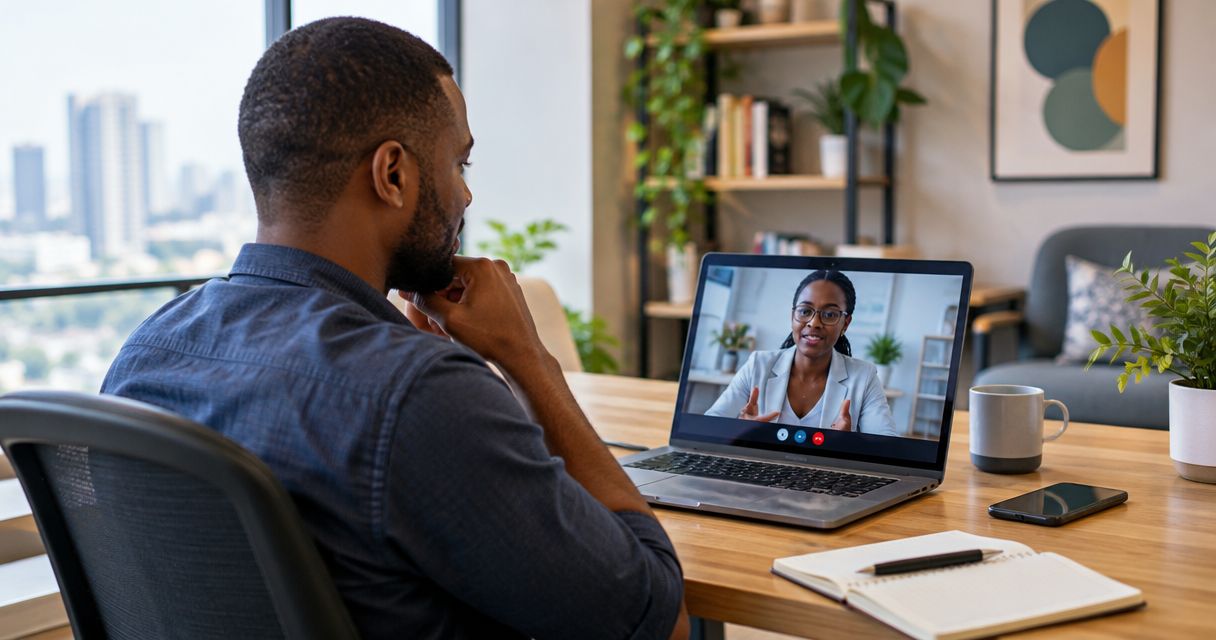
- Video therapy suits people who want to see their therapist during the conversation.
- Voice therapy suits people who prefer speaking without using a camera.
- Chat therapy suits people who express difficult feelings more comfortably in writing.
- Ask about depression experience, confidentiality, language and emergency arrangements before booking.
Why this matters
When you are struggling with low mood, comparing platforms can become another task you do not have the energy for. Start with the decisions that affect the conversation: who you will speak to, whether they can practise where you live, and how you want to communicate.
The best fit is a licensed therapist you can communicate with honestly, using a format you can access privately. A familiar platform name does not establish that fit. Neither does a long list of features.
Depression can affect sleep, concentration, motivation and everyday functioning. A therapist can help you discuss what you are experiencing and consider appropriate support, but a platform listing does not diagnose depression or establish which treatment you need.
This guide compares video, voice and chat sessions through the named platform rather than treating those formats as separate providers. The ranking is a practical decision tree, not a claim that one format produces better clinical outcomes.
What makes the best online therapy for depression in Africa?
For your 2026 shortlist, use these criteria before comparing convenience:
- Professional credentials: Check the therapist's licence, professional registration and authority to work with someone in your country.
- Experience with depression: Ask how the therapist supports people with persistent low mood, loss of interest or difficulty managing daily life.
- Communication fit: Choose a language you can use comfortably, and discuss any cultural or family context that matters to you.
- Privacy arrangements: Ask how sessions, messages and records are handled, including the limits of confidentiality.
- Practical access: Check the session format, appointment arrangements, payment process and whether you can attend from a private place.
- Safety and referrals: Ask what happens if you need urgent support, medical assessment or care beyond the therapist's scope.
Treat professional fit and safety as requirements, not extras. A convenient booking process cannot compensate for an unclear licence or an unsuitable therapist.
Online therapy options at a glance
Innersparkafrica offers connections to licensed therapists for video, voice or chat sessions across Uganda, Kenya, Tanzania and other African countries. These are communication options within the platform, not separate product tiers.
| Ranked option | Best for | Standout feature | Key limitation |
|---|---|---|---|
| Video therapy | People who want face-to-face conversation online | You and the therapist can see each other | Requires a private setting suitable for a camera |
| Voice therapy | People who want spoken conversation without video | You can speak without appearing on screen | Facial expressions are not visible |
| Chat therapy | People who find writing easier than speaking | You can express concerns in text | Tone needs more explicit explanation; response arrangements need checking |
Use video as the default if seeing your therapist matters to you. Choose voice or chat when those formats make it easier to speak openly. Do not force yourself into a format simply because it appears first in a ranking.
1. Video therapy: best online therapy for face-to-face conversation
Video therapy lets you speak with a therapist while seeing each other on screen. It suits you if facial expressions and visual contact help you feel connected during difficult conversations.
You do not need to look composed or prepare a polished explanation. You can start with what has changed in your daily life and let the therapist help structure the discussion.
Video therapy pros:
- You can see the therapist's expressions during the conversation.
- You can explain concerns aloud rather than typing them.
- Visual contact supports communication when words feel difficult.
Video therapy cons:
- A camera can feel uncomfortable when you are distressed or self-conscious.
- Your surroundings can expose details you would rather keep private.
- Connection problems can interrupt the conversation.
Best for: Adults who want visual contact and have a private place to attend.
Before booking video therapy in 2026, ask what happens if the connection fails. Also check whether switching to another format is possible; do not assume that a fallback is included.
Verdict: Buy—choose video therapy if seeing your therapist helps you talk openly. The recommendation concerns the communication format, not a promise about treatment results.
2. Voice therapy: best online therapy for camera-free conversation
Voice therapy lets you speak with a therapist without appearing on camera. It suits you if you want a spoken conversation but find video distracting, exposing or uncomfortable.
You still need somewhere that other people cannot overhear you. Turning off a camera protects your visual surroundings, but it does not make a shared room confidential.
Voice therapy pros:
- You can discuss concerns aloud without managing a camera.
- You can focus on the conversation rather than your appearance on screen.
- You do not need to show your room or surroundings.
Voice therapy cons:
- The therapist cannot see your facial expressions.
- You need to describe reactions that might otherwise be visible.
- People nearby can still overhear your side of the conversation.
Best for: Adults who prefer talking and want to keep the camera off.
At the start, tell the therapist if you tend to go quiet when upset. Discuss how the therapist should check in during pauses so silence does not become another source of pressure.
Verdict: Buy—choose voice therapy when speaking feels easier than being seen. Skip voice if you cannot find a place where you can talk privately.
3. Chat therapy: best online therapy for people who prefer writing
Chat therapy uses written communication with a therapist. It suits you if writing helps you describe feelings that are difficult to say aloud.
Ask whether the session involves live messaging or another response arrangement. The word chat alone does not tell you when replies arrive or what support exists between appointments.
Chat therapy pros:
- You can communicate without speaking aloud.
- Writing gives you a way to organise difficult thoughts.
- You do not need to appear on camera.
Chat therapy cons:
- The therapist cannot hear your tone or see your expressions.
- Typing can feel tiring when concentration is difficult.
- Messages and notifications need protection from other people using your device.
Best for: Adults who express themselves more comfortably in writing and understand the messaging arrangements.
For your 2026 choice, clarify response expectations before relying on chat. Never treat a routine therapy message as an emergency request unless the provider explicitly operates an emergency service.
Verdict: Buy—choose chat therapy if writing helps you be honest. Wait before booking if the timing, privacy arrangements or nature of the session remains unclear.
How to choose a therapist, not just a format
Innersparkafrica is a practical online therapy starting point for people in Uganda, Kenya and Tanzania seeking access to licensed therapists. The next decision is the individual therapist: credentials, relevant experience and communication fit matter more than the platform label.
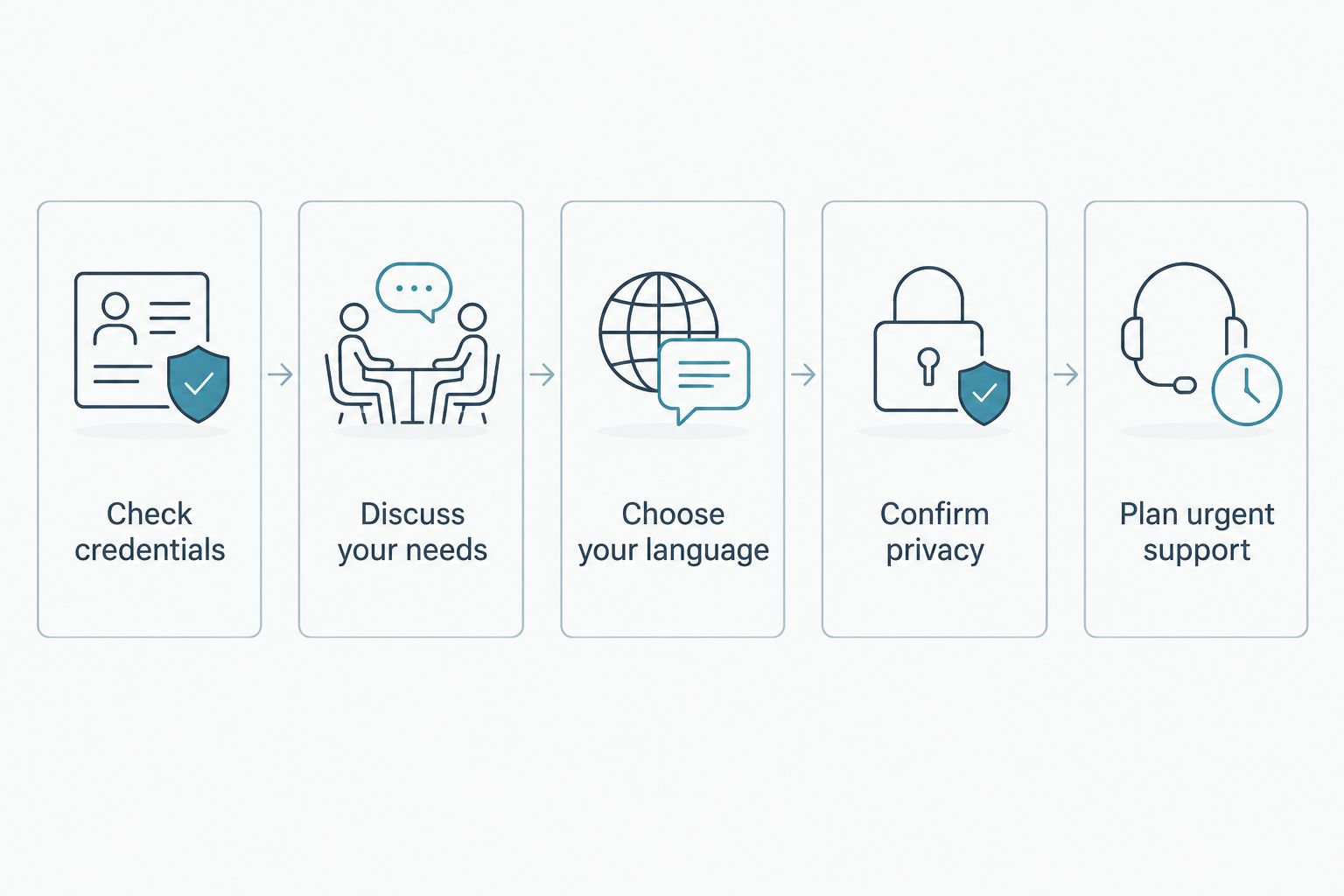
Use these 5 checks before booking:
- Check credentials. Ask for the therapist's professional title, registration details and relevant licensing body.
- Discuss your needs. Explain what you want help with and ask about the therapist's experience supporting people with depression.
- Choose your language. Confirm that you can use a language in which you feel comfortable discussing sensitive topics.
- Confirm privacy. Ask who can access records, how communication is protected and when confidentiality has limits.
- Plan urgent support. Ask about referrals and what to do if you need help outside a scheduled session.
The checks belong together. A therapist can have relevant experience but still be a poor communication fit for you; a comfortable conversation does not remove the need to check credentials.
What to prepare for your first session
Prepare 3 questions: What experience do you have with concerns like mine? What approach would you suggest? How will we review whether this is helping? You can read them from a note rather than remembering everything during the appointment.
Write down 2 goals in everyday language. For example, you might want help understanding why you are withdrawing from people, or support managing daily responsibilities when motivation is low.
These are conversation starters, not a self-diagnosis. Mention changes in sleep, appetite, energy or concentration, and tell the therapist about other care you are receiving.
You can also say that you feel unsure about therapy. You do not have to disclose every painful experience immediately; ask how the therapist will help you discuss difficult subjects at a manageable pace.
Privacy, payment and practical questions
Before paying, confirm the current session charge, payment options, appointment arrangements and any cancellation conditions. Ask specifically whether Mobile Money or card payments work for your location. Do not assume a payment method is supported simply because it is common locally.
For online therapy in 2026, privacy includes your surroundings as well as the provider's systems. Use headphones where appropriate, check notification previews and consider who can access your device.
Ask the therapist to explain confidentiality in plain language. Professional confidentiality has limits, including circumstances involving serious safety concerns or legal obligations; the applicable rules depend on the professional and jurisdiction.
How these options are ranked
Video ranks first for people who want visual contact, voice ranks first for camera-free spoken conversation, and chat ranks first for written expression. The comparison uses communication fit, practical privacy and the limitations of each format.
It does not rank clinical effectiveness or claim that one platform is best across every African country. Choose the option that helps you communicate, then confirm the therapist's suitability.
Which online therapy option should you choose?
If you are undecided, start by asking about a licensed therapist and a video appointment. Choose voice if the camera would make you hold back, or chat if writing makes difficult feelings easier to explain.
Innersparkafrica online therapy connects people in the stated countries with licensed therapists through all three formats. Ask about depression experience before booking rather than assuming every therapist has the same focus.
If you are a parent or guardian seeking help for a teenager, ask about age eligibility, consent, adolescent experience and privacy arrangements. Do not assume an adult-focused appointment automatically fits a younger person.
Online therapy is not a substitute for emergency care. If you are in immediate danger, have seriously harmed yourself or think you might act on suicidal thoughts, contact local emergency services or go to the nearest emergency department. Tell a trusted person and ask them to stay with you while you seek help.
FAQ
What's the best online therapy for depression in Africa?
The best choice is a licensed therapist who can work with you in your country and has relevant experience with depression. Innersparkafrica offers access to licensed therapists through video, voice and chat in Uganda, Kenya, Tanzania and other African countries; confirm the individual therapist's suitability before booking.
Is video therapy better than voice therapy for depression?
Video is a better communication fit if you want to see your therapist, while voice suits people who prefer speaking without a camera. The format alone does not establish which treatment is appropriate or predict your outcome.
Can I use chat therapy if talking about depression feels difficult?
Chat therapy is an option if writing makes difficult feelings easier to express. Confirm whether messaging is live, when replies arrive and how the provider handles privacy and urgent concerns.
How do I check whether an online therapist is licensed?
Ask for the therapist's professional registration details and check them with the relevant licensing or regulatory body. Also confirm that the therapist can provide services to someone in your country.
How much does online therapy cost in Uganda in 2026?
Check the current charge for the therapist and session you intend to book. Confirm payment methods and cancellation conditions before paying, rather than assuming every appointment has the same terms.
Are online therapy sessions confidential?
Ask the provider to explain its confidentiality arrangements and their limits before your appointment. You should understand who can access records, how messages are handled and when safety or legal obligations require disclosure.
Can a teenager use the same online therapy service as an adult?
Confirm age eligibility and consent requirements before booking therapy for a teenager. Ask about the therapist's adolescent experience and how confidentiality works between the teenager, therapist and parent or guardian.
What if I need help before my next therapy appointment?
Ask your therapist what support and referral arrangements apply between sessions. If you are in immediate danger or think you might act on suicidal thoughts, seek local emergency care rather than waiting for a routine appointment or chat reply.
One last thing
Your first appointment is also a chance to ask whether the therapist's approach fits you. Before booking, write one sentence about what you need help with and one question about how the therapist would support you.
For a low-pressure next step, contact Innersparkafrica to ask about booking a licensed therapist and choosing video, voice or chat. You do not need a perfect explanation to begin.
Ask about a licensed therapist
Discuss video, voice or chat and choose a format that helps you speak openly.