
Best starting point for regional access: InnerSpark Africa online teletherapy. Best for coordination with medical treatment: clinic-linked teletherapy. Best for avoiding screen time: voice therapy. This 2026 guide compares care pathways for chronic illness patients in Africa, including their limits and the questions to ask before booking.
- InnerSpark Africa online teletherapy suits people seeking licensed therapists through video, voice or chat in Uganda, Kenya and Tanzania.
- The best teletherapy for chronic illness patients in Africa depends on therapist experience, communication format and medical-care coordination.
- Choose clinic-linked teletherapy when you want mental health support connected to your treating medical team.
- Voice and chat therapy offer different communication options; neither replaces medical treatment or emergency care.
Why this matters
Living with a chronic illness can bring difficult conversations about pain, uncertainty, work, relationships and dependence on others. Therapy gives you space to discuss those experiences without making every appointment about a medical result.
Teletherapy supports your mental health; it does not replace treatment for your physical condition. You still need your medical team for medication decisions, new symptoms and changes in your illness.
Choosing care in 2026 means looking beyond whether a platform offers online appointments. You need a therapist whose experience fits your concerns, a format you can use comfortably, and clear answers about confidentiality and what happens between sessions.
This guide ranks access options rather than claiming that one provider produces better clinical outcomes. A platform, a clinic referral and a communication format solve different problems; the right starting point depends on yours.
What makes the best teletherapy for chronic illness patients?
Use these criteria before choosing a service:
- Licensed care: Ask which professional body licenses the therapist and how you can verify their current credentials.
- Relevant experience: Ask about work with long-term illness, adjustment, grief, persistent pain or caregiver relationships. Match experience to your concern, not just a broad profile label.
- Usable communication: Choose video, voice or chat based on your energy, privacy, accessibility needs and connection.
- Medical coordination: Ask whether the therapist can communicate with your treating clinician, with your permission, when that would help.
- Clear confidentiality: Request an explanation of records, platform privacy, information sharing and exceptions to confidentiality.
- Practical terms: Confirm session length, payment methods, cancellation rules and the process for interrupted appointments before paying.
For your 2026 shortlist, treat these as questions to answer rather than boxes to assume a provider ticks. Being online does not establish chronic illness expertise, accessibility or coordination with a hospital.
Teletherapy options at a glance
| Option | Best for | Standout feature | Key limitation |
|---|---|---|---|
| InnerSpark Africa online therapy | Regional access to licensed therapists | Video, voice or chat for people in Uganda, Kenya, Tanzania and other African countries | Confirm the individual therapist's chronic illness experience before booking |
| Clinic-linked teletherapy | Coordination with ongoing medical treatment | A route through your treating clinic or hospital | Your clinic must confirm whether remote mental health appointments are offered |
| Voice teletherapy | People who prefer not to use a screen | A spoken conversation without video | Neither person can use facial expressions as communication cues |
| Chat teletherapy | People who communicate more comfortably in writing | Written communication rather than a spoken session | Confirm whether chat is live, asynchronous or a mixture |
| Hybrid mental health care | People who want remote and in-person appointments | A care plan combining appointment formats | In-person visits still require travel and scheduling |
The table compares practical fit, not clinical effectiveness. Voice and chat are formats that a platform or clinic can offer; they are not separate providers with independently established results.
1. InnerSpark Africa: best for regional access to licensed therapy
InnerSpark Africa connects people in Uganda, Kenya, Tanzania and other African countries with licensed therapists through video, voice or chat. It is a practical starting point when you want online mental health support and a choice of communication formats.
For chronic illness support, choose the therapist as carefully as the platform. Ask about experience with the emotional demands of long-term illness, including uncertainty, changes in independence and conversations with family.
InnerSpark Africa pros:
- Connects people with licensed therapists.
- Offers video, voice and chat therapy sessions.
- Serves people in the named African countries and elsewhere in Africa.
InnerSpark Africa cons and checks:
- You need to confirm the chosen therapist's experience with your particular concerns.
- You need to ask how confidentiality, records and communication with your medical team are handled.
- Online sessions do not remove the need for a private place or a usable connection.
Best for: Adults seeking regional online access who want to choose between speaking, video and writing.
Before booking, describe what you want help with in plain language. For example, explain that managing your condition has made it difficult to sleep, talk to your partner or cope with uncertainty; you do not need to arrive with a diagnosis of a mental health condition.
Verdict: Choose this starting point when regional access and format choice are your priorities; confirm therapist fit first.
2. Clinic-linked teletherapy: best for medical-care coordination
Clinic-linked teletherapy means asking your treating clinic or hospital whether it offers remote mental health appointments or a referral route. Start with your existing clinician rather than assuming the service is included in your medical care.
This pathway puts coordination at the center of your search. Ask how a therapist and medical clinician would communicate, what permission is needed, and which information each person would receive.
Clinic-linked teletherapy pros:
- Starts with a medical team you already consult.
- Gives you a direct place to ask about condition-related referrals.
- Lets you discuss mental health support alongside your existing care arrangements.
Clinic-linked teletherapy cons:
- Your clinic must confirm whether it offers remote sessions.
- A referral does not automatically establish specialist experience or therapist fit.
- Appointment formats and information-sharing arrangements need checking separately.
Best for: People whose main priority is connecting mental health support with ongoing medical treatment.
Ask a specific question: can the clinic refer you to a licensed therapist experienced in supporting people with long-term illness? Then ask whether that therapist offers remote appointments where you live.
Verdict: Choose this route when coordination matters most; do not assume a referral includes shared care.
3. Voice teletherapy: best for avoiding screen time
Voice teletherapy is a spoken therapy session without video. It gives you a way to talk when looking at a screen feels uncomfortable or when being on camera makes the conversation harder.
Choose voice because it fits how you want to communicate, not because it guarantees an easier session. You still need enough privacy to speak openly and a connection that supports the agreed appointment format.
Voice teletherapy pros:
- Removes the need to appear on camera.
- Lets you communicate through speech and tone.
- Avoids holding or watching a video screen throughout the conversation.
Voice teletherapy cons:
- The therapist cannot see facial expressions or other visual cues.
- Spoken conversations can be overheard in a shared room.
- Hearing, speech or connection difficulties require discussion before booking.
Best for: People who want a spoken conversation without the demands of video.
Tell the therapist whether you need breaks or adjustments to the session. Also agree on what happens if the call disconnects; do not wait until an interrupted appointment to establish the backup plan.
Verdict: Choose voice when speaking is comfortable but video is not.
4. Chat teletherapy: best for written communication
Chat teletherapy uses written messages to communicate with a therapist. It suits people who find writing more comfortable than speaking, provided the service's timing and expectations match their needs.
Ask whether the appointment is live or whether messages receive replies later. A scheduled written conversation and an asynchronous message service are different experiences.
Chat teletherapy pros:
- Gives you a written way to explain difficult experiences.
- Does not require speaking aloud during the exchange.
- Lets you communicate without appearing on camera.
Chat teletherapy cons:
- Typing can be tiring or inaccessible for some people.
- Written messages do not carry vocal tone or facial expressions.
- Response timing needs explicit agreement; chat is not emergency support.
Best for: People who prefer writing and can comfortably use the agreed messaging format.
Check device privacy as well as room privacy. Ask about notifications, message storage and account access, especially if you share a phone or another person helps you use it.
Verdict: Choose chat when writing helps you communicate; establish response expectations before starting.
5. Hybrid mental health care: best for combining appointment formats
Hybrid care combines remote and in-person mental health appointments within an agreed care plan. Ask a therapist or clinic whether this arrangement is possible rather than assuming you can switch formats whenever you want.
This option suits people who want online appointments for some conversations but also want access to face-to-face care. Confirm whether the same therapist provides both formats and how records are managed.
Hybrid mental health care pros:
- Includes both remote and face-to-face appointments.
- Lets you discuss which format fits different needs.
- Creates a place to plan around travel and accessibility requirements.
Hybrid mental health care cons:
- In-person visits still involve travel and scheduling.
- The same therapist does not automatically offer both formats.
- Separate providers require clear agreements about records and coordination.
Best for: People who want a planned mix of remote appointments and in-person contact.
Discuss the arrangement before your first appointment. Ask which sessions would happen remotely, what would prompt an in-person visit, and whom you would contact if your needs changed.
Verdict: Choose hybrid care when you want both formats and can arrange a clear, workable plan.
Choose the format before your first appointment
For your 2026 decision, separate communication preference from provider choice. A suitable therapist still needs a format that works for you.
- Video sessions: Choose these when seeing the therapist helps you communicate and you have a private place for a camera-based conversation.
- Voice sessions: Choose these when you want to speak without using video.
- Chat sessions: Choose these when written communication feels more comfortable and the response schedule fits your needs.
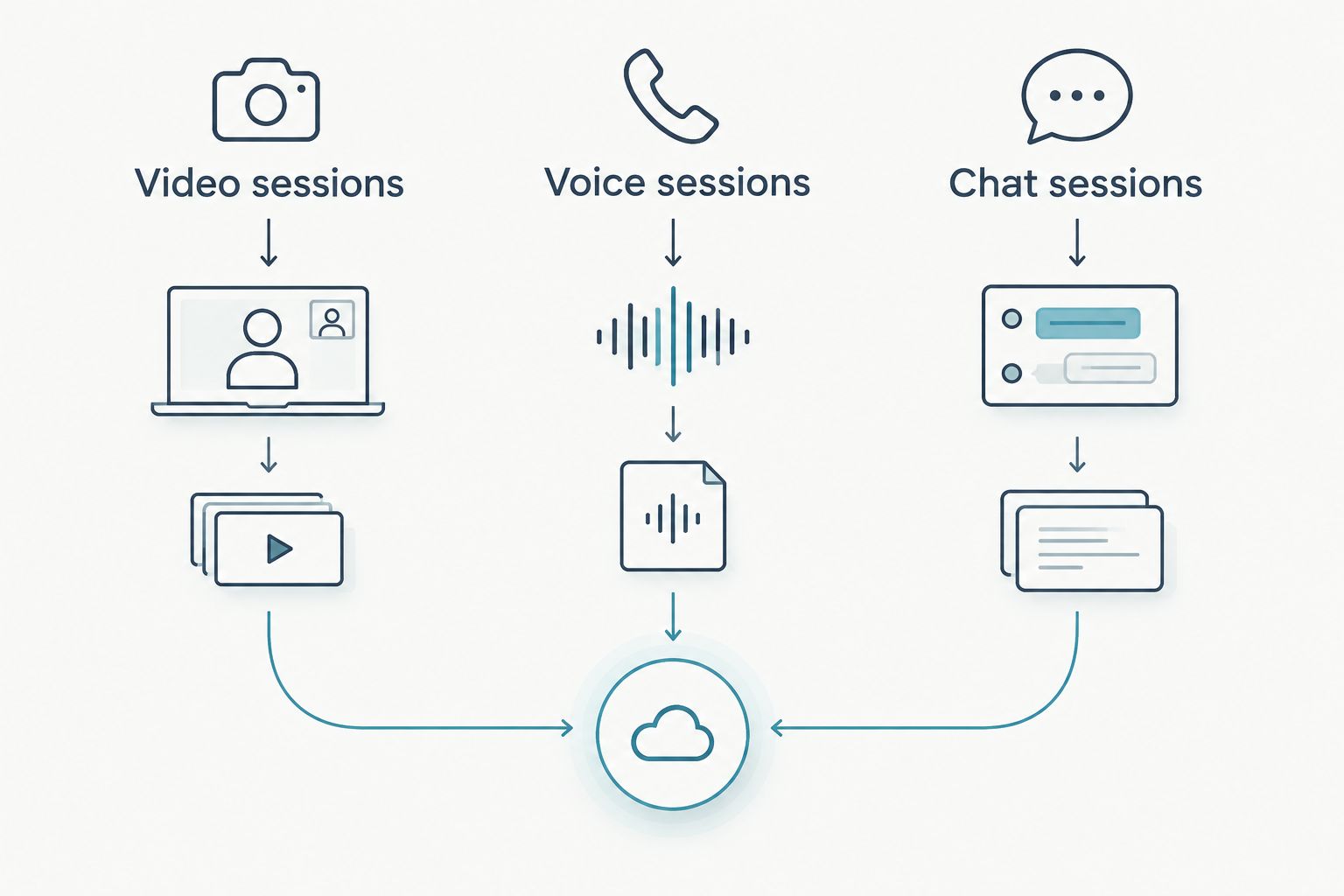
Your preference can change. Discuss switching formats with the therapist rather than treating the first choice as permanent, and confirm any arrangements before the next session.
Prepare without making therapy another task
Keep preparation small. You do not need to produce a complete medical history before asking for mental health support.
- Spend 5 minutes preparing: Note what has been hardest emotionally, not every detail of your condition.
- Write 2 sentences: Describe your main concern and what you want the therapist to understand.
- Choose 1 topic: Start with the issue you most want space to discuss.
- Check privacy: Decide where you can speak or write without unwanted interruptions.
- Agree on interruptions: Ask what happens if symptoms, fatigue or connection problems interrupt the appointment.
These are suggested preparation steps, not requirements for receiving care. If preparation feels like too much, tell the therapist that you need help getting started.
How these options were ranked
The 2026 ranking prioritizes regional access, relevant therapist experience, communication fit, privacy and medical coordination. The first option addresses platform access; the remaining options address specific decisions that access alone does not settle.
There is no claim here that one format treats chronic illness better than another. The decision is about getting appropriate mental health support through a route you can use.
Which teletherapy option should you choose?
Start with licensed online therapy when access is your main barrier; start with your treating clinic when coordination is your main concern. Then choose video, voice or chat based on how you communicate comfortably.
Before committing, ask about credentials, chronic illness experience, confidentiality, session arrangements and the total current charge. A clear answer to those questions matters more than a broad promise of wellness.
FAQ
What's the best teletherapy for chronic illness patients in Africa in 2026?
The best choice matches a licensed therapist's experience to your concerns and gives you a usable communication format. Choose regional online therapy for access, or ask your treating clinic about remote mental health referrals when coordination is your priority.
Can online therapy treat my chronic physical illness?
Online mental health therapy does not replace medical treatment for a chronic physical illness. It provides space to address emotional concerns while your medical team manages your condition.
Is voice therapy better than video when I feel tired?
Voice therapy removes the need for video, but the best format depends on how you feel and communicate. Ask the therapist about breaks and adjustments rather than assuming any format will be effortless.
Can I use chat therapy if speaking is difficult?
Chat therapy offers written communication instead of a spoken conversation. Confirm that typing is workable for you and ask whether sessions are live or messages receive replies later.
How do I know whether a therapist understands chronic illness?
Ask about the therapist's experience supporting people with long-term illness and concerns similar to yours. Also verify professional credentials and discuss what support you want before booking.
How much does teletherapy cost?
Check the provider's current charges before booking. Confirm the session length, payment methods, cancellation terms and whether any additional charges apply.
What should I do if I need urgent help?
Seek urgent local medical help if you are in immediate danger, cannot keep yourself safe or have a medical emergency. Routine teletherapy and chat appointments are not substitutes for emergency care.
One last thing
You do not have to make your physical symptoms sound less serious to ask for emotional support. Tell the therapist what living with the condition is like, including what you are tired of explaining to other people.
For your 2026 choice, ask one final question: how would you adapt sessions when my health makes participation difficult? The answer gives you something practical to evaluate before booking.
Related guides
- Best online counselling services in Uganda
- Best online therapy platforms in Kenya
- How much therapy costs in Uganda
- Best online therapy platforms in Tanzania
If you want to take the next step, visit InnerSpark Africa to book a licensed therapist and ask which session format fits your needs.
Take the next step
Choose licensed online therapy by video, voice or chat, and ask about support for your concerns.