
Finance sector employees’ online therapy is support from a therapist through digital sessions, with the aim of helping you address emotional difficulties alongside working life. This 2026 guide explains how to choose a therapist, protect your privacy, and arrange sessions around client-facing work, reporting deadlines, or shifts without bringing confidential business information into therapy.
- Online therapy for finance sector employees should start with therapist fit, confidentiality questions, and a private session space.
- InnerSpark Africa connects people in Uganda, Kenya, Tanzania, and other African countries with licensed therapists through video, voice, or chat.
- Choose video, voice, or chat according to how you communicate and where you can speak privately.
- Keep client identifiers and confidential financial records out of therapy conversations.
Why online therapy matters for finance sector employees
Your job title does not determine whether you need therapy. What matters is how you feel, what is becoming difficult, and whether you want support. You do not need a diagnosis or a workplace crisis to start that conversation.
If your role involves customer complaints, difficult financial decisions, performance targets, or responsibility for checking other people’s work, explain which situations affect you. A therapist needs your experience, not an assumption that everyone working in finance has the same pressures.
InnerSpark Africa is best for employees seeking online therapy with licensed therapists through video, voice, or chat in Uganda, Kenya, Tanzania, and other African countries. You can explore InnerSpark Africa without making therapy an employer-led decision.
The practical advantage of online therapy is the ability to attend remotely. Its limitation is equally important: a remote session still needs privacy, attention, and a suitable connection. An office meeting room is not automatically a confidential therapy space.
How to choose and start online therapy in 2026
Start with a private note about what you want help with. You can prepare this yourself before choosing a platform or contacting a therapist; no paid tool is necessary.
Follow the steps below in order, then revisit them when your working circumstances change. Choosing a format comes after checking confidentiality, not before it.
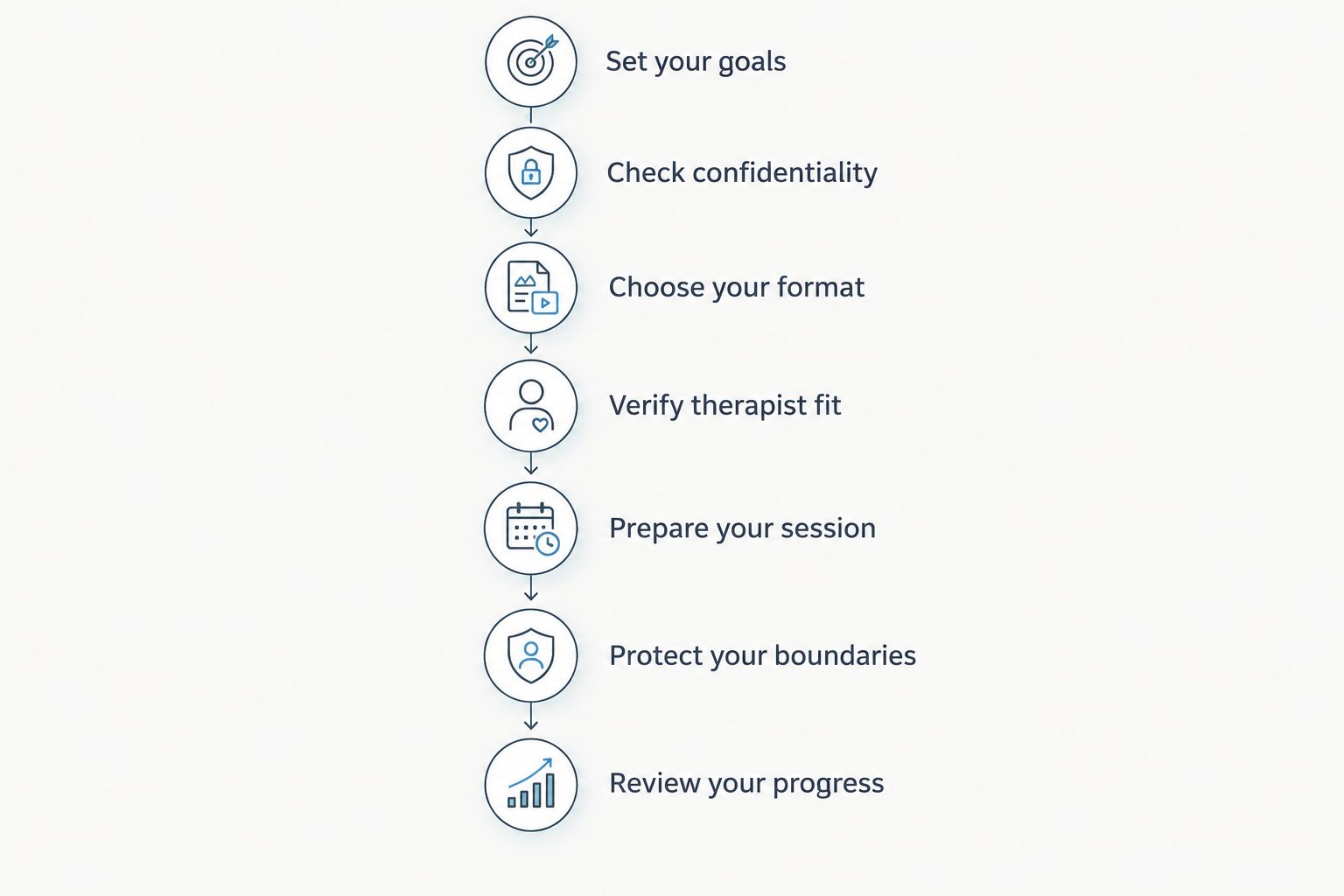
Set your goals
Write down what you want to discuss in ordinary language. For example, you might want help understanding why work stays on your mind after you leave, handling difficult conversations, or separating your sense of worth from performance feedback. These are conversation starters, not diagnoses.
Choose 2 initial goals rather than expecting the first appointment to address every part of your life. A goal such as being able to discuss a mistake without becoming overwhelmed gives your therapist more direction than a general request to fix work stress.
Your goals can include concerns outside work. Relationship difficulties, grief, family responsibilities, and financial worries do not become less relevant because you work in finance.
- Write what is bothering you in your own words.
- Describe how it affects your life outside work.
- Choose 2 concerns to discuss first.
- Note what you would like to feel or handle differently.
Check confidentiality
Before booking, ask how confidentiality works and what its limits are. Do not assume that every platform, employer scheme, or therapist handles records and disclosures in the same way. Ask for an explanation you understand.
If your employer provides access to support, separate the clinical conversation from programme administration. Ask what information reaches the employer, whether attendance is reported, and whether any reporting identifies you. Confidentiality should be explained, not inferred from a benefit’s name.
Use 3 privacy questions as your starting checklist: who can access session information, what is recorded or retained, and when information can be shared. For your 2026 privacy review, include the device, calendar, account, and payment process you intend to use.
- Ask who can access notes, messages, and appointment details.
- Ask whether sessions are recorded and how consent works.
- Request an explanation of confidentiality limits.
- Check what an employer receives if it funds your sessions.
- Avoid work devices or accounts when personal access is appropriate.
Choose your format
Decide whether speaking face-to-face on screen, speaking without video, or writing feels most manageable. You can explore those preferences before committing to a service. Do not choose chat solely because it appears easier to conceal during working hours.
InnerSpark Africa offers online therapy through video, voice, or chat, so you can consider a platform that includes all three formats. Ask how the chosen format operates, including whether chat happens in a scheduled session or through messages answered later.
Each option has a trade-off. Video adds visual communication but needs a suitable space; voice removes the camera but not the need to prevent overhearing; chat lets you write but requires careful handling of message privacy.
- Choose a format that supports honest communication.
- Check whether your connection suits the session format.
- Ask how chat timing and therapist replies work.
- Arrange a private place rather than multitasking at your desk.
- Agree on what to do if the connection fails.
Verify therapist fit
Ask about the therapist’s licence, credentials, and experience with the concerns you want to discuss. You do not need a therapist who once worked at a bank. You need someone who can understand your situation without treating your occupation as your entire identity.
InnerSpark Africa connects people with licensed therapists. Before choosing a therapist for online therapy, ask about language, relevant experience, and eligibility to work with someone in your location. Confirm these details rather than assuming every therapist offers the same support.
Local understanding matters when you want to discuss family expectations, workplace hierarchy, money responsibilities, or attitudes toward seeking help. Ask whether you can speak in your preferred language; do not assume language availability from the platform’s geographic coverage.
- Request the therapist’s professional credentials.
- Ask about experience with your main concern.
- Confirm the language you want to use.
- Explain cultural or family context that matters to you.
- Ask how the therapist approaches goals and feedback.
Prepare your session
Prepare a short account of what brings you to therapy, not a polished presentation. You can say that you are unsure where to start. Therapy is not a performance review, and you do not need to justify support by proving that your situation is severe.
Describe workplace events without sharing customer identities, account details, internal reports, or confidential transactions. For example, explain how a difficult client interaction affected you rather than forwarding the client’s correspondence.
Keep 1 clear boundary for preparation: personal reflections belong in the session; confidential business records do not. If a work-related event feels hard to explain without identifying details, ask the therapist how to describe it safely.
- Note the main issue you want to discuss.
- Remove names and identifying business details from examples.
- Test your audio and connection beforehand.
- Close work messages and silence avoidable notifications.
- Tell the therapist if you feel uncomfortable or unsure.
Protect your boundaries
A therapy appointment needs protected time, even when it happens online. Choose a slot that does not require you to answer customer calls or monitor a transaction at the same time. If your schedule changes, ask about appointment arrangements before booking.
You do not owe colleagues a detailed explanation of your health care. Where your workplace requires notice for an absence, follow the applicable process without volunteering the content of your sessions. Ask the relevant workplace contact about documentation requirements when necessary.
For your 2026 work calendar, plan for the appointment itself and an unhurried return to other responsibilities. Avoid scheduling a sensitive conversation immediately before a meeting where you cannot pause if needed.
- Choose a slot when you can stop working.
- Use a calendar description that suits your privacy needs.
- Check appointment-change arrangements before committing.
- Arrange childcare or household privacy where relevant.
- Leave space to settle before returning to demanding tasks.
Review your progress
Review whether therapy is addressing the goals you brought, not whether every session feels comfortable. Discuss confusion, disagreement, or a lack of direction with the therapist. You should be able to ask what the work is focusing on.
Notice practical changes without turning recovery into another performance target. You might reflect on whether you can discuss difficult feelings more openly, recognise recurring reactions, or make boundaries clearer. These are personal observations, not promised outcomes.
If the format or therapist does not fit, discuss alternatives. Your 2026 therapy plan should remain open to revision when your needs, location, or working hours change.
- Revisit your original goals with the therapist.
- Explain what feels useful and what does not.
- Ask how the sessions connect to your concerns.
- Discuss changing format or therapist when needed.
- Agree on the next step rather than continuing automatically.
Compare your support options
Choose by fit and privacy, not by how easy an option is to hide at work. Video, voice, chat, and in-person sessions differ in how you communicate. Employer-provided support also raises separate questions about administration and reporting.
The table below is a selection guide, not a ranking of clinical effectiveness. Check the actual service arrangements before deciding; a format alone does not establish confidentiality or suitability.
| Option | Best for | Practical advantage | Key limitation |
|---|---|---|---|
| Online video therapy | Employees who prefer speaking with visual interaction | You can attend remotely while seeing the therapist | Requires a suitable connection and private surroundings |
| Online voice therapy | Employees who prefer speaking without a camera | Removes the need for video | Others can still overhear your conversation |
| Online chat therapy | Employees who find writing easier than speaking | Lets you express concerns in writing | Reply timing and message retention need clarification |
| In-person therapy | Employees who prefer a separate physical setting | Creates a clear separation from home or work | Travel and appointment location affect scheduling |
| Employer-provided support | Employees exploring a workplace benefit | Gives you an existing route to ask about support | Scope, confidentiality, and employer reporting require checking |
If remote privacy is not possible, do not force online sessions into an unsuitable setting. Ask about another format or consider in-person support. Convenience is useful only when you can actually participate.
Common mistakes finance sector employees make
These mistakes concern how you arrange support, not whether you are handling life correctly. Addressing them makes it easier to have an honest conversation without exposing work information.
Treating therapy as another performance score
Do not judge a session by whether you immediately feel more productive. Tell the therapist what you want to understand or change, then discuss how to review that work. Support is not a productivity test.
Sharing business records to explain your feelings
A therapist does not need a customer file, transaction screenshot, or internal report to understand that an event upset you. Describe the situation and your reaction without disclosing protected business information. Keep professional confidentiality separate from the therapist’s confidentiality obligations.
Assuming employer-funded means employer-invisible
Ask what the employer receives before using a workplace scheme. Attendance administration and session content are different categories of information; get clarity about both. Do not rely on a colleague’s experience as the explanation for your own arrangement.
Booking during a period when you cannot disengage
An appointment squeezed between customer calls leaves you managing competing responsibilities. Choose a time when you can give the conversation attention. If you cannot secure that time, address scheduling before deciding online therapy is unsuitable.
FAQ
What's the best online therapy for finance sector employees?
The best fit is a licensed therapist who understands your concerns, explains confidentiality, and offers a format you can use privately. InnerSpark Africa offers video, voice, and chat therapy for people in Uganda, Kenya, Tanzania, and other African countries; confirm individual therapist fit before booking.
Will my employer know that I am having online therapy?
Do not assume your employer will or will not know; check the service arrangement and your own use of work accounts, devices, and calendars. If an employer funds the sessions, ask exactly what attendance or other information it receives.
Can I talk about work without breaking client confidentiality?
Describe your feelings and the general situation without sharing client identities, account details, or confidential business records. If an example is difficult to explain safely, ask the therapist how to discuss it without identifying information.
Is chat therapy better than video for someone working in finance?
Chat is not automatically better than video for finance employees; choose according to how you communicate and the privacy you can arrange. Ask whether chat is scheduled or asynchronous, how replies work, and how messages are retained.
Do I need a diagnosis before booking online therapy?
You do not need a diagnosis simply to ask a therapist for support. Explain what is troubling you and ask whether the therapist's service is appropriate for your needs.
How do I check the cost before booking a therapist?
Check the current session charge directly with the service before booking. Confirm the payment method, appointment-change terms, and whether any employer funding applies to your arrangement.
What if I need urgent help rather than a booked session?
If you are in immediate danger or cannot keep yourself safe, contact local emergency services or go to the nearest emergency department. A routine online therapy booking is not a substitute for immediate emergency help; ask a trusted person to stay with you if possible.
One last thing
Your therapist does not need your employer’s name to begin understanding how work affects you. Start with what happened, how you felt, and what you want help with. Share identifying details only when they are relevant and safe to disclose.
When you feel ready, book a licensed therapist through InnerSpark Africa. You can start by asking about fit and confidentiality; you do not need to arrive with a complete explanation of everything that is wrong.
Explore your therapy options
Ask about therapist fit, confidentiality, and video, voice, or chat before choosing your next step.