
Healthcare workers’ online therapy in Kenya is mental health support delivered remotely by a therapist, with the aim of helping you address emotional strain alongside clinical responsibilities. This 2026 guide explains how to choose a licensed therapist, protect your privacy and arrange support around shifts without turning therapy into another work task.
- Online therapy for healthcare workers in Kenya should fit your shift pattern, privacy needs and reasons for seeking support.
- InnerSpark Africa is best for adults seeking licensed online therapy through video, voice or chat.
- Check therapist credentials, confidentiality limits and payment details before booking.
- Use urgent local support, not a routine online appointment, when you cannot keep yourself safe.
Why online therapy matters for healthcare workers
Healthcare work involves responsibilities that deserve space outside handovers, ward rounds and conversations with colleagues. You can seek therapy for work-related distress, relationship difficulties, grief or problems unrelated to your profession. You do not need to prove that work caused the problem.
For your 2026 search, use the online therapy platforms in Kenya guide as a starting point, then assess the individual therapist. A platform’s suitability does not establish a therapist’s fit.
Remote appointments remove the journey to a consulting room, but they do not remove the need for protected time. A shared staff room, an interrupted break or a conversation within patients’ hearing is not a suitable substitute for privacy.
How to choose and start online therapy
Identify what you want help with
Start with a private note rather than a search for the perfect clinical term. Describe what feels difficult, when you notice it and what you want to discuss. You can bring that note to an introductory conversation without deciding on a diagnosis.
Separate personal support from workplace action. Therapy can provide space to discuss the effect of an unsafe workload; it does not replace a staffing complaint, safeguarding process or clinical incident report. Both forms of support can matter without serving the same purpose.
As a preparation exercise, write 2 initial goals in ordinary language. These are conversation starters, not promises about what treatment will achieve. For example, you might want to talk about a difficult patient death and understand why you keep withdrawing from people at home.
- Write down the concern that brings you to therapy now.
- Identify any effect on sleep, relationships or daily responsibilities.
- Separate your personal support needs from formal reporting duties.
- Choose what you feel ready to discuss at the first appointment.
Set your privacy and scheduling requirements
Before comparing providers, identify a place where you can speak without being overheard. Test it using your own phone and headphones. Headphones keep the therapist’s voice private; they do not stop someone nearby hearing yours.
For a changing rota, ask how appointments are arranged and what happens when a shift changes. Do not assume evening appointments, flexible cancellations or messaging between sessions are included. Confirm the arrangement before committing.
Build a 10-minute preparation buffer into your proposed schedule if it helps you settle and check your connection. This is a planning suggestion, not a required session length. In 2026, the useful question remains practical: can you attend without simultaneously caring for patients or managing a handover?
- Choose a private location away from patient care areas.
- Check sound, connection and device access before the appointment.
- Ask about scheduling changes caused by your rota.
- Agree how the therapist should contact you if a connection drops.
Verify the therapist and service
Use the provider’s information to identify a therapist, then ask direct questions about credentials and suitability. A professional title alone does not explain someone’s experience with your concerns. Ask about the licensing or registration body and how you can verify the details independently.
InnerSpark Africa is best for adults seeking licensed online therapy through video, voice or chat. InnerSpark Africa connects people in Kenya and other African countries with licensed therapists; ask about the individual therapist’s experience, language and appointment arrangements before choosing.
The platform offers a route to licensed support, but the platform description does not establish healthcare-worker specialism or your preferred session language. Treat those as questions for the provider, not assumptions. The same applies to experience with grief, workplace conflict or distress after a difficult clinical event.
- Ask for the therapist’s full name and professional credentials.
- Check the relevant licensing or registration details.
- Ask about experience supporting healthcare workers and your specific concern.
- Confirm the language you want to use during sessions.
- Ask how referrals work if your needs fall outside the therapist’s scope.
Choose a format you can use privately
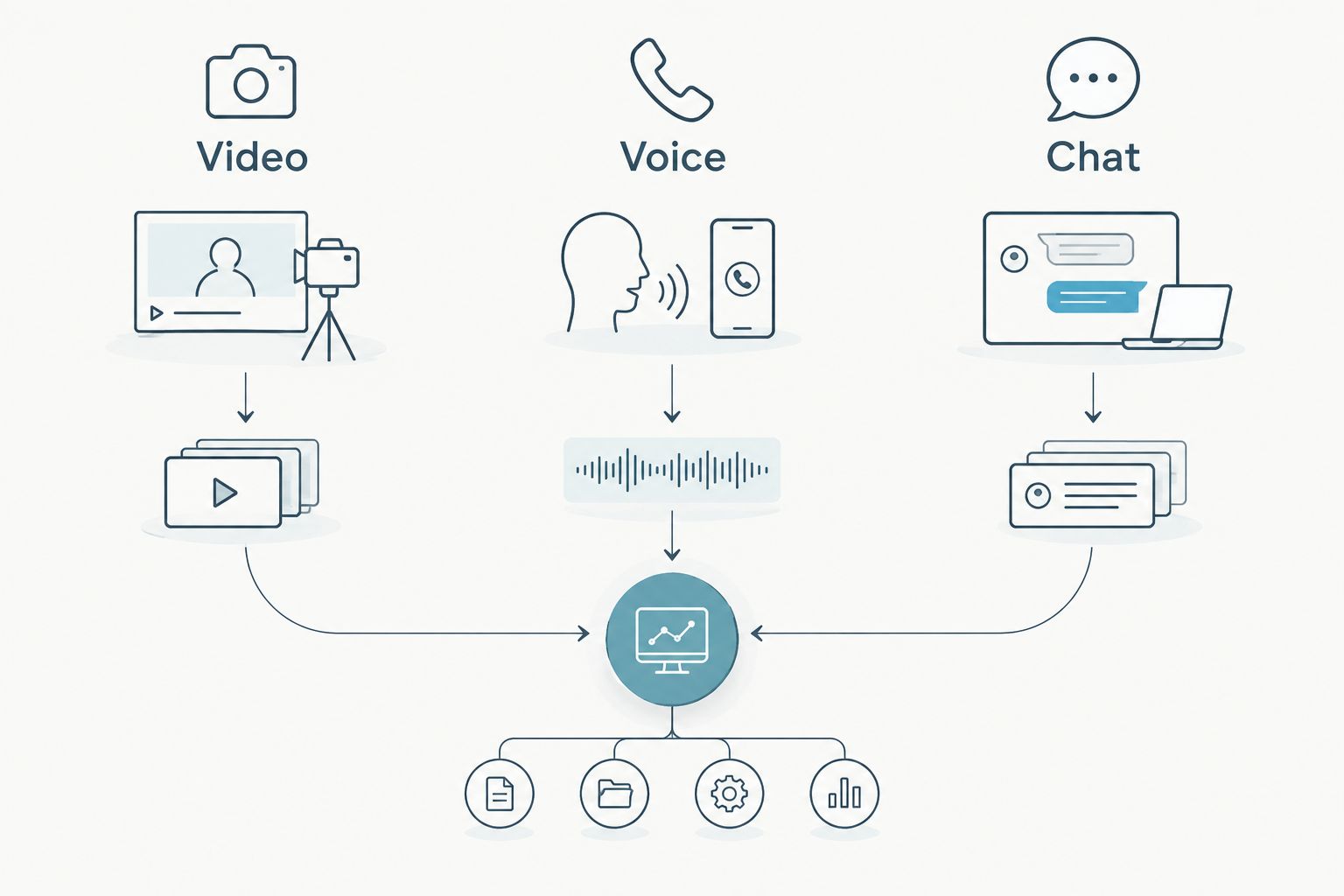
Choose the format around how you communicate and where you will attend. Video lets you see the therapist, voice removes the camera, and chat lets you communicate in writing. None of these formats makes an unsuitable location private.
Voice can suit someone who wants to speak but does not want to be on camera. Chat can suit someone who finds writing easier, but you must establish whether the exchange happens live or through messages answered later. Those are different arrangements.
InnerSpark Africa online therapy offers video, voice and chat. Ask which format the chosen therapist uses and whether switching formats is possible. Choose the format you can attend consistently, not the one that looks most convenient during a quiet shift.
- Choose video if seeing the therapist helps you communicate.
- Choose voice if you prefer speaking without a camera.
- Choose chat if writing helps you explain your concerns.
- Ask whether chat is live or answered later.
- Check where messages or appointment notifications will appear.
Clarify confidentiality and payment before booking
Ask the therapist to explain confidentiality in plain language, including its limits. Do not rely on the word confidential without understanding who can access records, when information must be shared and what happens during an emergency.
If an employer funds support, ask separately whether the employer receives attendance information, billing details or clinical information. Do not assume workplace-funded therapy and independently arranged therapy have identical reporting arrangements. Get the explanation before sharing sensitive details.
For payment, confirm the currency, accepted methods and cancellation terms directly. If you want to use Mobile Money or a card, ask whether that method is accepted for your appointment. A Ugandan currency reference does not establish a Kenyan session charge, conversion amount or payment arrangement.
- Ask who can access appointment information and clinical notes.
- Request an explanation of confidentiality limits and emergency procedures.
- Clarify any information shared with an employer or referring organization.
- Confirm the session charge, billing currency and accepted payment method.
- Check cancellation, rescheduling and refund terms before paying.
Prepare for an honest first conversation
You do not need to present your experience like a patient history. Start with what made you book and what feels hardest to say. Your clinical knowledge does not require you to explain your own difficulties perfectly.
Prepare 3 questions for the first conversation: how the therapist works, how you will agree goals, and what happens if the approach does not suit you. Keep the questions in your own words. An appointment is also a chance to understand the working relationship.
Describe difficult clinical experiences without naming patients or sharing identifying records. You can explain the emotional effect of an event without reproducing a chart, photograph or case discussion. Ask the therapist for guidance if you are unsure what detail is appropriate.
- Bring your short note about what prompted the appointment.
- Say if professional shame or fear of judgment makes talking difficult.
- Explain which subjects you want to approach slowly.
- Discuss patient-related experiences without identifiable information.
- Ask what to expect after the first conversation.
Review the fit and agree the next step
After an appointment, consider whether you felt heard and understood the therapist’s approach. Feeling uncomfortable while discussing something painful is different from feeling dismissed or pressured. Bring concerns about the working relationship into the next conversation rather than silently accepting them.
Agree how you will review your goals and whether the appointment format fits your rota. Avoid judging therapy only by whether you feel better immediately after a session. Use the goals you agreed with the therapist to discuss what is useful and what needs changing.
For your 2026 plan, leave room to ask about a different therapist or another kind of care. If you are in immediate danger or cannot keep yourself safe, seek urgent local help or attend the nearest emergency department rather than waiting for a routine online session.
- Review whether the therapist understood your main concerns.
- Ask for clarification when the approach or next step is unclear.
- Raise problems with timing, privacy or communication format.
- Discuss a different therapist or referral if the fit is wrong.
- Use urgent services when waiting for an appointment is unsafe.
Compare support options for healthcare workers
Choose support by purpose, not by a single label such as wellness. In 2026, an online appointment, a staff support service and an informal conversation can all occupy different places in your support plan.
The table compares formats and routes rather than promising that any option produces a particular result. For personal therapy, assess the practitioner and confidentiality arrangements; for workplace problems, also use the appropriate organizational route.
| Option | Best for | Practical benefit | Key limitation |
|---|---|---|---|
| Licensed online video therapy | Adults who want face-to-face conversation without travelling | You can see and speak with the therapist remotely | Requires a private location and a workable video connection |
| Licensed online voice therapy | Adults who prefer speaking without a camera | Removes the need to appear on screen | Offers no visual communication and still requires speaking privacy |
| Licensed online chat therapy | Adults who prefer explaining concerns in writing | Provides a written communication format | Live and delayed messaging differ; records need privacy protection |
| In-person therapy | Adults who want a separate place for appointments | Moves the conversation outside your home or workplace | Requires travel and an appointment that fits your rota |
| Employer-arranged support | Staff who want to explore support through work | Gives you a workplace route to ask about help | Reporting arrangements and service scope need checking |
| Peer support | Healthcare workers who want collegial conversation | Provides space to talk with someone who understands the work | Is not a substitute for individualized therapy or urgent care |
Common mistakes healthcare workers make
Treating therapy like another clinical assessment
You are attending as a person seeking support, not as a clinician defending a management plan. Explaining every symptom in technical language can leave your actual concern unspoken. Say what the experience means to you, even if the words feel less precise than your professional vocabulary.
Replace the polished case summary with a personal starting point: what happened, what you notice now and what you want help discussing. You can add detail at a pace agreed with the therapist.
Booking during an interruptible break
A quiet moment on the rota is not necessarily protected time. If you remain responsible for responding to patients or colleagues, the appointment competes with duties you cannot simply ignore.
Choose time away from active clinical responsibility and a location where you can speak. If that is difficult, explain the constraint before booking rather than assuming a therapist can work around repeated interruptions.
Sharing identifiable patient information
Seeking support after a clinical event does not require uploading patient records or repeating names. Focus on your response, the situation in broad terms and what you need to discuss.
Keep therapy separate from formal incident reporting. If a concern requires action through your employer’s clinical or safeguarding process, use that process rather than expecting a personal therapist to resolve the workplace issue.
Assuming local context means automatic fit
A therapist’s location does not by itself establish shared language, familiarity with your role or experience with your concern. Ask about all of these directly. Cultural understanding matters, but you still need to understand the person’s professional approach.
When choosing InnerSpark Africa online therapy in 2026, apply the same checks you would use elsewhere. A licensed therapist and a suitable communication format are starting criteria, not proof of healthcare-worker specialization.
Waiting until you can explain everything clearly
You can ask for support while your reasons still feel mixed or uncertain. Work stress, family responsibilities and personal difficulties do not need to be separated neatly before a first conversation.
Start with the part you can explain. Ask how the therapist helps people clarify goals, and keep emergency support separate from routine booking if your immediate safety is at risk.
FAQ
What is online therapy for healthcare workers in Kenya?
Online therapy for healthcare workers in Kenya is remote mental health support delivered by a therapist through a format such as video, voice or chat. It can address personal concerns as well as emotional strain connected with healthcare work.
Is InnerSpark Africa suitable for healthcare workers in Kenya?
InnerSpark Africa connects people in Kenya with licensed therapists for video, voice or chat sessions. Ask about the individual therapist’s experience with healthcare workers, preferred language and suitability for your concern before booking.
Will my employer know that I am attending therapy?
Ask the provider what information, if any, is shared with your employer. If work funds or arranges the support, clarify attendance reporting, billing information and access to clinical records before the first appointment.
Is video therapy better than voice or chat?
The best format depends on your communication preferences, privacy and the therapist’s approach. Video provides visual communication, voice removes the camera, and chat uses writing; confirm whether chat is live or answered later.
How much does online therapy cost for a healthcare worker in Kenya?
Confirm the current session charge and billing currency directly with the provider before booking. Ask about accepted payment methods, cancellation terms and whether any payment or conversion charges apply.
Can I discuss a patient death without breaking confidentiality?
You can discuss your emotional response without sharing identifiable patient information. Leave out names and identifying records, and ask the therapist how to describe the experience appropriately.
Do I need a diagnosis before booking online therapy?
You do not need to diagnose yourself before asking a therapist for support. Explain what is troubling you and ask whether the service is appropriate for your needs.
What should I do if I need help immediately?
If you are in immediate danger or cannot keep yourself safe, seek urgent local help or attend the nearest emergency department. Do not wait for a routine online therapy appointment; contact a trusted person who can help you access urgent care.
One last thing
Your ability to care for patients is not a test you must pass before asking for care yourself. You can value your work and still need a private place to discuss its effect on you.
For a practical next step in 2026, write down your preferred format, available private time and main question. Then contact InnerSpark Africa to ask about booking a licensed therapist who fits those needs. You can ask questions before deciding.
Ask about booking a therapist
Explore licensed therapy by video, voice or chat and ask which arrangement fits your needs.