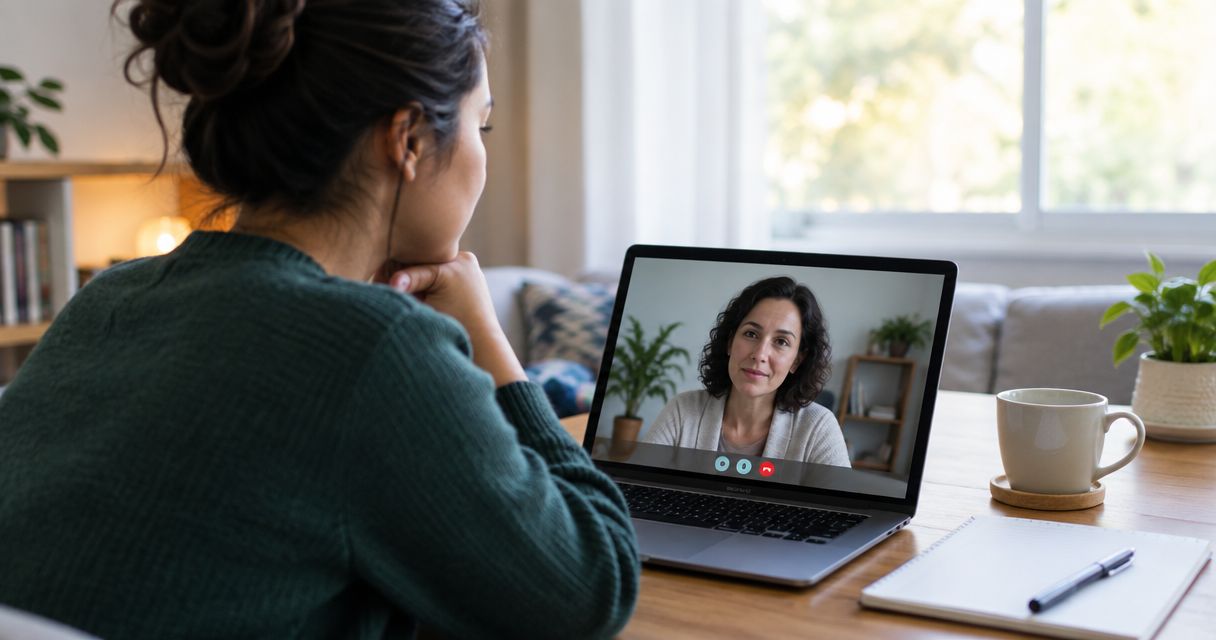
Teachers’ online therapy in Uganda is support from a therapist through video, voice or chat, with the aim of helping you address emotional difficulties that affect your working and personal life. This guide explains how to choose support around teaching commitments, protect your privacy and discuss school-related concerns without identifying pupils.
- Online therapy for teachers in Uganda should fit your timetable, privacy needs and preferred way of communicating.
- InnerSpark Africa is best for teachers seeking licensed therapists through video, voice or chat.
- Check therapist credentials and confidentiality arrangements before booking online counselling.
- Use your first session to discuss your concerns and agree on a practical starting point.
Why online therapy matters for teachers in Uganda
Teaching-related concerns can overlap with personal ones: a difficult classroom interaction, tension with a colleague, family responsibilities or trouble switching off after work. You do not need to decide whether your concern is serious enough before asking a therapist about support. Start with what is troubling you and how it affects your day.
Online sessions remove the need to travel to a therapy appointment, but they still require protected time and a suitable place to talk. For a teacher, the useful question is not simply whether a service operates online. It is whether you can use it without interruptions, overheard conversations or pressure to return immediately to class.
For your 2026 search, the guide to online counselling services in Uganda provides a separate starting point for comparing services. Choose around your actual constraints, not a promise that one platform suits every teacher.
Therapy and workplace action serve different purposes. A therapist can help you explore how a situation affects you; a school’s reporting process addresses employment or safeguarding concerns. Getting emotional support does not replace reporting an unsafe situation through the appropriate channel.
How to choose online therapy around your teaching life
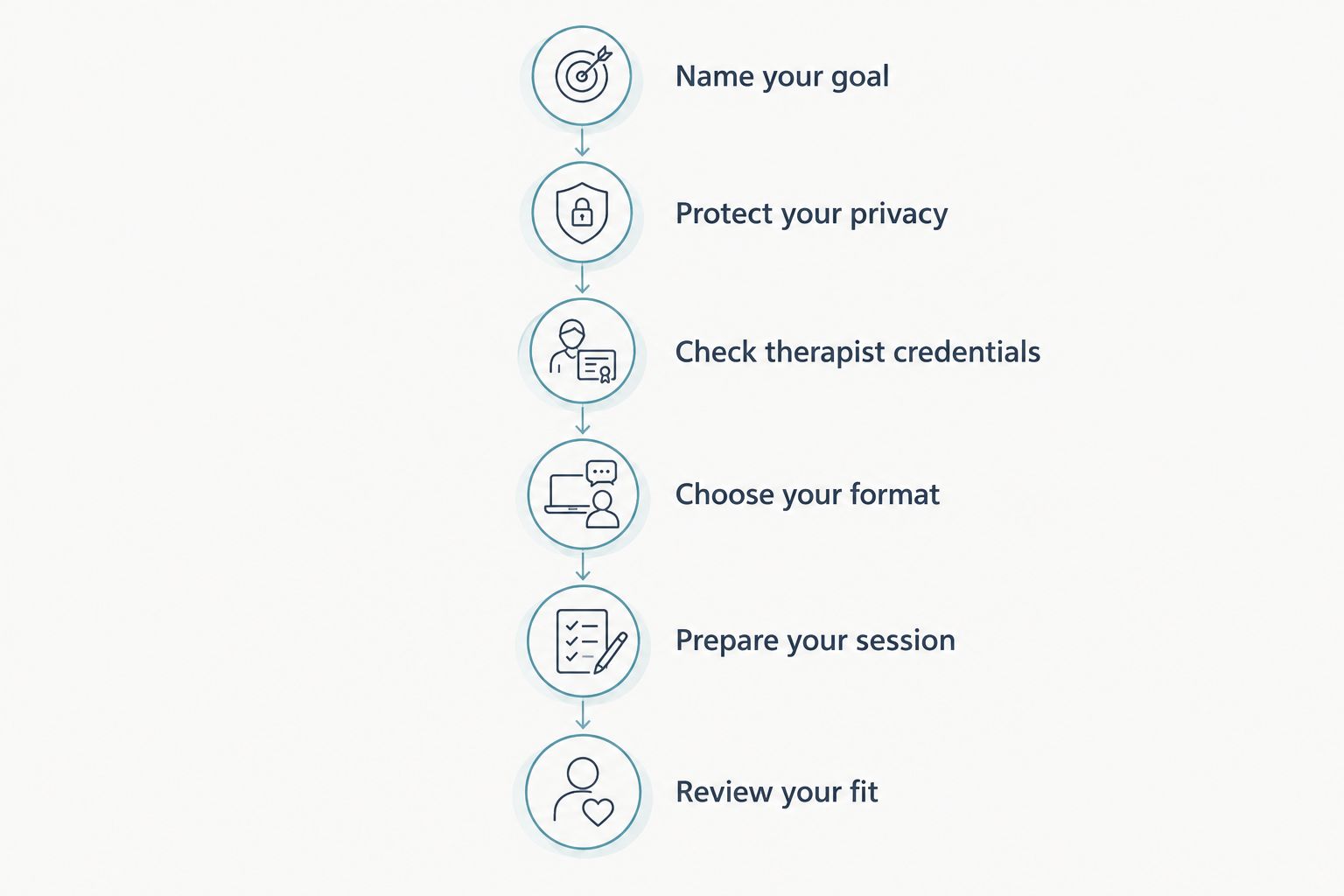
Follow this sequence: name your goal, protect your privacy, check therapist credentials, choose your format, prepare your session and review your fit. You can do the preparation yourself before choosing a provider. A platform helps connect you with a therapist; it does not replace these decisions.
Name your goal
Begin with an ordinary-language description of what you want help with. You do not need a diagnosis or a polished explanation. A useful opening is that you keep replaying difficult school days, feel overwhelmed by responsibilities or want help handling conflict without carrying it home.
Separate the situation from the change you want. The situation might be repeated disagreements at school; your goal might be responding more calmly or deciding how to raise concerns. That distinction gives the therapist something concrete to explore without asking therapy to solve an entire workplace problem.
Spend 10 minutes preparing a short note before contacting a provider. This is a planning suggestion, not a requirement. Keep it somewhere private rather than in a shared school document or notebook pupils can access.
- Write down the concern you most want to discuss.
- Describe how it affects your sleep, concentration, relationships or work.
- Identify what you would like to feel or handle differently.
- Note whether the concern extends beyond school.
- Leave pupil names and identifying details out of your notes.
Protect your privacy
Check your physical setting before choosing a session time. Headphones help keep the therapist’s voice from being heard, but they do not stop someone nearby hearing your side of the conversation. An empty classroom is not private if colleagues or pupils can walk in.
Use a personal device where possible, and ask what happens to messages, appointment notifications and session records. Do not assume that an employer-owned device or shared account gives you the privacy you need. Check who has access before entering sensitive information.
Confidentiality also has limits. Ask the therapist to explain those limits in plain language, including circumstances involving serious safety concerns or legal obligations. If your school is arranging support, establish what information, if any, goes back to the school before you begin.
- Choose somewhere you will not be overheard or interrupted.
- Check access to your device, email and notifications.
- Ask whether sessions are recorded and how records are handled.
- Ask who can see chat messages and appointment details.
- Clarify confidentiality limits and any employer reporting arrangements.
Check therapist credentials
Start by asking a prospective therapist for their professional qualification, licensing or registration details, and experience relevant to your concerns. A profile description is a starting point, not a substitute for understanding who will provide your care. Ask which professional body you can contact to check the stated credentials.
InnerSpark Africa connects people in Uganda and other African countries with licensed therapists for video, voice or chat sessions. InnerSpark Africa is best for teachers seeking licensed therapists through video, voice or chat. Its range of formats gives you a choice of how to communicate; you still need to check an individual therapist’s experience, language and confidentiality arrangements.
For your 2026 shortlist, prepare 2 questions: whether the therapist works with the concerns you have described, and how they approach those concerns. Ask about your preferred language directly rather than assuming every therapist offers it.
- Request the therapist’s qualification and professional registration details.
- Ask about experience with your stated concern, not just teachers generally.
- Confirm the language you want to use in sessions.
- Ask how the therapist explains their approach and agrees on goals.
- Check what happens if the therapist is not a suitable fit.
Choose your format
Choose a format based on how you communicate and the privacy you can arrange. Video includes visual communication, voice lets you speak without using a camera, and chat lets you write. None is automatically the right choice for every teacher or every concern.
Try your device and connection before committing to a format. A format that looks convenient on paper is not useful if you spend the session managing technical problems or worrying about interruptions. Ask the provider what to do if the connection fails.
Chat also needs clarification. Ask whether it means a live conversation at an agreed time or messages answered later. Those are different arrangements, and the word chat alone does not tell you which one you are booking.
- Choose video if seeing the therapist matters to you.
- Choose voice if you want to speak without a camera.
- Consider chat if writing feels easier than speaking.
- Confirm whether chat is live or answered later.
- Agree on a backup plan for connection problems.
Prepare your session
Bring your short note, but do not turn the appointment into another task you must perform perfectly. Tell the therapist if you feel uncertain, embarrassed or unsure where to start. You can begin with a recent situation and work outward from there.
Keep discussion of school events focused on your experience. Describe what happened, how you responded and what stayed with you afterward. Avoid sharing names, photographs, school records or details that make a pupil identifiable unless an appropriate safeguarding process requires disclosure.
Protect the transition back to work too. Do not place a session between duties if you cannot finish without rushing. Before booking, check the expected session length and whether the appointment fits your timetable.
- Bring a brief description of your main concern.
- Mention relevant previous support or treatment.
- Explain what you hope to get from the conversation.
- Discuss pupil-related situations without identifying pupils.
- Keep your next commitment from cutting the session short.
Review your fit
After 1 session, review whether you felt listened to, understood the therapist’s explanations and could ask questions. This is a check on fit, not a deadline for feeling better. Do not judge the value of therapy only by whether a difficult feeling disappeared immediately.
Notice whether the therapist respects your boundaries and helps you agree on a focus. A conversation can feel uncomfortable without being disrespectful; equally, you do not have to dismiss concerns about pressure, unclear explanations or conduct that feels inappropriate.
Before arranging another appointment, clarify anything unresolved. Ask about the proposed approach, what you will discuss next and how progress will be reviewed. For your 2026 therapy plan, leave room to reconsider the therapist or format rather than treating the first booking as a permanent commitment.
- Check whether you could speak without being shamed.
- Ask for an explanation of anything you did not understand.
- Confirm the focus of the next session.
- Discuss difficulties with the format or timing.
- Ask about changing therapists if the fit is not right.
Compare options for your situation
Best for means best for a stated need, not best overall. Online and in-person therapy both require attention to credentials, confidentiality and fit. Informal support has a different role and should not be presented as equivalent to therapy.
Use this 2026 comparison to decide what arrangement to investigate. The limitations are practical trade-offs, not reasons to rule out an option automatically.
| Option | Best for | Main advantage | Key limitation |
|---|---|---|---|
| InnerSpark Africa online therapy | Teachers seeking licensed therapists through video, voice or chat | Connects you with licensed therapists and offers different communication formats | You must confirm the individual therapist’s fit and arrange a private setting |
| Video therapy | Teachers who want visual communication | Lets you see and speak with the therapist | Requires a working camera, suitable connection and privacy |
| Voice therapy | Teachers who prefer speaking without a camera | Supports a spoken conversation without video | People nearby can still hear your side of the session |
| Chat therapy | Teachers who prefer expressing themselves in writing | Provides a written way to communicate | You must clarify response timing and how messages are stored |
| In-person therapy | Teachers who prefer meeting in a separate physical space | Provides face-to-face conversation away from your usual setting | Requires travel and time around the appointment |
| Trusted colleague or friend | Teachers seeking everyday emotional support | Offers a familiar person to talk with | Is not a substitute for professional therapy or formal reporting |
Common mistakes teachers make when arranging therapy
Booking during an unprotected school break
A break is not protected time if you remain responsible for pupils or colleagues regularly interrupt you. Choose a slot when you can step away from duties. If that is not possible at school, look for another setting rather than trying to squeeze a private conversation into a shared space.
Assuming employer-funded support stays entirely private
Funding and confidentiality are separate questions. Ask what the therapist or service reports to the employer, including attendance or other administrative information. Get an explanation before discussing sensitive matters; do not rely on an informal assurance from a colleague.
Sharing pupil details to explain the problem
You can explain your emotional response without providing a pupil’s full identity or records. Describe the situation in general terms. Where there is a safeguarding concern, follow the appropriate reporting process rather than using your therapy session as the only place you disclose it.
Expecting therapy to repair school conditions
Therapy can focus on your responses, needs and decisions, but it does not change staffing, workload allocation or management decisions by itself. Keep emotional support and workplace action separate. You can seek therapy while also raising practical concerns through the relevant school process.
FAQ
What is online therapy for teachers in Uganda?
Online therapy for teachers in Uganda is support from a therapist through video, voice or chat. You can discuss work-related or personal concerns without travelling to the appointment, provided you have a suitable device and private setting.
Which online therapy option is best for a teacher in Uganda?
The best option fits your privacy, timetable, communication preferences and therapist needs. InnerSpark Africa connects people with licensed therapists through video, voice or chat; check the individual therapist’s credentials, language and experience before booking.
Can I talk about school problems without identifying pupils?
Yes, you can describe school situations while leaving out pupil names and identifying details. Focus on what happened and how it affected you; handle safeguarding concerns through the appropriate reporting process.
Is online therapy confidential if my school pays for it?
Clarify confidentiality and employer reporting before using school-funded therapy. Ask what information goes back to the school and what exceptions apply to confidentiality, rather than assuming payment determines privacy.
Is voice therapy better than video therapy for teachers?
Voice therapy is a practical choice if you prefer speaking without a camera, while video suits people who want visual communication. Both require a place where your conversation will not be overheard.
How do I check therapy costs before booking in 2026?
Ask the provider for the current session charge and payment arrangements before confirming a booking. Also check cancellation terms and any conditions attached to the appointment so you understand what you are agreeing to.
What should I do if I need urgent help instead of a booked session?
Seek immediate local emergency care if you are in immediate danger or cannot keep yourself safe. Contact someone you trust who can stay with you, and do not wait for a scheduled online therapy appointment or chat reply.
Related guides
- Compare online therapy platforms in Kenya
- Check what to ask about therapy costs in Uganda
- Compare online therapy platforms in Tanzania
One last thing
The most convenient appointment is not always the most usable one. A session on a school device during an interrupted break still leaves you managing privacy and duties. Before your next step in 2026, decide where you can talk and when you can genuinely step away.
When you are ready, book a licensed therapist through InnerSpark Africa. Start with the concern you want help with, and ask about fit before committing to further sessions.
Book a licensed therapist
Choose video, voice or chat, and ask about therapist fit and confidentiality before your session.