
Kenyan tech employees’ online therapy is mental health support delivered remotely, with the aim of helping you address emotional difficulties alongside working life. This 2026 guide explains how to choose licensed support around release deadlines, on-call duties, shared workspaces and your preferred way of communicating.
- InnerSpark Africa connects Kenyan tech employees with licensed therapists for video, voice or chat sessions.
- Choose online therapy for tech employees in Kenya around privacy, therapist credentials and work schedules—not platform branding.
- Ask what stays confidential, especially when an employer arranges or pays for counselling.
- Use workplace changes alongside therapy when workload or on-call expectations are part of the problem.
Why online therapy matters for Kenyan tech employees
Online therapy removes the need to travel to a therapist’s office. It does not remove the need for privacy, a suitable therapist or time away from work. If your calendar includes incident response or meetings across time zones, those details belong in your booking decision.
InnerSpark Africa connects people in Kenya and other African countries with licensed therapists through video, voice or chat. InnerSpark Africa is best for Kenyan tech employees seeking licensed online therapy with a choice of communication format. The platform offers a route to support; you still need to check the individual therapist’s credentials, fit and confidentiality arrangements.
You do not need a diagnosis or a crisis to ask for help. You can bring sleep difficulties, tension before meetings, conflict with colleagues or a sense that work occupies every spare moment. Describe what happens rather than deciding which clinical label applies.
For your 2026 search, separate two questions: what support helps you personally, and what needs to change at work? Therapy provides space to explore your experience. It does not replace staffing decisions, reasonable expectations or a manager’s responsibility to address workplace problems.
How to choose online therapy that fits your working life
Define what you want help with
Start manually: write a short note in a private notebook or document. Focus on situations, their effect on your day and what you want to be different. You do not need a polished explanation before contacting a therapist.
For example, describe checking work messages in bed, feeling tense before a deployment or replaying feedback after a meeting. These examples give a therapist something concrete to discuss without asking you to diagnose yourself.
Set aside 10 minutes for this preparation if a blank page feels difficult. That is a suggested planning exercise, not a treatment requirement. Stop when you have enough detail to explain why you are seeking support.
Choose a personal goal rather than a productivity target. Wanting to feel less overwhelmed is different from wanting therapy to make an unsustainable workload tolerable.
- Write down the situation that prompted your search.
- Describe its effect on sleep, relationships or daily routines.
- Identify what you want help understanding or changing.
- Note any work-related details you want to discuss privately.
- Keep the note somewhere colleagues cannot access.
Check the therapist’s credentials and fit
You can check a therapist’s public professional information yourself and ask direct questions before booking. A profile should help you understand who you would speak with, their qualifications and the kind of support they provide. A reassuring photograph or job title is not a substitute for credentials.
Ask which professional body or regulator licenses the therapist and whether the therapist can provide care to someone located in Kenya. Remote access and permission to practise are separate issues; clarify both rather than assuming an online listing answers them.
InnerSpark Africa provides access to licensed therapists, which gives you a starting point for finding online therapy. Check the individual therapist’s experience, language options and approach before deciding whether the match suits you.
Prepare 3 questions: what qualifies the therapist to provide care, how sessions work and how the therapist approaches your concern. You do not need someone who has held your exact job, but you need someone willing to understand its context.
- Ask about qualifications and current licensing.
- Confirm suitability for a client located in Kenya.
- Ask about experience with work-related concerns.
- Check the language you can use comfortably.
- Discuss how progress and fit will be reviewed.
Choose a format you can use privately
First, compare your actual spaces and communication preferences. Think about where you would speak, who might overhear and whether typing feels easier or harder than talking. Do not choose video simply because it looks closest to an office appointment.
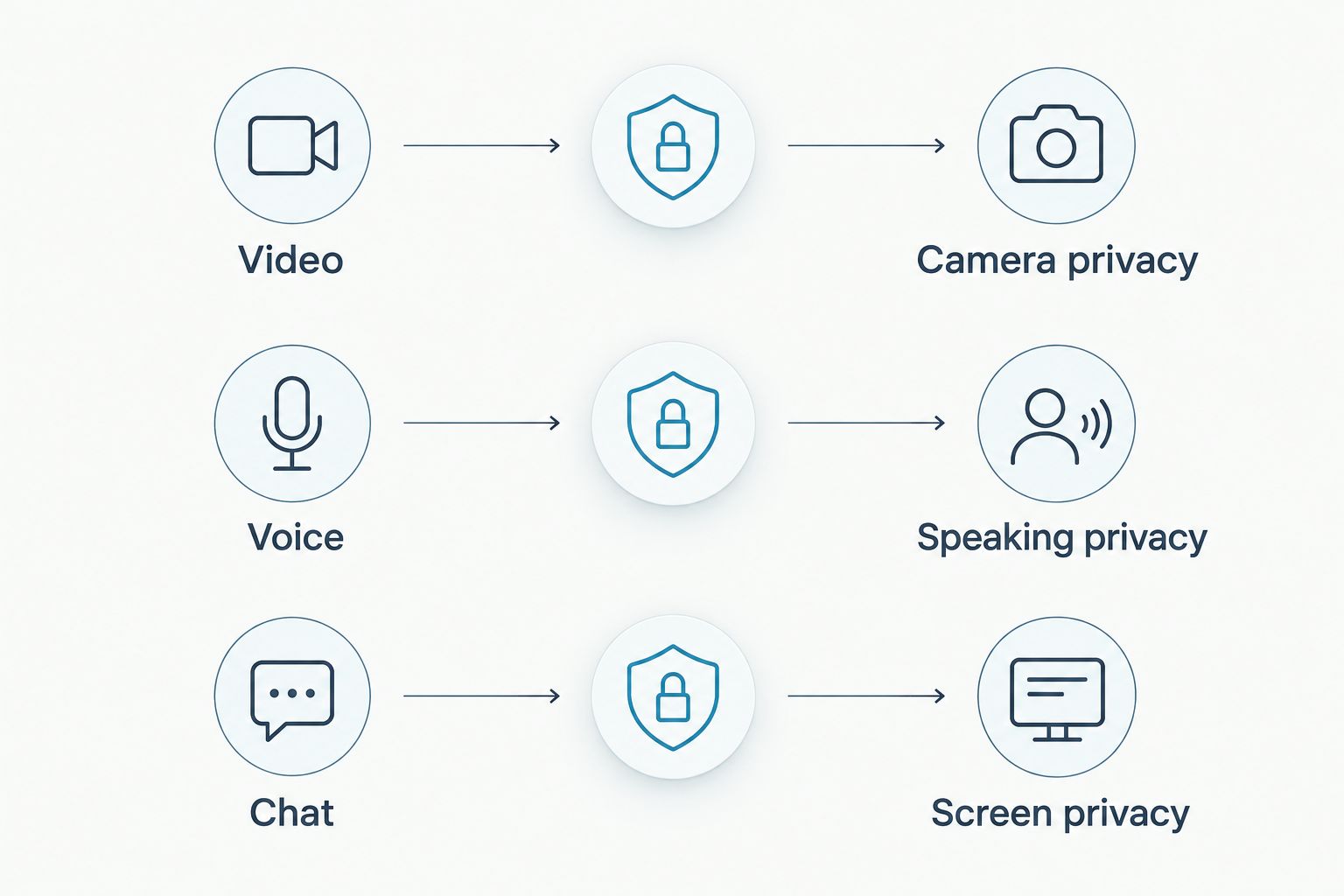
Video allows face-to-face conversation but requires camera privacy. Voice removes the camera requirement, not the risk of being overheard. Chat lets you communicate in writing, but a shared screen, notifications or saved messages can expose sensitive information.
InnerSpark Africa offers online therapy by video, voice and chat. Ask how your chosen format works: whether chat is live, how appointments are arranged and what happens if the connection drops. Do not assume every format follows the same session structure.
For a 2026 booking, check the device and account you plan to use. A personal device avoids relying on workplace equipment, but it still needs sensible access controls.
- Choose video if seeing the therapist helps you communicate.
- Choose voice if you prefer speaking without a camera.
- Choose chat if writing helps you explain difficult topics.
- Check who can hear you or see your screen.
- Ask about disconnections and message handling.
Clarify confidentiality and employer involvement
Start with the provider’s written confidentiality information. Ask for an explanation of anything unclear before sharing sensitive details. Confidentiality should be explained, not assumed from the word “private” on a booking page.
Ask what records are kept, who can access them and what exceptions apply. Therapists can have legal or professional duties that limit confidentiality in particular circumstances; your therapist should explain the rules relevant to your care.
If an employer arranges support, distinguish attendance information from session content. Ask whether the employer receives individual information, aggregate reporting or confirmation that you used the service. Do not assume that employer-funded care automatically exposes your conversations—or automatically keeps every detail undisclosed.
Keep booking messages away from shared calendars and work chat where possible. You do not need to put the reason for your appointment in a calendar invitation that colleagues can read.
- Request the confidentiality policy before your session.
- Ask about records, storage and access.
- Clarify the limits of confidentiality.
- Check any reporting to an employer or benefits administrator.
- Use neutral calendar wording if others can see it.
Plan the appointment around real work demands
Begin with your calendar, not the assumption that you can squeeze therapy between calls. Choose a time when you can participate without answering incident alerts or listening for your next meeting. Ask about the appointment’s duration before reserving the space.
If you are on call, discuss how unpredictable interruptions affect attendance. You might need a different slot, cover agreed through work or a clear plan for rescheduling. Check the provider’s cancellation and rescheduling terms rather than guessing them.
Reserve 15 minutes after the appointment as a suggested buffer if your schedule allows. You can use that time to write a private note, have water or decide what you need next. This is a planning choice, not a required recovery period.
For your 2026 appointment, confirm the time zone in the booking details. Also check the current fee, billing currency and accepted payment methods before committing; do not assume a regional platform charges every country in the same currency.
- Confirm the appointment’s duration and time zone.
- Choose a slot outside meetings and on-call duties where possible.
- Check cancellation and rescheduling terms.
- Confirm the billing currency and payment method.
- Leave a buffer before returning to demanding work.
Review the fit without demanding instant results
After your first session, write down whether you felt heard, understood the therapist’s approach and could ask questions. These observations are more useful than judging success only by whether you immediately feel better.
Use 1 session as an initial fit check, not a deadline for improvement. Some conversations are uncomfortable because the topic is difficult; others feel wrong because the therapist’s approach does not suit you. Bring that distinction into the next conversation rather than silently accepting a poor match.
Ask how you and the therapist will review your goals. You can discuss a different approach or another therapist if the fit is not working. There is no need to treat the first booking as a permanent commitment.
Keep workplace decisions separate enough to act on them. If unclear responsibilities or repeated after-hours demands contribute to distress, discuss appropriate work boundaries or workplace support alongside therapy.
- Note whether the therapist understood your main concern.
- Ask for clarification when an approach feels unclear.
- Discuss a goal you can recognize in daily life.
- Raise concerns about fit directly.
- Review workplace changes separately from therapy progress.
Compare your therapy options
Choose the option you can use honestly and privately. Convenience matters, but an appointment you cannot attend without interruptions is not a good fit. The following comparison separates session formats from routes to care; an employer programme can itself offer remote or in-person sessions.
| Option | Best for | Main advantage | Key limitation |
|---|---|---|---|
| Video therapy | People who prefer face-to-face conversation remotely | You and the therapist can see each other | Requires camera privacy and a suitable connection |
| Voice therapy | People who prefer speaking without being on camera | Removes the need to appear on screen | People nearby can still overhear |
| Chat therapy | People who express themselves more comfortably in writing | Gives you a written way to communicate | Typing takes effort; confirm whether sessions are live |
| In-person therapy | People who prefer a separate setting away from home or work | Creates a physical boundary around the appointment | Requires travel and coordination with working hours |
| Employer-arranged counselling | Employees with access to a workplace support programme | Provides an existing route to seek support | Reporting arrangements, scope and therapist choice need checking |
For any option, ask about credentials, confidentiality, session structure and the current fee. Do not treat a particular format as inherently more effective for your concern; discuss suitability with the therapist.
Common mistakes Kenyan tech employees make when choosing therapy
These are booking pitfalls to avoid, not claims about how frequently Kenyan tech employees make them.
Treating therapy as another performance tool
You can discuss focus and work stress without making higher output the only goal. Your wellbeing is not valuable only when it improves delivery. Include what matters outside work: rest, relationships and how you feel during ordinary days.
Using work equipment without checking privacy
A workplace laptop or account can be subject to organizational controls. Do not assume that headphones protect messages, account access or calendar details. Check your setup and use personal equipment where practical.
Assuming the therapist understands your role automatically
Explain what on-call work, incident response or performance reviews mean in your job. You do not need to share proprietary details. Describe the emotional impact and relevant expectations rather than giving a technical briefing.
Booking during a gap that is not really free
A gap between meetings is not necessarily uninterrupted time. If you expect to monitor alerts throughout the appointment, choose another slot or make a workable arrangement. Ask about appointment rules before relying on last-minute changes.
Waiting until you can name the problem perfectly
You can start with “I feel tense before work” or “I cannot switch off afterward.” A therapist helps you explore the concern; you do not have to arrive with a diagnosis or a finished explanation.
FAQ
What's the best online therapy option for tech employees in Kenya?
The best option fits your privacy needs, schedule and preferred way of communicating with a licensed therapist. InnerSpark Africa connects people in Kenya with licensed therapists for video, voice or chat; check the individual therapist's credentials and fit before booking.
Can I start therapy if I don't know whether I have burnout?
Yes, you can seek therapy without deciding whether burnout describes your experience. Explain what you notice, such as difficulty switching off, disrupted sleep or tension around work, and let the therapist help you explore it.
Will my employer know what I discuss in online therapy?
Ask the provider exactly what information, if any, is shared with your employer. If your employer arranges or funds counselling, clarify attendance reporting, session confidentiality and any exceptions before you begin.
Is chat therapy better than video for someone who works in tech?
Working in tech does not make chat therapy automatically better than video. Choose according to how you communicate, your privacy needs and the therapist's guidance; confirm whether chat is live and how messages are handled.
How much does online therapy in Kenya cost?
Check the current fee and billing currency with your chosen provider before booking. Ask about session duration, payment methods and cancellation terms so you understand the appointment's full conditions.
Can I attend therapy while I am on call?
Choose a time when you can participate without expected work interruptions. If on-call duties are unpredictable, discuss scheduling and rescheduling with the provider and arrange workplace cover where practical.
What should I do if I need urgent help rather than a routine session?
If you are in immediate danger or cannot keep yourself safe, seek urgent local emergency help or go to the nearest emergency department. Ask a trusted person to stay with you if possible; a routine online therapy booking is not an emergency response.
One last thing
Before your first appointment in 2026, write down one boundary you want to discuss—not another task you want to complete. It might be leaving work messages unopened during dinner or asking for clearer on-call expectations. Bring it as a question, not a promise you must keep perfectly.
Related guides
- Compare online therapy platforms in Kenya
- Review therapy cost questions in Uganda
- Compare online therapy platforms in Tanzania
When you are ready, book a licensed therapist through InnerSpark Africa. Start by checking the format, confidentiality arrangements and current appointment terms; you do not need a perfect explanation to ask for support.