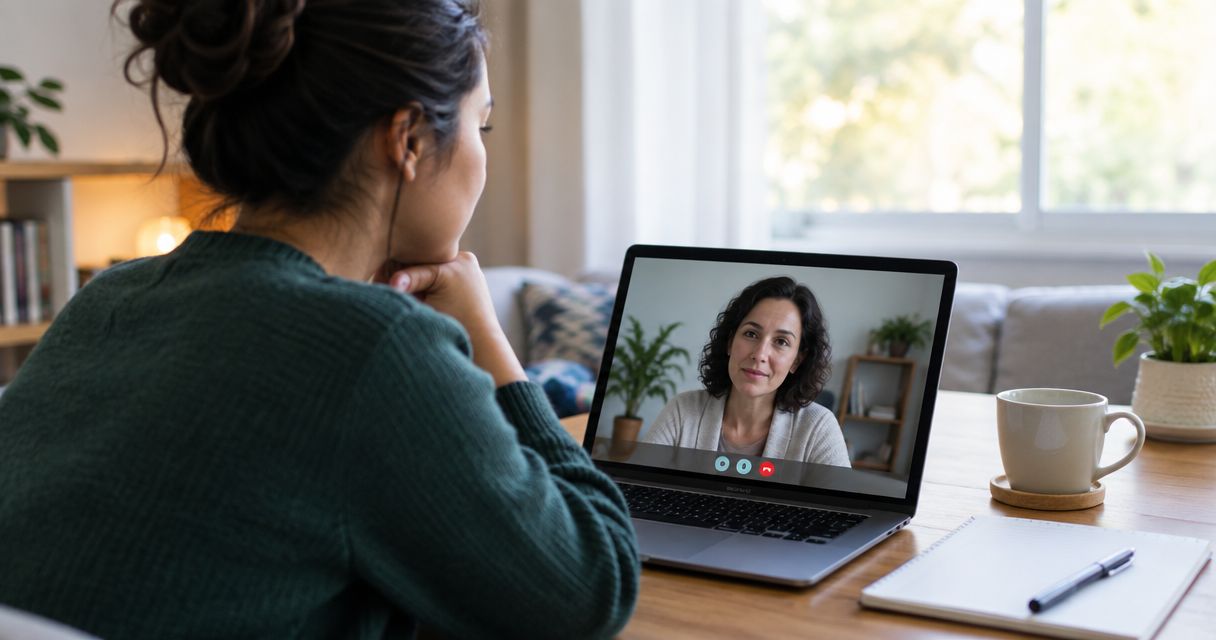
Small business owners’ therapy is support from a mental health professional aimed at helping you manage emotional strain and protect your wellbeing while running a business. This 2026 guide explains therapy for small business owners whose work, income and family responsibilities are closely connected, including how to choose a therapist without treating therapy as another performance target.
- Therapy for small business owners addresses emotional wellbeing; business coaching addresses business decisions and skills.
- InnerSpark Africa suits owners seeking online therapy with licensed therapists by video, voice or chat.
- Choose your therapist around work stress, personal goals, language and privacy—not promises of business growth.
- Prepare a private space and discuss confidentiality before sharing sensitive personal or business information.
Why therapy matters for small business owners
When you own the business, a difficult working day does not necessarily end when you close the shop or put down your phone. Unpaid invoices, staffing decisions and family expectations can follow you home. Therapy gives you a place to discuss their emotional effect without making employees, customers or relatives responsible for supporting you.
InnerSpark Africa is best for small business owners seeking online therapy with licensed therapists by video, voice or chat. The platform connects people in Uganda, Kenya, Tanzania and other African countries with therapists. You can explore InnerSpark Africa when you are ready to consider that route.
Online access is useful when your work makes travel difficult, but convenience alone does not establish a good therapeutic fit. You still need a format you can use privately and a professional whose approach matches what you want help with.
For your 2026 wellbeing plan, separate two questions: what needs changing in the business, and what support do you need personally? An accountant can help with financial records. A therapist can help you explore the worry, shame or conflict attached to those records. Neither replaces the other.
How to choose and start therapy
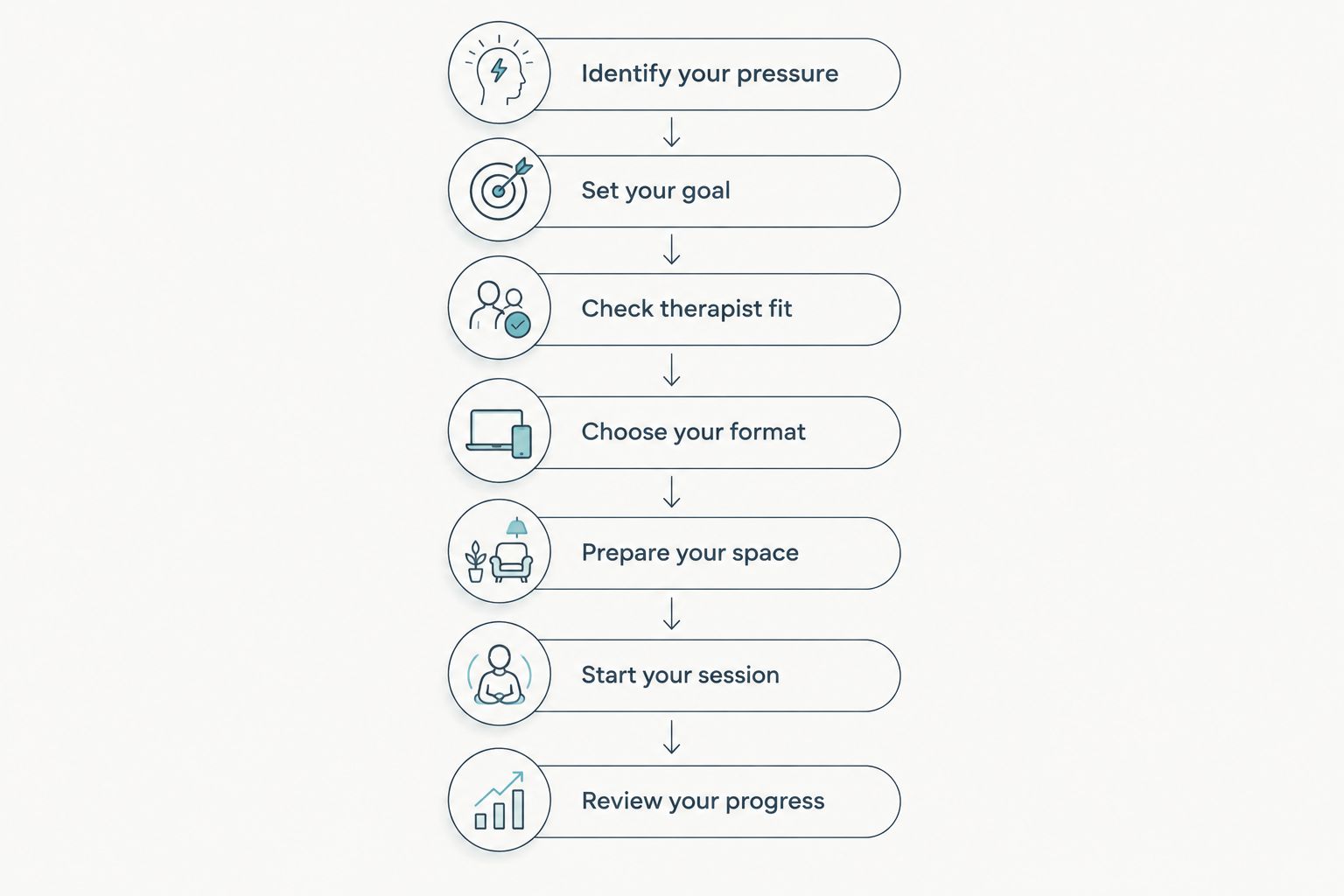
Identify your pressure
Start with a private note rather than a booking form. Describe what is happening in ordinary language: you keep checking messages after closing, dread difficult customer calls, or struggle to talk with your partner about money. You do not need to name a condition or decide whether your experience is serious enough.
Spend 10 minutes writing down the situations you want help with. This is a preparation exercise, not a screening test. Include what happens outside work, because business pressure and personal strain do not always stay separate.
Notice the difference between an event and its effect. A delayed payment is an event; lying awake replaying the conversation is an effect you can bring to therapy. Your notes help you explain the problem without turning the first session into a complete business history.
- Name the work situation that feels hardest.
- Describe how it affects sleep, attention or relationships.
- Note what you do when pressure builds.
- Include a personal concern unrelated to the business.
Set your goal
Before paying for support, decide what you want the conversation to help you understand or change. A useful starting goal is specific but not a promise: you want to discuss work without becoming overwhelmed, set clearer boundaries, or understand why a mistake feels like a judgment on your worth.
Write 3 questions you would like to explore. For example: why do you feel responsible for every problem, what makes it hard to delegate, and how can you speak honestly about money at home? These questions give the therapist a starting point while leaving room for their assessment.
Do not make increased revenue your therapy goal. Revenue depends on business conditions as well as your decisions, and a therapist cannot guarantee commercial results. Therapy goals belong to your wellbeing, behaviour and relationships.
- Choose one concern to discuss first.
- Describe what better daily functioning would mean to you.
- Separate personal goals from sales targets.
- Leave room to revise your goal with the therapist.
Check therapist fit
You can begin by asking any prospective therapist about their qualifications, professional registration where applicable, approach and experience with concerns like yours. Ask how they work with self-employed adults and what happens when your needs fall outside their practice. Clear answers matter more than a polished profile.
InnerSpark Africa offers an online route to licensed therapists, but the platform name does not replace an individual fit check. Confirm the therapist’s credentials and suitability for your country, language and concern before booking. Ask about cultural understanding directly rather than assuming every therapist shares your experience.
Confidentiality also belongs in this conversation. Ask who can access session information, how records are handled and what legal or safety exceptions apply. Do not assume that a private conversation means there are no exceptions, and do not share customer or employee identifiers unless they are genuinely necessary.
- Ask about credentials and relevant professional registration.
- Explain your location and preferred language.
- Ask about experience with work stress and relationship concerns.
- Request a clear explanation of confidentiality and its limits.
- Check how referrals work when different support is needed.
Choose your format
First, look at your actual working conditions. If you share a shop floor, office or home, a video appointment is not automatically the easiest option. Decide whether you can speak without being overheard, maintain a connection and give the conversation your attention.
InnerSpark Africa online therapy includes video, voice and chat sessions. Video supports face-to-face conversation; voice removes the need to appear on camera; chat uses written communication. Each changes how you communicate, so choose around your privacy and preferences rather than a claim that one format is universally better.
For your 2026 schedule, select a protected appointment window instead of squeezing therapy between customer calls. Ask how the chosen format works, including whether chat happens live and what the therapist does if the connection fails. Those details need confirmation before you commit.
- Choose video if seeing the therapist helps you communicate.
- Choose voice if you prefer speaking without a camera.
- Consider chat if written communication suits you.
- Confirm session arrangements and connection-loss procedures.
Prepare your space
You can improve your session setup without buying equipment. Find a room where other people cannot hear you, check your device and close work notifications. Headphones can reduce what others hear from the therapist, but they do not stop people nearby from hearing your voice.
Reserve 15 minutes before the appointment to settle in and check your connection. This is a practical buffer, not a required session length. If your only available space is a shared workplace, tell the therapist before the appointment and discuss whether another arrangement would protect your privacy better.
Treat the appointment as personal time. You do not need to disclose therapy to staff or customers to block your calendar. A simple unavailable period is enough. Keep confidential notes away from shared business devices, accounts and documents.
- Choose somewhere you cannot be overheard.
- Test your connection, microphone and headphones.
- Silence customer alerts and nonessential notifications.
- Keep personal notes separate from business files.
- Leave a short buffer after the conversation.
Start your session
Begin with the concern you wrote down, not a polished explanation of your entire life. You can say that you are exhausted by responsibility, uncertain how to talk about money, or uncomfortable asking for support. Plain language gives the therapist useful information.
Ask what the first appointment involves and how you will agree on the focus of further work. Tell the therapist if a question feels confusing or if you need more time before discussing something. Therapy should allow you to raise concerns about the process itself.
You do not need to prove that the business is struggling. A business can be operating well while its owner feels strained. Equally, therapy is not a substitute for resolving an urgent accounting, staffing or legal problem. Bring the emotional impact into the session and use the relevant professional for the business task.
- Explain what prompted you to seek support.
- Share your main goal and current responsibilities.
- Ask how the therapist approaches your concern.
- Say when you need clarification or a slower pace.
Review your progress
After appointments, use a short private note to record what stood out. Focus on daily life rather than whether the business had a profitable week. Did you understand a recurring reaction more clearly? Were you able to discuss a difficult subject? Did something in the session feel unhelpful?
Bring those observations back to the therapist. Progress is not a requirement to feel better after every conversation, and discomfort alone does not establish whether the approach is right for you. Discuss the experience, your goals and any concerns rather than silently continuing with a poor fit.
Keep business monitoring and therapy reflection separate. Your sales report tracks commercial performance; your therapy review tracks what you are learning and how you are functioning. If your needs change, ask whether the plan should change or whether another professional would be more appropriate.
- Record one useful insight or unresolved question.
- Notice changes in boundaries, relationships or daily functioning.
- Tell the therapist what is not helping.
- Review your goals together.
- Ask about a different approach or referral when needed.
The sequence is straightforward: identify your concern, choose the right professional and format, then review the work together. You do not need to finish a self-improvement project before you are allowed to book.
Compare your support options
Choose support by the problem it addresses, not by the label that sounds most ambitious. In 2026, your decision still starts with whether you need mental health support, business guidance or informal connection.
| Option | Best for | Practical advantage | Key limitation |
|---|---|---|---|
| Video therapy | Owners who prefer face-to-face conversation online | Lets you and the therapist see each other | Requires a private speaking space and a suitable connection |
| Voice therapy | Owners who prefer spoken conversation without a camera | Removes the need to appear on screen | Does not provide visual communication cues |
| Chat therapy | Owners who prefer expressing themselves in writing | Uses written communication | Written exchanges do not carry vocal tone; confirm how sessions work |
| In-person therapy | Owners who prefer sharing a room with the therapist | Provides a separate setting for the conversation | Requires travel and time away from work |
| Business coaching | Owners seeking help with commercial goals and management skills | Keeps the focus on business decisions and actions | Coaching does not replace mental health care |
| Peer support | Owners seeking connection with others facing business pressures | Offers shared experience and informal encouragement | Peers do not replace a qualified therapist; privacy arrangements vary |
Start with the option that fits your need and circumstances. You can use therapy alongside professional business advice, but keep their purposes clear and avoid sharing sensitive information across those conversations unnecessarily.
Common mistakes small business owners make
Waiting until the business is stable
If you make support conditional on clearing every problem, there will always be another task first. You can seek therapy while the business remains unfinished and uncertain. Choose a workable appointment arrangement rather than demanding a perfect month.
Turning therapy into a productivity target
Therapy is not another channel to optimise for output. Better understanding, healthier boundaries and more honest conversations are legitimate goals even when they do not produce a measurable commercial result. Agree on goals with the therapist instead of grading each appointment against revenue.
Booking from a place where staff can overhear
An empty corner of a shop is not necessarily private. Check who can hear your voice, whether someone can enter and whether the device belongs to you. If privacy is not possible, discuss an alternative before sharing sensitive information.
Looking for a therapist who will make business decisions
A therapist can help you explore the fear or conflict around a decision, but they are not your accountant, lawyer or operations manager. Use specialist business advice for those tasks. Therapy helps you examine your response without handing responsibility for the decision to the therapist.
Hiding discomfort with the therapist
You do not need to protect the therapist from feedback. If the pace, language or approach does not work for you, say so. Their response helps you decide whether to continue, adjust the work or seek another professional.
FAQ
What is therapy for small business owners?
Therapy for small business owners is mental health support for the emotional and personal difficulties associated with running a business. You can discuss work pressure, relationships, boundaries and concerns that have nothing to do with work.
Is therapy better than business coaching for work stress?
Therapy is the appropriate route when your main need is mental health support; business coaching focuses on commercial goals and skills. If you need both, use each professional for their own area of work.
Can I book therapy if my business is doing well?
Yes, you can seek therapy even when your business is doing well. Commercial success does not determine whether you need support with responsibility, relationships or personal concerns.
Does InnerSpark Africa offer online therapy for business owners?
InnerSpark Africa connects people in Uganda, Kenya, Tanzania and other African countries with licensed therapists for video, voice or chat sessions. Ask the individual therapist about their experience with your concerns, credentials and suitability for your location.
How do I keep an online therapy session private?
Use a place where other people cannot overhear you, and avoid shared business devices or accounts for personal notes. Ask the therapist about confidentiality, record handling and legal or safety exceptions before sharing sensitive information.
What should I say in my first therapy session?
Start with what brought you to therapy and how it affects your daily life. You do not need a diagnosis or a prepared life story; a specific concern gives the therapist a useful starting point.
How much does therapy for a business owner cost?
Check the current session fee and payment arrangements with the provider before booking. Confirm what the appointment includes and ask about cancellation terms rather than assuming every format or therapist uses the same arrangements.
Is online therapy suitable if I need urgent help?
A routine online therapy booking is not an emergency response. If you are in immediate danger or cannot keep yourself safe, contact local emergency services or go to the nearest emergency department and seek support from someone you trust.
One last thing
Your business does not need to be failing for you to deserve support. For your next step in 2026, write down the concern you want to discuss and the privacy you need, then consider booking a licensed therapist through InnerSpark Africa. You can ask questions about fit before deciding to continue.