
Your employer can sometimes see that you used a workplace therapy benefit, but paying for therapy does not automatically give your manager access to what you discuss. Attendance records, reimbursement claims and clinical notes are different types of information, with different access rules. Before booking, ask the provider what identifying information reaches your employer and who can access it.
- Can my employer see I use workplace therapy benefits? Participation can be visible without access to session content.
- Ask who receives attendance records, claims information and clinical notes before using an employee assistance programme.
- InnerSpark Africa connects adults seeking online therapy with licensed therapists; confirm workplace coverage and confidentiality arrangements separately.
- Personal devices reduce workplace-system exposure, but do not change your benefit provider’s reporting rules.
Can my employer see if I use workplace therapy benefits?
Do not assume workplace-funded therapy is anonymous. The key question is not simply whether your employer pays. It is what information the provider, insurer or benefits administrator shares with the employer.
Start with the guide to connecting workplace mental health benefits to therapy, then ask your own benefits administrator for the applicable privacy notice. A general explanation cannot replace your scheme’s written terms.
| Information | What to establish before booking | Why it matters |
|---|---|---|
| Eligibility | Whether the provider checks your name, employee number or work email | Confirming eligibility identifies you to someone administering the benefit |
| Participation | Whether the employer receives named attendance records or only grouped totals | A record of using therapy is different from a record of your conversations |
| Claims and invoices | Which details appear on documents sent for payment | Reimbursement can create an identifiable administrative record |
| Clinical records | Who holds notes and the circumstances permitting disclosure | Payment arrangements do not themselves explain access to clinical information |
| Workplace referrals | Whether attendance or a work-related assessment is reported | A referral can have reporting terms separate from voluntary therapy |
For a benefit you use in 2026, request the current documents rather than relying on an old staff presentation. Read the provider’s privacy notice alongside the employer’s benefits policy; they answer different parts of the question.
Why this matters
You deserve to understand the privacy arrangements before discussing something personal. Knowing the limits lets you choose how to book, what contact details to use and whether to use the workplace benefit at all.
Confidential is not the same as anonymous. A therapist can know your identity while keeping session content confidential. Equally, an employer can receive an attendance record without receiving the therapist’s notes.
Do not give HR your personal history just to ask about the policy. Request the standard privacy information first. You can ask how a benefit works without explaining why you are considering therapy.
Which booking route gives your employer information?
These are ways therapy can be arranged, not promises about any particular employer or platform. Your scheme’s documents determine the actual information flow.
| Booking route | Best for | Practical advantage | Privacy limitation to check |
|---|---|---|---|
| Employee assistance programme | Employees checking an existing counselling benefit | Provides an established workplace access route | Whether reporting identifies individual users |
| Employer-linked health insurance | Employees whose policy includes therapy | Uses an existing insurance arrangement | Which claims details reach the employer or plan administrator |
| Employer reimbursement | Employees with an approved reimbursement benefit | Allows an eligible expense to be submitted | Receipts and approval forms can identify the service and employee |
| Independently arranged therapy | Adults choosing care outside workplace administration | Keeps booking separate from the employer’s benefit process | Work devices, shared accounts or submitted receipts can still create exposure |
Employee assistance programmes: ask about reporting
An employee assistance programme, often called an EAP, is not automatically anonymous just because you contact an outside provider. Ask whether access requires an employee identifier and whether the employer receives individual records or grouped reporting.
If the provider describes reports as anonymous, ask what fields they contain. A report broken down by a very small team, location or job role deserves a closer explanation of how identities are protected.
Insurance-funded therapy: separate claims from conversations
An insurance claim is an administrative record, not a transcript of therapy. Ask which claim fields are collected, who processes them and what information is available to the employer under the plan.
Also ask whether correspondence goes to you, a policyholder or an employer-managed account. Check the 2026 policy documents for your actual cover rather than assuming every employee has the same arrangement.
Reimbursement: inspect the paperwork first
If you submit an invoice to your employer, the people approving it can read the information on that invoice. Review the required documents before sending them.
Ask whether a receipt without clinical details meets the reimbursement requirements. Do not alter a document or omit required information without agreement; ask the provider and administrator what documentation they accept.
Independently arranged therapy: separate the administration
Booking outside the workplace benefit separates the appointment from that benefit’s approval process. It does not make the appointment anonymous or remove the therapist’s recordkeeping obligations.
If you choose this route, use personal contact details and ask how appointment reminders and payment records are labelled. Avoid submitting the same appointment for employer reimbursement if your goal is to keep it outside workplace administration.
Why employer visibility varies
These factors determine which questions you need answered:
- Payment route: Direct provider payment, insurance claims and employee reimbursement involve different records and recipients.
- Eligibility checks: Your work email, staff number or referral form can connect your identity with access to the service.
- Reporting terms: Named attendance, grouped usage totals and clinical information are separate reporting categories.
- Referral purpose: Voluntary counselling and a workplace-requested assessment can have different reporting agreements.
- Applicable rules: The country, provider’s professional obligations and benefit contract affect confidentiality and disclosure requirements.
- Communication systems: Work email, managed devices, shared calendars and notification settings create records outside the therapy file.
A policy that only says the service is confidential leaves practical questions unanswered. Ask for the recipients, information fields and disclosure circumstances, not just a reassurance.
How do I check confidentiality before booking?
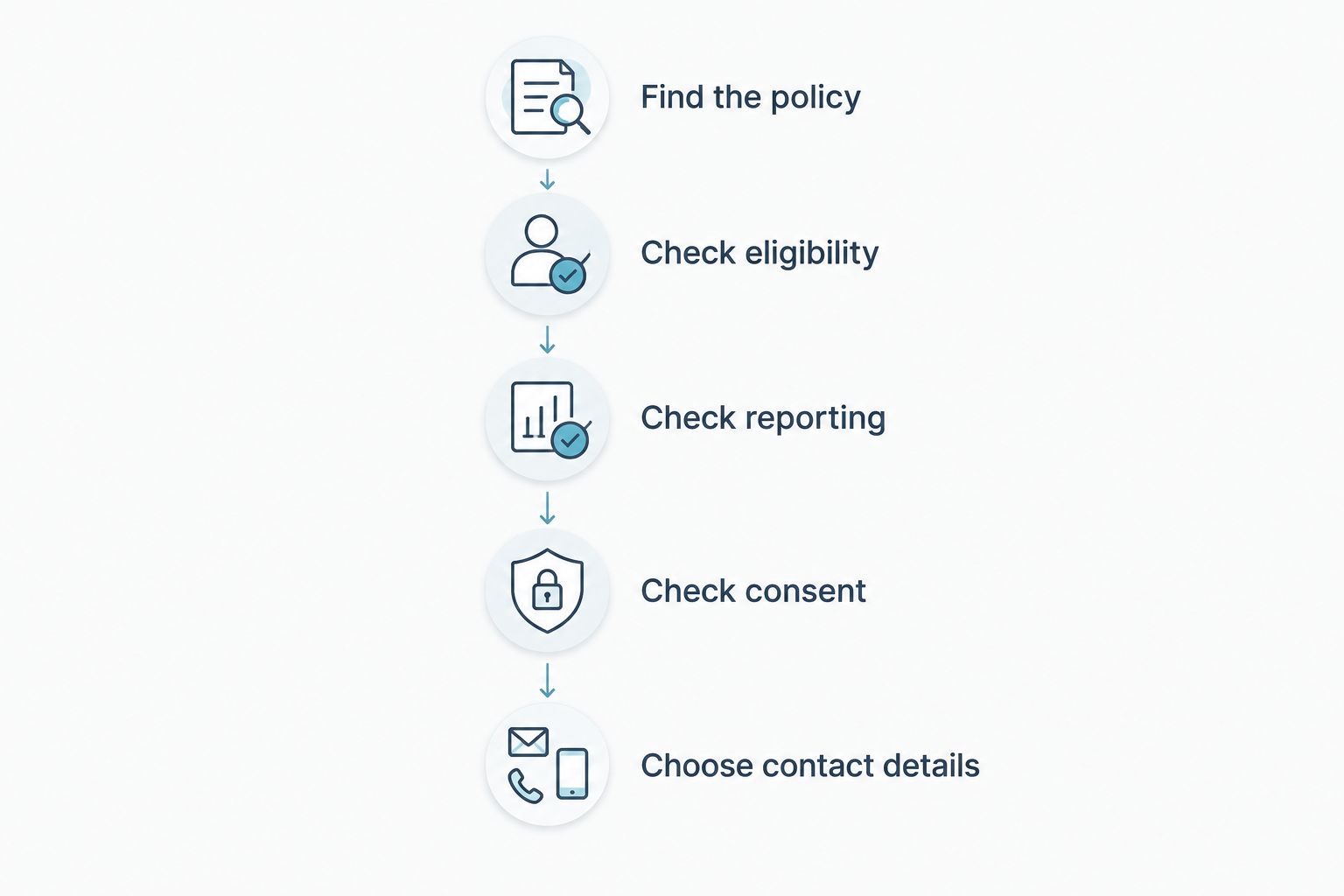
Use this sequence for your 2026 benefit. You do not need to disclose symptoms, a diagnosis or a personal situation to request these details.
- Find the policy. Request the current benefits terms, provider privacy notice and any consent or referral form.
- Check eligibility. Ask which identifying details the provider needs and who verifies them.
- Check reporting. Ask whether your employer receives your name, attendance, appointment dates, claims details or only grouped figures.
- Check consent. Read any permission to share information, including the intended recipient, purpose and scope.
- Choose contact details. Set the email address, phone number and reminder preferences you want used.
Get the answers in writing so you can refer back to them. If the administrator answers only part of the question, ask for the remaining details before you book.
What should I ask HR?
Keep the request administrative. You can send this suggested wording without explaining your reason for asking:
Please send the current workplace therapy benefit policy and provider privacy notice. Does the employer receive individual names, attendance, appointment dates or claims details? Which roles can access that information, and are clinical records kept separately?
If you work in a small team, add a question about grouped reporting: how does the provider prevent team-level information from identifying an individual?
What should I ask the therapist or provider?
Ask the provider to distinguish its records from the employer’s records. Useful questions include:
- Who holds my clinical notes, and who can access them?
- What information is sent to my employer, insurer or benefits administrator?
- Does a missed appointment generate an identifiable report?
- What are the exceptions to confidentiality under the rules that apply to this service?
- Can I review a proposed employer report before it is shared?
Do not assume a right to approve every disclosure. Ask what the provider’s policy and applicable law permit, including situations where disclosure is required without your agreement.
Can my manager read what I tell my therapist?
Employer payment alone does not establish a right to read your therapy notes. Ask who holds the clinical record and what legal or consent basis would permit information to be shared.
A workplace assessment needs particular attention. Before it starts, establish whether the professional is providing treatment, preparing an employment-related report or doing both, and ask exactly what the employer will receive.
Avoid signing a broad release simply because it appears in routine paperwork. Ask the provider to explain unfamiliar wording and whether the stated purpose requires the full scope of information requested.
Can using work email or a work laptop reveal my appointment?
Work systems can create evidence outside the provider’s records. Appointment emails, calendar entries, browser records and notifications are separate from what your therapist reports.
For a 2026 privacy check, review the employer’s device and account policies as well as the therapy policy. Private browsing does not make an employer-managed device private from its administrator.
Use a personal account and device when practical, turn off message previews and choose a space where you cannot be overheard. These steps reduce avoidable exposure; they do not alter benefit reporting or legal disclosure rules.
What if my employer referred me to therapy?
Ask whether the referral is voluntary support or a formal employment-related process. Do not assume the reporting arrangements are identical.
Before agreeing, request a written explanation of what is reported, to whom and for what purpose. Attendance confirmation, recommendations about work and session content are different disclosures; ask the provider to separate them clearly.
If you are concerned about employment consequences, seek advice from an appropriate local employment adviser or worker representative. A therapist can explain the service’s confidentiality arrangements, but cannot promise how an employer will act.
Where does InnerSpark Africa fit?
InnerSpark Africa is an online therapy option for adults seeking licensed therapists in Uganda, Kenya, Tanzania and other African countries. The platform connects people with therapists for video, voice or chat sessions.
That service description does not establish whether your employer’s benefit covers a booking or what a workplace arrangement reports. Before booking through InnerSpark Africa, ask about eligibility, the applicable privacy notice and any information shared with a benefits administrator.
Choose the format you can use privately and comfortably. The platform provides a route to licensed therapy, but workplace coverage and employer visibility still need separate confirmation.
FAQ
Can my employer see I use workplace therapy benefits?
Your employer can sometimes see participation or payment information, depending on the benefit arrangement. That does not automatically give your manager access to session content; ask what information is shared and with whom.
Will HR know what I talk about in therapy?
An employer-funded appointment does not by itself establish HR access to your conversations. Check the provider’s confidentiality policy, any disclosure consent and the exceptions required by applicable law.
Can I ask about therapy benefits without telling HR why?
You can request the standard benefit policy and privacy notice without explaining your personal reason for considering therapy. Keep the request focused on eligibility, reporting and access to records.
Does anonymous reporting mean nobody can identify me?
A description of reporting as anonymous is not enough to establish how identities are protected. Ask which fields appear in reports and how the provider handles small teams or narrowly defined groups.
Is paying independently more private than claiming reimbursement?
Independent booking keeps the appointment outside the employer reimbursement process if you do not submit it. It does not remove provider records or exposure through work devices, shared accounts and notifications.
Can my employer require a report from my therapist?
Whether an employer can require a report depends on the circumstances and applicable rules. Ask for the purpose, requested information and legal or consent basis, and seek local employment advice if you are concerned.
Does InnerSpark Africa automatically accept my workplace benefit?
Do not assume your workplace benefit covers InnerSpark Africa. Confirm eligibility, payment arrangements and information-sharing terms with both the benefits administrator and the therapy provider before booking.
One last thing
The easiest privacy detail to overlook is the appointment reminder. Even when session content stays confidential, a notification preview or shared calendar entry can reveal that you have an appointment.
Before your first session, check where reminders appear. A neutral calendar label and personal contact details address a different privacy risk from the provider’s reporting policy; check both.
Related guides
- Can you use online therapy without giving your name?
- Is personal data safe with online therapy in Uganda?
- Online therapy for NGO and aid workers
When you are ready, contact InnerSpark Africa on WhatsApp or book a licensed therapist. You can start by asking about confidentiality and workplace-benefit arrangements before sharing anything personal.